Show and Tell: Iran Exhibits Destroyed US Equipment as Washington Moves to Restrict Satellite Imagery of Bases
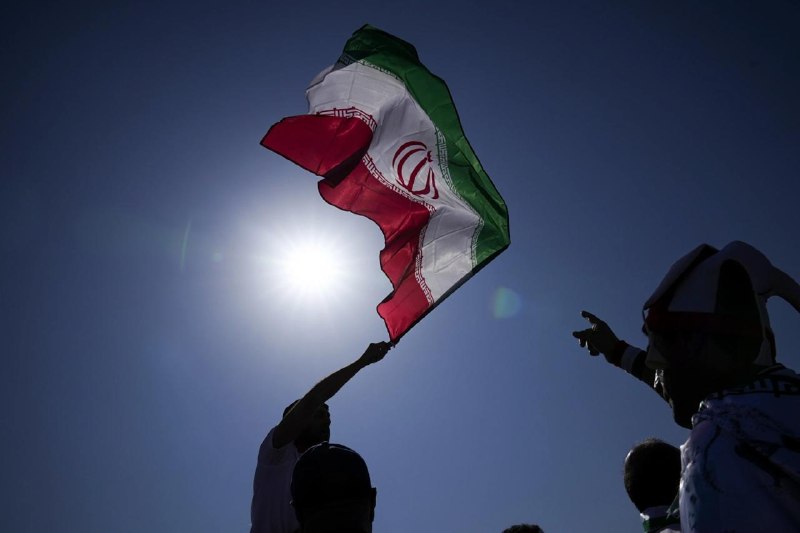
On a Tuesday afternoon in late April 2026, officials in Isfahan Province opened a public exhibition in the city of Shahrez displaying what they identified as damaged and destroyed American military equipment. The showcase — billed in Iranian state-adjacent reporting as proof of operational success against United States positions — was held in a provincial city far from the capitals where such displays normally play. The effect was deliberate: a domestic audience invited to see what the foreign adversary lost, filmed and distributed for regional amplification.
Simultaneously, and by most accounts quietly, the American presidential administration instructed private commercial satellite operators to restrict access to high-resolution imagery of American bases in the Middle East. The order, reported across Telegram wire services citing Iranian state-linked channels on 25 April 2026, was framed as an effort to limit intelligence exposure — but its timing and scope raise a harder question about what Washington was trying to hide from view.
The juxtaposition is the story. Iran put its evidence on display; the United States moved to suppress its own.
What Tehran Chose to Show
The exhibition in Shahrez was not a controlled military briefing for accredited journalists. It was, by most accounts, a public event — a kind of war museum opened early, with wrecked vehicles and debris arranged for cameras. Iranian officials presenting the display characterised it as confirmation that strikes on American installations had caused material damage the Pentagon had underreported.
The Trump administration, for its part, has not publicly addressed the satellite restriction request, leaving the scope and legal basis of the order unclear. Commercial satellite firms — firms that sell imagery to hedge funds, journalists, researchers, and foreign governments — operate under export controls but enjoy significant editorial latitude in what they publish. Whether this request constituted a formal directive with enforcement teeth or a softer political ask remains contested in the limited reporting available.
What is not contested is that American bases in Iraq and Syria have been subject to repeated attack since early 2024. The Pentagon has acknowledged some damage. Iranian-backed groups have claimed significantly more. The gap between those two accounts is where this story lives.
The Pentagon's Credibility Problem
The administration faces a familiar dynamic: when the official accounting of harm consistently lags behind what independent observers can reconstruct from open-source imagery, the credibility of the denial erodes faster than the credibility of the claim. Satellite companies like Planet Labs, Maxar, and BlackSky have built businesses on the premise that the public and press can verify what governments say about the physical world. When the administration asks those companies to stop selling that verification, it is making a political calculation — and that calculation is itself informative.
A request that cannot be discussed publicly, only complied with, is a concession that the imagery would be damaging if released. That logic is not lost on regional audiences watching both the exhibition and the restriction. Iran invited observers to come look. Washington asked commercial operators to stop looking.
The asymmetry is not lost on Tehran's messaging apparatus. Iranian state-linked coverage of the exhibition has consistently framed it in terms of asymmetry — a smaller power that can strike and then exhibit the results, versus a superpower that strikes and then restricts the documentation of what was struck. The propaganda value is not in the equipment alone; it is in the contrast between display and suppression.
The Information Architecture of Escalation
Escalation is rarely only kinetic. The use of information control — restricting what satellites can see, limiting what officials can say, controlling the visual record of one's own positions — has become a structural feature of how both sides manage a conflict that neither has fully defined. The United States has not declared war on Iran. Iran has not launched a direct, comprehensive assault on American forces. What both powers have done, with increasing regularity since 2024, is probe and demonstrate while maintaining a rhetorical shell that stops short of total rupture.
Within that mode, image control becomes a tool of escalation management. Washington restricts satellite access because it does not want the market to price in the true scale of base damage. It does not want journalists or adversaries counting craters. The restriction signals that the administration considers the visual record strategically sensitive — and that it believes commercial operators will comply when asked.
Whether those operators will comply, and what precedent that compliance sets for future requests, is one of the less-discussed structural questions this episode opens. The commercial satellite industry has marketed itself as an independent, publicly useful verification layer. A pattern of yielding to informal administration requests would erode that positioning — and would be noticed by the governments of countries whose own military facilities might, in some future scenario, be the subject of similar American requests.
What Remains Unresolved
Three things remain genuinely unclear from the available reporting. First, the extent of damage at specific bases — the gap between the Pentagon's acknowledged harm and Iranian claims is real, but we lack ground-truthed imagery to close it independently. Second, the legal and commercial mechanism of the satellite restriction: whether it was a formal directive, an informal ask, and what enforcement tools the administration has if operators decline to comply. Third, whether the exhibition in Shahrez was primarily domestic political theatre — a provincial display timed for a domestic audience — or whether it signals a new phase of Iranian public-relations warfare designed for regional and international distribution.
What is clear is that both sides are managing a conflict in which physical strikes and visual control are operating simultaneously, and that the gap between what is struck and what is shown to the public is itself a site of contestation. The administration has asked commercial operators to help close that gap. Whether they will — and at what cost to their own credibility — is a question that will outlast this particular news cycle.
The war in plain sight has limits. Washington is testing where they are.
—
This desk initially framed the satellite restriction as a routine operational security measure. The broader context — that Iran was simultaneously running a public exhibition using the same material — suggested a more structural reading was warranted. The wire from Iranian-aligned channels was treated as counter-claim material requiring independent framing, not as a primary evidentiary basis.
Wire provenance
This editorial synthesis draws on the following public wire/social posts:
- https://t.me/sprinterpress/2048159331569602560
- https://t.me/sprinterpress/2048141998322761728
- https://t.me/sprinterpress/2048139703376019456