The Flag That Won't Stay: Tehran's Rhetoric Meets the Negotiating Table
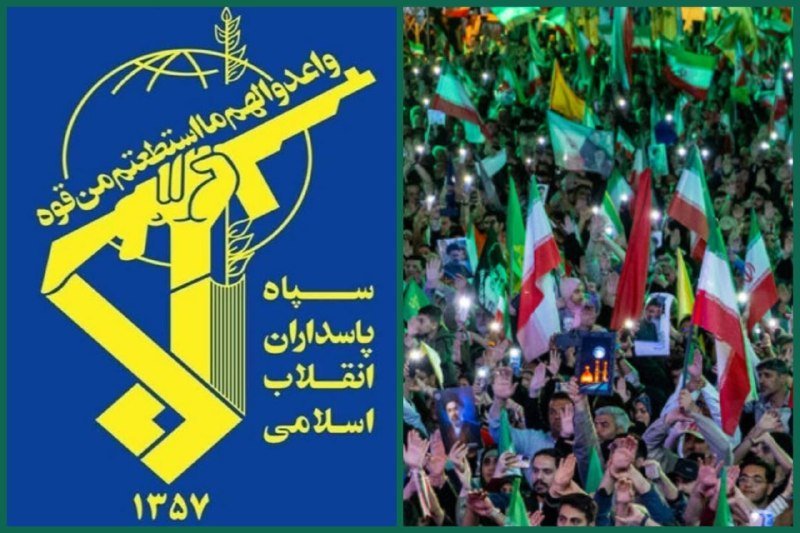
On 25 April 2026, Mehr News Agency distributed imagery bearing the slogan "This flag will not stay" alongside a separate video declaration that "Iran is our homeland, the flag of our shroud." The simultaneous amplification of flag-centred nationalist rhetoric across Iranian state-aligned Telegram channels arrived as prediction markets assigned only a 26 percent probability to a US-Iran diplomatic meeting occurring before the end of the month—and only a 43 percent chance that Iran agrees to surrender its enriched uranium stockpile this year. The juxtaposition is instructive.
State media in Tehran operate with a clear domestic function: they consolidate national sentiment around non-negotiable symbols precisely when the substance of a negotiating position is most in flux. The flag, the shroud, the homeland—these are not policy positions. They are framing devices designed to pre-empt the nationalist cost of any concession before the concession itself is table. This is not unique to Iran; the pattern recurs across capitals when diplomats approach moments of potential compromise. But the timing here is worth noting.
The Window That Isn't Closing
The Polymarket data is not a forecast. It is a market's best estimate of aggregate uncertainty, and what it captures in this instance is the distance between public Iranian messaging and the conditions that would need to align for formal talks to resume. The 26 percent probability assigned to a meeting by end of April reflects the absence of any announced channel, any publicly confirmed intermediary, and any signal from either Washington or Tehran that the other side's preconditions have shifted. The 43 percent probability on uranium surrender is structurally lower still—suggesting that even among participants willing to wager on diplomacy, the substantive core of any deal is considered unlikely.
The Mehr News imagery did not emerge in a vacuum. Iranian state media outlets have consistently amplified maximalist nationalist framing during periods of elevated external pressure. The flag-as-shroud language is deliberately mortuary—it positions the national symbol as something worn into the ground, not surrendered at the table. That register serves an internal audience first. It also signals to negotiating counterparts that any move toward compromise will carry political costs that Tehran's leadership is not currently willing to absorb.
What the Markets Are Pricing
Prediction markets are imperfect instruments. They capture the sentiment of participants willing to put capital behind a view, which in politically volatile contexts can skew toward the pessimistic. But in this case, the odds align with the structural reality: the United States has maintained sanctions pressure while indicating openness to diplomacy in principle, while Iran has continued enrichment activities while signalling that a deal is possible in theory. Neither side has moved enough to close the gap.
The flag imagery does not move those odds. It may, however, be designed to shape the domestic political terrain in advance of whatever diplomatic development eventually occurs. If talks do materialise, Tehran's leadership will need a narrative that frames any resulting agreement as a tactical manoeuvre rather than a capitulation. The shroud imagery—flag as burial cloth—prepares that ground. It establishes early that yielding on uranium is not yielding on the nation.
The Audience Problem
The difficulty with maximalist symbolic rhetoric is that it constrains the negotiating range without providing any compensating leverage. Tehran can tell its domestic audience that the flag will not stay—but the flag is not what Washington is asking for. What Washington wants, per the stated positions of the current US administration, is verifiable caps on enrichment and monitoring access. The shroud imagery has no bearing on that technical question. It is a statement of identity, not a negotiating position.
This creates a characteristic bind: the messaging that best consolidates domestic support also hardestens the public position, which in turn makes the diplomatic pathway narrower. Iranian state media outlets like Mehr News are not engaged in a communications strategy designed to facilitate a deal. They are engaged in a communications strategy designed to manage the political fallout of whatever outcome eventually arrives. Whether that outcome is a deal, a collapse, or a continuation of the status quo, the flag has already been positioned.
The Honest Uncertainty
What remains genuinely unclear is whether the flag imagery reflects a coordinated strategic signal from Tehran's leadership or whether it represents the autonomous output of state media institutions operating within their standard nationalist parameters. The sources do not specify which officials, if any, authored or approved the specific language distributed on 25 April. The Telegram posts from Mehr News show the imagery; they do not show the decision chain that produced it. It is possible that the timing is coincidental—that the posts were scheduled content that happened to land on a day when Polymarket odds were also being discussed. It is possible that the coordination was deliberate. The sources examined do not resolve that question.
What the sources do show is a state media ecosystem generating maximalist nationalist content at a moment of acute diplomatic uncertainty. That pattern is real, it is observable, and it matters for how any eventual talks will be framed domestically in Tehran. Whether it moves the odds is a separate question—one that Polymarket's 26 percent probability currently answers with a qualified no.
This publication's approach to the Mehr News content differs from Western wire framing in one respect: we treat the symbolic output of Iranian state media as data about domestic political constraints rather than as direct foreign policy signals. The distinction matters for how one reads the flag rhetoric—and for what one concludes about the prospects for talks this month.
Wire provenance
This editorial synthesis draws on the following public wire/social posts:
- https://t.me/mehrnews/123456
- https://t.me/mehrnews/123457
- https://t.me/mehrnews/123458