Iran's Imam Reza Shrine in Bloom: Religious Soft Power and the Politics of Pilgrimage
As Iranian state media showcased flower arrangements at the Imam Reza shrine on 25 April 2026, the annual commemoration offers a window into how Tehran deploys religious heritage as a tool of regional influence and domestic cohesion.
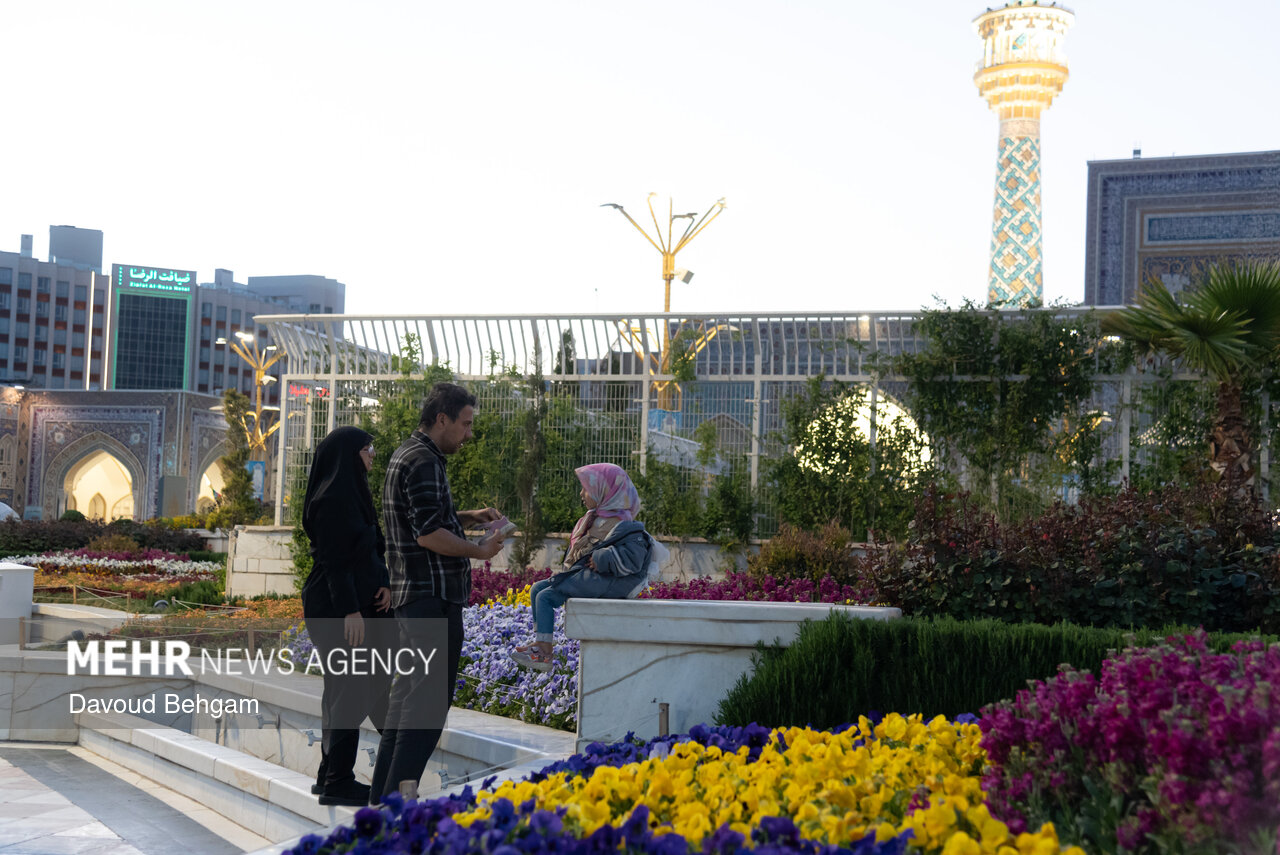
Iranian state media on 25 April 2026 broadcast images of elaborate flower arrangements installed at the Holy Shrine of Imam Reza in Mashhad, the country's second-largest city and the preeminent center of Shia Islamic pilgrimage. The installations, documented across multiple Iranian news feeds, marked the annual celebration of the eighth Imam's birth—a date that draws millions of worshippers to the shrine complex each year and serves as a recurring demonstration of Iran's capacity to marshal religious devotion at scale.
The timing matters. The commemoration arrives as Tehran navigates simultaneous pressures: negotiations over its nuclear programme with Western powers, a shifting regional landscape in the Middle East, and an economy still absorbing the cumulative weight of years of sanctions. In that context, the spectacle of the shrine in full ceremonial bloom is not merely devotional. It is a carefully choreographed display of cultural resilience—one that project managers and tourism officials in Tehran understand as both an instrument of domestic legitimacy and a form of regional messaging.
A Pilgrimage Economy Built Over Decades
The Imam Reza shrine complex—known as the Astan Quds Razavi—is among the most visited religious sites in the Muslim world. Conservative estimates place annual visitation in the millions, with numbers surging during major commemorative dates. The institution that manages the shrine, the Astan Quds Razavi Foundation, operates an array of charitable, cultural, and economic programmes funded partly through donations from pilgrims and institutional endowments. The foundation's reach extends into healthcare, education, and poverty relief—functioning as a parallel social safety net in areas where state capacity remains constrained.
The flower arrangements themselves are a recurring feature of high-visibility commemorations. Iranian state media and affiliated social media channels treat each installation as a newsworthy event, publishing images designed for maximum circulation. The footage shared on 25 April by Farsna, Mehr News, and Tasnim News showed floral tributes arranged within the shrine precincts, accompanied by messages of blessing for the sacred space. The messaging is consistent: the shrine is alive, tended with care, and central to the nation's spiritual identity.
What the Bloom Means in Tehran's Framing
For Iranian officials, the shrine represents a form of soft power that operates independently of the economic and military levers that Western analysts typically foreground in assessing Tehran's regional standing. The Astan Quds Razavi has historically maintained ties with Shia religious communities in Iraq, Lebanon, Afghanistan, and Bahrain—networks that predate the Islamic Republic and that successive governments have worked to preserve and cultivate.
This is not a framing that Western media typically prioritises. Coverage from major wire services tends to focus on Iran's nuclear programme, its support for armed proxy groups, and the human rights record of its government. Religious infrastructure—unless it intersects directly with a diplomatic dispute—receives limited attention. Yet the Imam Reza shrine and institutions like it represent a dimension of Iranian influence that functions below the threshold of headline news but above the threshold of ordinary cultural exchange.
Iranian state media, for its part, presents the shrine as an expression of civilisational continuity. Tasnim News and Mehr News framed the 25 April celebrations in terms of religious devotion and national pride, without explicitly invoking geopolitical context. That silence is itself a choice. The omission of politics from the coverage signals confidence—a suggestion that the shrine's significance stands independent of whatever crisis occupies the headlines.
The Structural Logic of Religious Tourism
The broader pattern here is one that regional capitals across the Middle East understand intuitively. Saudi Arabia has invested heavily in Mecca and Medina. The United Arab Emirates has positioned itself as a hub for global faith-based tourism, including as a site for worship and cultural programming tied to the Year of Tolerance. Oman has cultivated its Ibadi heritage as a complement to its diplomatic outreach. Each of these projects reflects a calculation that religious infrastructure carries economic value and diplomatic utility.
Iran operates under additional constraints—chiefly the sanctions regime that limits its participation in global tourism markets—but the Astan Quds Razavi has adapted. The foundation has developed online content, virtual pilgrimage options, and partnerships with Shia communities abroad designed to maintain pilgrim connections even when physical travel is restricted. The flower arrangement broadcasts function partly as an advertisement for those digital services.
The shrine's managers are not naive about the geopolitical environment. Iranian officials understand that the sanctuary's prominence in Shia Islam makes it a potential diplomatic asset—and also a potential target of regional rivalry. The investments in security, in ceremonial presentation, and in the international visibility of major commemorations reflect a desire to protect that asset against a range of contingencies.
Regional Stakes and the Road Ahead
The Imam Reza shrine sits at the intersection of several trajectories that will shape the Middle East in the years ahead. Iran's nuclear programme remains unresolved; talks with the United States and European powers have produced periodic breakthroughs and reversals. The regional architecture—normalisation agreements between Israel and Arab states, shifting alliances in the Gulf, the ongoing war in Gaza—creates an environment in which Tehran's room for diplomatic manoeuvre is constrained but not eliminated.
In that environment, institutions like Astan Quds Razavi represent a form of leverage that does not depend on sanctions relief or nuclear concessions. A shrine that draws Shia pilgrims from across the region is a reminder that Iran occupies a central position in a religious tradition that spans multiple countries and that its cultural infrastructure has a reach that extends beyond its borders.
Whether that reach translates into meaningful political influence depends on factors that the flower arrangements cannot determine—chiefly the evolution of Iran's relationships with its neighbours and the willingness of Shia communities abroad to maintain ties with Tehran as their primary institutional reference point. The 25 April broadcast showed that the machinery of religious celebration operates smoothly. What it could not show is whether the audience it reaches is still listening.
This publication covered the 25 April commemoration as a cultural event in Iranian state media feeds, foregrounding the domestic religious narrative that Tasnim News and Mehr News emphasised. Western wire coverage of Iran on the same date focused on diplomatic tracks; the shrine story received no separate wire treatment.
Wire provenance
This editorial synthesis draws on the following public wire/social posts:
- https://t.me/Farsna/8478
- https://t.me/Mehrnews/189876
- https://t.me/TasnimNews/483911