Iranian Military Command Warns US Over Strait of Hormuz 'Piracy' Allegations
Khatam al-Anbia, the Islamic Revolutionary Guard Corps joint operations headquarters, issued a direct warning to Washington on April 25, accusing US forces of maritime piracy in the Gulf and pledging a strong military response if operations continue.
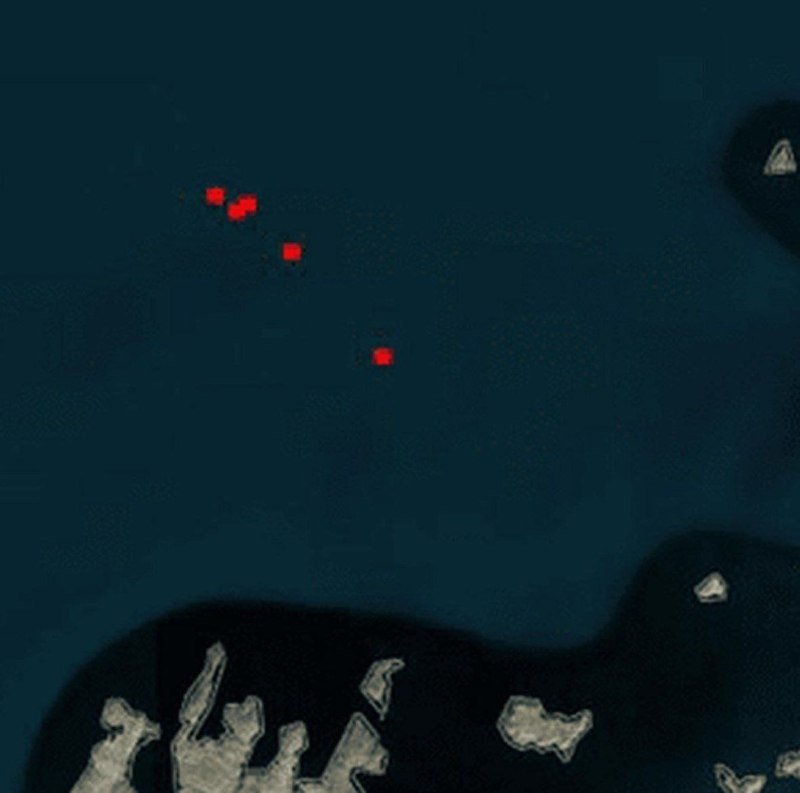
A unified command of the Islamic Revolutionary Guard Corps has delivered a direct challenge to US naval posture in the Persian Gulf. Khatam al-Anbia, the IRGC's joint operations headquarters, issued a warning on April 25 accusing American forces of "blockade, robbery, and maritime piracy" in the region and declaring that any continuation would prompt a strong response from Iranian armed forces.
The statements, circulated across multiple Iranian state Telegram channels between 11:07 and 11:45 UTC, represent an unusually synchronized articulation of threat from the IRGC's central command structure. The language used — "aggressor American army," "bandit and piracy," "blockade" — mirrors official Iranian framing of US sanctions enforcement as acts of economic warfare rather than legitimate sanctions compliance.
What the Warning Says
According to the statements attributed to Khatam al-Anbia Central Headquarters, Iranian forces are actively monitoring American military movements in the Gulf and will respond forcefully if what the command describes as hostile maritime practices continue. The wording frames US sanctions enforcement as piracy under international law — a characterization Tehran has employed for years to delegitimize American financial and naval pressure. "We monitor the enemy's movements and continue to manage and control the Strait of Hormuz," one statement reads, asserting continued Iranian operational awareness over the waterway through which roughly 20 percent of global oil shipments pass.
The warning does not specify what actions Tehran considers piracy, but Iranian officials have previously characterized US sanctions enforcement, the interception of vessels suspected of carrying sanctioned goods, and the freezing of oil revenues as illegitimate seizures of Iranian sovereign property.
Signal or Posturing?
The question observers will grapple with is whether this constitutes a substantive escalation in rhetoric or calibrated deterrence messaging aimed at domestic and regional audiences. Khatam al-Anbia's statements arrive amid heightened scrutiny of USIran negotiations over Iran's nuclear program. American officials have insisted that any deal requires verification of uranium enrichment limits and the reopening of sites to international inspectors — demands Tehran has rejected as equivalent to surrendering national sovereignty.
In that context, the Hormuz warning reads as a reminder of asymmetry: if economic pressure escalates to the point of strangling export revenues entirely, Iran retains the ability to disrupt global energy markets through control of the strait's chokepoint. The warning is simultaneously a deterrence message aimed at Washington and a signal to Gulf Arab states that they bear collateral risk from American pressure on Iran.
The Hormuz Calculus
Control of the Strait of Hormuz has been a structuring fact of Gulf security since the 1980s. Iran's ability to threaten shipping lanes there is the primary reason American military planners have maintained a continuous carrier presence in the region — and why Gulf states, despite their alignment with Washington, have historically resisted an openly anti-Iranian military posture that might invite exactly the disruption the Khatam al-Anbia statement alludes to.
What has changed is the operational environment. US Central Command has increased maritime interdiction operations targeting Iranian oil shipments bound for China and other buyers in recent months, part of a broader effort to enforce price caps and sanctions regimes without direct confrontation. Iranian state media framing those operations as piracy reflects a genuine Iranian grievance — the seizures are legally contested, conducted under American domestic authority that Tehran does not recognize as legitimate — but it is also convenient propaganda that casts Iran as a victim of imperial overreach rather than a party subject to binding international sanctions resolutions.
Stakes and Forward View
If the statements represent a genuine intent to contest American operations, the risk of miscalculation rises sharply. A confrontation near Hormuz — whether a harassment of a US warship, an interdiction of a flagged vessel, or an attempt to disrupt shipping — could spiral rapidly given the number of commercial vessels transiting the strait daily. For global energy markets, even the threat of disruption is sufficient to move prices.
If, on the other hand, the warning is primarily domestic messaging — a demonstration of IRGC readiness ahead of domestic political contestation in Tehran — the practical risk is lower, though the language signals a hardening of the negotiating posture that makes diplomatic offramps harder to construct.
The sources do not indicate whether the IRGC has taken any additional operational steps — repositioned assets, restricted naval traffic, or altered patrol patterns — that would distinguish this warning from previous statements. What is clear is that the Khatam al-Anbia command has chosen to issue its most direct maritime warning of 2026 at a moment when US-Iran talks are stalled and American enforcement operations are accelerating.
This article uses the Telegram posts from Iranian state-affiliated channels as primary reporting material, consistent with Monexus protocol for stories where Iranian-state-adjacent sources are the dominant input. Western government and wire reporting on US naval interdiction operations will be incorporated as the story develops.
Wire provenance
This editorial synthesis draws on the following public wire/social posts:
- https://t.me/alalamarabic/785432
- https://t.me/alalamarabic/785428
- https://t.me/presstv/234891
- https://t.me/tasnimnews_en/156723
- https://t.me/farsna/989123
- https://t.me/sprinterpress/445672
- https://t.me/alalamfa/334215