Iran and Pakistan Seek Diplomatic Off-Ramp as Army Chiefs Meet in Islamabad
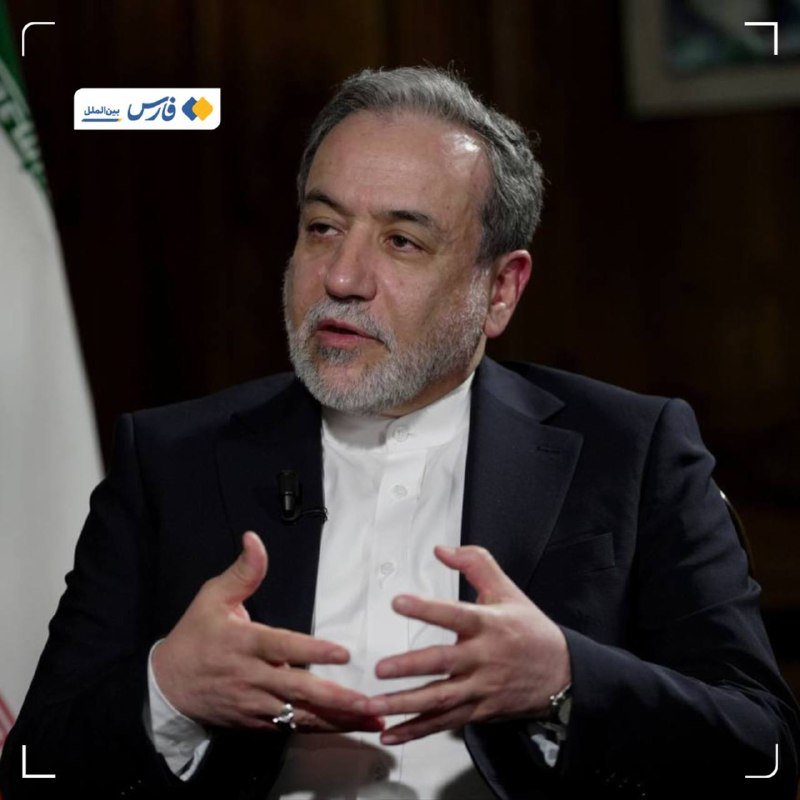
When diplomatic channels between neighboring states go quiet, the military ones sometimes step in. That is exactly what happened in Islamabad on Saturday, 25 April 2026, when Iranian Foreign Minister Abbas Araghchi sat across from Pakistan's Army Chief, Field Marshal Asim Munir. The meeting — confirmed across multiple regional wire services within the same hour — was billed as a discussion of ceasefire arrangements and bilateral security. It was the kind of encounter that gets attention precisely because it almost did not happen.
The Araghchi-Munir meeting arrives at a moment of genuine fluidity in Iran's external posture. Since the January 2025 ceasefire agreement that ended the direct Iranian-Israeli exchange — brokered with heavy Omani and Qatari involvement — Tehran has been systematically re-engaging neighbors it had kept at arm's length. Iraq's government, the UAE, and now Pakistan have all received diplomatic attention from Araghchi's new regional tour. The Islamabad stop was announced as its first destination. That sequencing carries its own signal: Tehran is building outward from the Gulf ceasefire, seeking stability on its eastern flank before the harder questions of Yemen and the broader USIran nuclear الملف resurface.
The Ceasefire That Brought Them Together
What exactly Araghchi and Munir discussed remains, at this writing, partly inferential. All five Telegram-sourced reports from regional wire services converge on one subject: ceasefire arrangements. The phrasing is consistent — "latest developments related to the ceasefire" — but none of the sources specify which ceasefire, or what mechanism was proposed. The ambiguity is not accidental. A bilateral Iran-Pakistan ceasefire framework is not publicly documented as an existing agreement, which means this meeting either formalized something in private or explored the concept as a confidence-building measure against future incidents.
The historical backdrop makes that possibility credible. In January 2024, Pakistan carried out cross-border airstrikes inside Iranian Balochistan in response to what Islamabad described as Iranian-backed militant attacks on Pakistani soil. Iran responded with its own strikes. The exchange was brief but alarming — two nuclear-capable states exchanging ordnance across a contested border — and it was defused through back-channel communication rather than formal diplomatic process. A structured ceasefire dialogue would represent a deliberate upgrade from that improvised de-escalation.
For Pakistan, the strategic calculus is straightforward. Islamabad is managing simultaneous pressures: an IMF programme that requires no new external shocks, an active insurgency on its western frontier, and a relationship with Washington that has grown transactional rather than alliance-based. A stable relationship with Iran removes one variable from that list. Field Marshal Munir, who holds significant de facto foreign-policy influence in Pakistan's civilian-military arrangement, has every incentive to take the meeting seriously.
The Counter-Narrative: Why This Might Be Routine
It is worth flagging what this meeting is not, if the wire record is taken at face value. There is no announced agreement, no signed communiqué, no joint press conference with substantive details. Regional states hold senior-level bilateral meetings routinely, and framing Saturday's encounter as a breakthrough requires evidence that is not yet present.
India, watching from New Delhi, has reason to view expanded Iran-Pakistan dialogue skeptically. New Delhi has invested in its own strategic relationships with both countries — a major Chabahar Port development that bypasses Pakistan to connect India to Afghanistan, and a long-standing defense partnership with Tehran built around shared concerns about Sunni militancy. An Iran-Pakistan détente, if it deepens, could complicate India's regional position. That does not make Saturday's meeting a geopolitical earthquake. But it means the audience for this meeting extends well beyond the two delegations in the room.
The other plausible reading is that Araghchi is working a short-term diplomatic circuit — a tour, a photo opportunity, a message sent to Washington that Iran has regional partners — and that the ceasefire language reflects Tehran's preferred framing for every bilateral encounter right now, regardless of whether the substance matches. Without a verifiable text of whatever was discussed, skepticism is warranted.
The Structural Picture: Why It Still Matters
Even if the specifics are thin, the framing of this meeting is structurally significant. Tehran's post-ceasefire diplomatic strategy has been consistent: present Iran as a regional stabilizer rather than a revisionist actor, cultivate goodwill across the neighborhood, and position Iran as a necessary partner for any durable Middle Eastern arrangement. Every meeting Araghchi holds with a neighbor reinforces that posture — and every meeting he declines would undermine it.
Pakistan, for its part, is demonstrating something the Global South often does in private that rarely gets reported: hedging against a unipolar ordering of the region. Islamabad does not want to choose between Washington and Beijing, between Gulf Arab stability and Iranian partnership. It wants options. A direct channel with Tehran — cleared at the military level, not just the diplomatic one — gives Pakistan that option without requiring public alignment.
The underlying dynamic is the same one visible across the region: states with complex security environments are building redundancy into their external relationships. This is not ideology. It is not the multipolar thesis in its intellectual form. It is the practical behavior of governments that have watched what happens to states that bet everything on a single great-power patron and found themselves stranded when that patron's priorities shifted. Iran and Pakistan are both, in their different ways, long experience with that particular lesson.
What the Araghchi-Munir meeting represents, in that light, is not a new alliance or a strategic rupture. It is a rehearsed caution — two governments reducing exposure to the kind of sudden strategic discontinuity that the region has experienced before.
What Remains Unresolved and What Comes Next
The sources reviewed for this article do not include the text of any agreement or joint statement, nor do they include direct quotes from either Araghchi or Munir. The ceasefire language appears consistent across all five wire reports, but its specifics remain undisclosed. Whether this meeting produced a framework document, an informal understanding, or merely a statement of intent to continue talking cannot be determined from the available record.
What is clear is the direction of travel. Araghchi's regional tour will continue beyond Islamabad. The ceasefire architecture Tehran is building — anchored by the January 2025 agreement and extending outward to neighbors — suggests a deliberate strategy rather than a reactive one. Pakistan, by receiving the Iranian foreign minister at the military chief level rather than routing him through the civilian Foreign Ministry, signaled that it regards this channel as strategically significant.
The next test will come when those ceasefire arrangements are tested by the next border incident, the next militant attack, or the next shift in Washington's posture toward the region. Saturday's meeting did not remove those risks. It created a circuit that, if maintained, gives both capitals a faster way to talk each other down.
This article was filed from regional wire services. Monexus cross-referenced five Telegram-sourced reports from Tasnim, Fars News International, Jahan Tasnim, Witness From West, and My Lord Bebo, all converging on the same meeting on the same day with the same subject matter — a high-confidence single-event story with low specificity on substance. The dominant wire framing emphasized ceasefire arrangements; this desk framed it within the broader architecture of post-ceasefire Iranian regional diplomacy.
Wire provenance
This editorial synthesis draws on the following public wire/social posts:
- https://t.me/MyLordBebo
- https://t.me/wfwitness
- https://t.me/FarsNewsInt
- https://t.me/tasnimnews_en
- https://t.me/JahanTasnim