Iran Vows Resilience After Infrastructure Strikes, State Media Reports
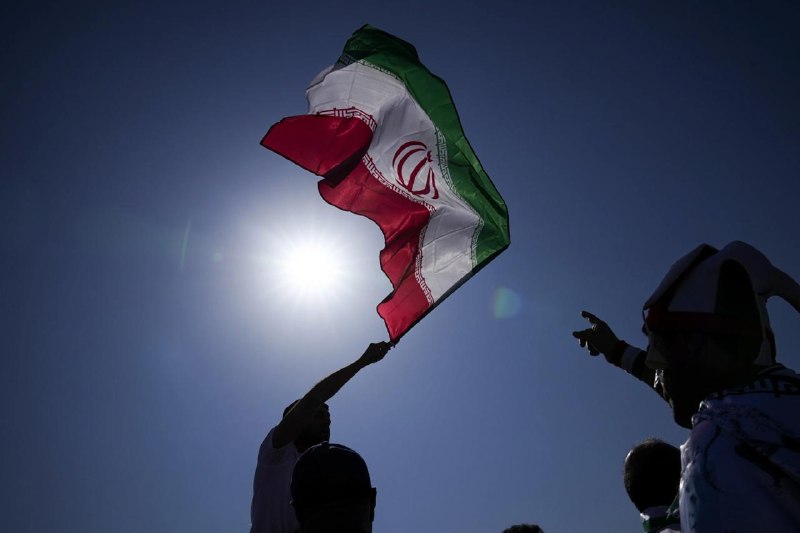
Mohammad Reza Aref, Iran's First Vice President, posted remarks on the social media platform X on 25 April 2026 describing what he called an attack on Iran's bridges and pledging that the Iranian people would respond by rebuilding and strengthening the country's infrastructure. The statements, distributed across multiple Iranian state-affiliated news channels including Farsna, Mehr News, and Tasnim News in English translation, constitute the most direct official response yet to whatever operational events prompted the language of strikes. "The enemy hit the bridges, but he was unaware that the people of Iran will close the fractures," Aref wrote, in a formulation that cast the incident as a misjudged provocation rather than a strategic success.
The framing matters. Across the three channels — Farsna, Mehr News, and Tasnim — the same core message appears in slightly varied wording: Iranian resilience is the defining variable; the strikes were an error in political calculus. Where Farsna's English service carried the formulation "we will make Iran more glorious than before," Tasnim's version used "more magnificent," and Mehr News framed it as "the people of Iran are closing the cracks." These are not contradictions; they represent deliberate semantic layering — a rhetorical strategy that presents a single policy outcome through several emotional registers simultaneously, reaching audiences who process political language differently depending on word choice, cultural register, and medium.
That the statements come from the First Vice President rather than the Supreme Leader or the President carries its own signal. Aref occupies a role that, in the Islamic Republic's constitutional architecture, is primarily administrative rather than military or theological. He is the deputy to the President. The decision to use his personal social media account rather than an official government channel suggests a calculated informality — a voice that can sound like a citizen speaking plainly rather than a state speaking formally. This is not unusual in Iranian political communication, where figures like Aref routinely operate on platforms Western audiences associate with civil society rather than government broadcasting. But it also means the statement functions as a form of controlled venting: the official position can be expressed with less diplomatic precision than a Ministry of Foreign Affairs communiqué would carry.
The infrastructure focus is deliberate. Bridges — physical, logistical, metaphorical — have become central to how Iran's state media frame the current moment. Infrastructure is concrete. It has visible consequences. Roads and bridges connecting populations, linking economic zones to ports, joining provincial centres to the capital: these are the arteries of a country operating under extensive sanctions. When those arteries are disrupted, the effects ripple through ordinary life in ways that officials cannot easily deflect. By naming bridges specifically, Aref's statement acknowledges damage while simultaneously redirecting attention to repair capacity. The rhetorical move is from loss to renewal — and it is designed to short-circuit the narrative that strikes have inflicted lasting systemic harm.
What the sources do not specify is the identity of the attacking party. The Telegram channels, translating Aref's X post, attribute the action to "the enemy" with no further identification. No external outlet cited in the available thread context has published confirmed attribution as of the filing of this article. The silence is structurally significant. Iranian state media have historically been precise about attribution when it suits them — naming Israel, the United States, or allied intelligence services as the source of strikes when doing so advances a political objective. The decision not to name the actor here suggests either that the operational picture is still unclear, that an internal domestic audience already knows the answer and no naming is needed, or that Iranian officials are keeping the attribution deliberately open — preserving negotiating space in whatever back-channel conversations may be underway.
The regional context makes this ambiguous attribution consequential. Negotiations over Iran's nuclear programme have been at an advanced stage, with reports from outlets including Axios suggesting a framework was close to finalisation in recent weeks. The proximity of a military incident to diplomatic progress creates a familiar pressure point: the question of whether strikes are designed to improve one's bargaining position, to demonstrate credibility gaps in the opposing camp, or simply to degrade capabilities that the other side cannot afford to see continued. Each interpretation produces a different optimal response from Tehran — from accelerated compromise to measured escalation to internal consolidation. The language of resilience, without attribution, keeps all three options open.
There is also the question of domestic political architecture. Iran is not a country with a single voice on foreign policy. The Islamic Revolutionary Guard Corps, the Foreign Ministry, the Supreme Leader's office, and elected officials including the President and First Vice President each carry distinct institutional interests and distinct relationships with the negotiation process. A public statement from the First Vice President that frames a strike as an opportunity for national reconstruction is also a statement about institutional competence: that civilian administrative capacity, not just military response, is the appropriate framework for managing the moment. This is not a minor positioning exercise. It is a claim on how Iran should narrate the next chapter of its own story.
The phrasing "close the fractures" carries particular weight in a country where the language of national unity has historically been mobilised in moments of external pressure. The image of a cracked but not broken structure — one that can be repaired, reinforced, even made stronger than before — has deep roots in both Iranian political rhetoric and Shia Islamic tradition, where the metaphor of testing and endurance through suffering appears across canonical texts. Whether a Western audience registers this register or not, it is calibrated for a domestic one. The statement functions on multiple levels simultaneously: defiance toward external actors, reassurance toward the Iranian public, and a demonstration of rhetorical command by an official who is not typically the most prominent voice in moments of crisis.
What remains unclear from the current source material is the physical extent of the damage, the operational timeline of the strike or strikes, and the status of any diplomatic communication channels that may have been opened or closed as a consequence. The Telegram channels carry the political framing, not the operational detail. Western wire services and regional outlets have not yet published confirmed assessments of the incident as of the filing of this article. The information environment around the episode is, at this stage, dominated by the official Iranian response — which is itself a data point about how Tehran chooses to shape the early narrative.
The broader pattern these statements sit inside is not new. Iran has repeatedly used moments of external military pressure to reinforce domestic cohesion around a narrative of resist-and-rebuild. The difference in the current moment is the proximity to a potential nuclear agreement that would, if concluded, alter the sanctions architecture that has defined Iran's economic experience for the better part of a decade. Whether strikes and the language of resilience are designed to influence the terms of that agreement, to prepare a domestic audience for concessions, or simply to manage an event unrelated to the nuclear track — that question is not answerable from the current source base. What is answerable is that the First Vice President's office has chosen to speak, in English, on a foreign social media platform, using language calibrated for export as much as domestic consumption. That choice tells us something about priorities.
The sources circulating on Iranian Telegram channels on 25 April 2026 represent the initial official framing of whatever has occurred. They are not corroboration of the underlying event; they are the event's political envelope. Readers should distinguish between what the Iranian government is saying happened — and what the sources confirm about the government's saying — and what independent verification would establish. The gap between those two things is the actual story, and it remains open.
—
This publication's coverage of Iran draws primarily on state-affiliated Telegram channels in the absence of confirmed Western wire reporting as of filing. The framing from Tehran emphasises national resilience and reconstruction capacity over attribution of the strike itself. Monexus will update as additional sources become available.
Wire provenance
This editorial synthesis draws on the following public wire/social posts:
- https://t.me/farsna
- https://t.me/mehrnews
- https://t.me/tasnimnews_en