Islamist-Tuareg Coalition Launches Coordinated Offensive on Mali Capital Bamako
A coalition of JNIM Islamists and Tuareg separatists from the Azawad Liberation Front launched a coordinated offensive on Mali's capital Bamako on 25 April 2026, with fighting reported on the northwestern outskirts and the Malian army reportedly backed by Russian African Corps forces.
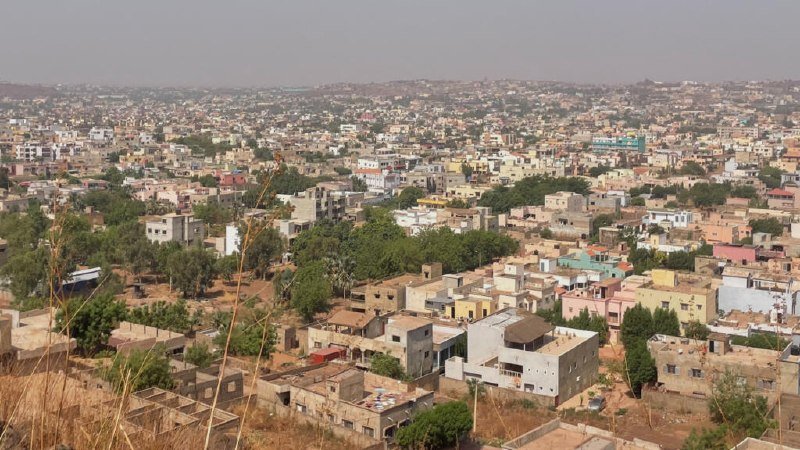
A coalition of Islamist militants and Tuareg separatists launched a coordinated offensive against Mali's capital Bamako on 25 April 2026, according to OSINT monitoring channels and military tracking sources. Fighting was reported on the northwestern outskirts of the city, marking a significant escalation in a conflict that has steadily deteriorated since Mali's military junta expelled French forces in 2022 and deepened ties with Russian security contractors.
The assault brings together two groups with distinct but now-converging agendas: JNIM, formally Jamaat Nusrat al-Islam wal-Muslimin, an al-Qaeda-affiliated Sunni Islamist organisation that has operated across the Sahel since 2017; and the Azawad Liberation Front, a Tuareg nationalist movement that previously fought for independence in Mali's north before a 2015 peace accord temporarily defused that conflict. According to initial OSINT accounts, fighters from both groups moved simultaneously against Malian army positions across multiple fronts, suggesting a level of operational coordination that analysts had feared but not yet witnessed at this scale.
The Malian Junta's Russian Partnership Under Strain
The offensive arrives at a moment of acute vulnerability for Bamako. Since breaking with Paris and demanding the withdrawal of French Barkhane forces and the UN peacekeeping mission MINUSMA, Mali's ruling junta under Assimi Goita has relied heavily on the Russian African Corps — the successor entity to the Wagner Group — for counter-insurgency operations. Russian contractors have conducted airstrikes and ground operations across central and northern Mali, but the insurgents have proven adaptable. The simultaneous mobilisation of JNIM and the FLA along an arc stretching from the Kidal region to Bamako's periphery suggests that years of Russian-backed military pressure have pushed erstwhile adversaries into tactical alliance.
Western military analysts had warned that the junta's strategy of replacing French counter-terrorism cooperation with Russian private military contractors carried inherent risks. The Russian African Corps, unlike a standing state military with clear command-and-control structures and diplomatic accountability, operates with opacity about its operational rules of engagement and casualty reporting. When that force fails to contain an expanding insurgent coalition, as appears to be occurring, Bamako has fewer institutional levers to compel a recalibration.
The FLA Factor: Separatism Meets Jihad
The participation of the Azawad Liberation Front complicates the standard framing of Mali's conflict as a straightforward Islamist insurgency. The FLA's roots lie in Tuareg nationalism — a demand for autonomous governance in the north, driven by grievances over state neglect and perceived marginalisation of the Tuareg people — rather than in transnational jihad. That a secular-nationlist liberation movement and a pan-Islamist militia are now conducting joint operations reflects both the fragmentation of Mali's post-colonial state order and the opportunism that characterises armed movements in ungoverned spaces.
The 2015 Algiers Agreement had offered the Tuareg factions a political settlement, but the junta's abandonment of the agreement's implementation provisions — itself linked to the broader collapse of state authority after the 2020 and 2021 coups — left the FLA with little recourse beyond armed resistance. The convergence with JNIM is therefore not ideological affinity but tactical desperation: a mutual recognition that the Bamako regime, whatever its international arrangements, is too weak to defeat either group in isolation.
Structural Failures and the Sahel Security Vacuum
What is unfolding in Mali is less an aberration than a structural consequence of a decade of policy errors by Western powers and their Sahel partners. France's counter-terrorism campaign, operationally focused and reliant on local state proxies, treated the symptoms of state failure — banditry, radicalisation, cross-border movement — without addressing the underlying governance collapse. When France exited, the vacuum it left was not ideological but operational: a gap in intelligence, logistics, and strike capability that the Russian African Corps partially filled on commercial terms, but which lacked the development and political dimensions that a durable security architecture requires.
The insurgency's ability to absorb the FLA into a unified offensive also reflects the limits of ethnically segmented counter-insurgency. Bamako's forces, heavily drawn from southern Mali and historically mistrustful of northern populations including Tuareg communities, have struggled to build local partnerships that might have divided the insurgent coalition. The result is a conflict in which the state's enemies are simultaneously more numerous and more coherent than at any point since 2012.
Stakes and Unresolved Questions
The immediate stakes are stark. A successful insurgent push into Bamako — a city of roughly three million people — would constitute a strategic defeat for a sitting government, one that has staked its legitimacy on delivering security through its Russian partnership. It would also reshape the broader Sahel security landscape, placing an al-Qaeda-affiliated movement in de facto control of a West African capital and demonstrating that the withdrawal of Western counter-terrorism frameworks has not, as its proponents claimed, reduced extremist risk but concentrated it.
The sources reviewed for this report do not yet provide confirmed casualty figures, the precise territorial extent of insurgent advances, or official statements from the Malian government or the Russian African Corps command. OSINT monitoring of the offensive is ongoing, and the information environment around the fighting is expected to remain contested. Monexus will continue to track developments as additional reporting surfaces.
The thread context for this article drew exclusively on OSINT monitoring channels and Telegram-distributed content. Given the rapidly evolving situation and the absence of reporting from established wire services at time of publication, readers are advised to treat initial claims as provisional pending corroboration from independent journalists or official Malian government and military sources.