Israeli Forces Strike Southern Lebanon as Cross-Border Hostilities Intensify
Israeli forces carried out a wave of airstrikes and artillery fire across multiple towns in southern Lebanon on Friday, a day after intensified bombardment was reported east of Gaza City, in what appears to be a significant escalation in cross-border hostilities.
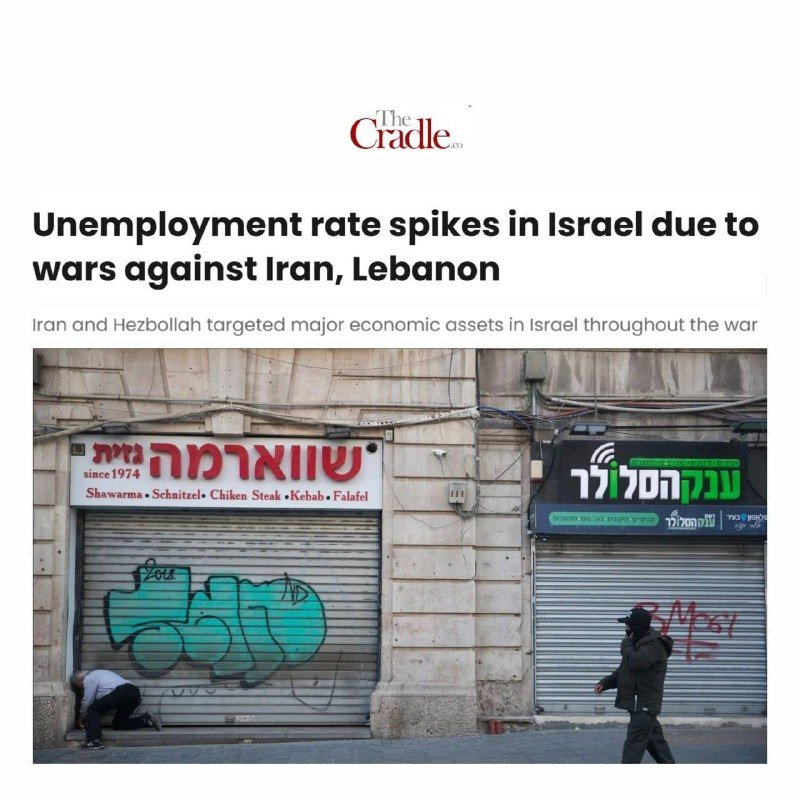
Israeli forces carried out a wave of airstrikes and artillery fire across multiple towns in southern Lebanon on 25 April 2026, Lebanese national news agency and regional Arabic-language media reported, in what appears to be a significant escalation in cross-border hostilities along the Lebanon-Israel frontier. The strikes, concentrated in the Tyre district and the broader south Lebanon area, followed intensified bombardment east of Gaza City that was reported in parallel dispatches from regional wire services earlier the same day.
According to the Lebanese National News Agency — the state-run wire service — Israeli artillery and aircraft targeted at least four locations: Khiam, Al-Bazouriyah, Hadada, and the outskirts of Al-Mualliyah in the Tyre district. The timing of the strikes, coming within a single hour on Friday evening, suggested a coordinated operational sequence rather than isolated incidents. Three Lebanese citizens were reported injured in the strike on Hadada, according to initial accounts from Lebanese sources. The casualties were reported at approximately 20:24 UTC. Khiam, a town near the so-called Blue Line demarcation between Lebanon and Israel, was struck with what the Lebanese National News Agency described as a "violent bombing operation" beginning at 20:03 UTC. Al-Bazouriyah was hit by an Israeli aircraft raid at 21:23 UTC.
The strikes landed within hours of an Al Alam Arabic wire dispatch reporting intensive Israeli artillery fire east of Gaza City. The parallel opening of new fronts — or the expansion of existing ones — along both the Gaza perimeter and the Lebanon frontier raises structural questions about whether Israel's military posture has shifted from contained cross-border response to a broader campaign of simultaneous pressure across multiple theaters.
Immediate Context: A Day of Parallel Bombardment
The timeline of Friday's events tracks a compressed sequence of military actions. At 20:01 UTC, Arabic-language wire services reported occupation forces firing intensively east of Gaza City, according to dispatches carried by the Gaza English Updates Telegram channel. Lebanese National News Agency reports, confirmed by Arabic-language outlets including Al Alam, placed the Khiam strike at 20:03 UTC, the Hadada injury count at 20:24 UTC, and the Al-Bazouriyah raid at 21:23 UTC. Within a window of roughly 90 minutes, Israeli forces were engaged in significant operations on two separate fronts separated by approximately 100 kilometers.
Southern Lebanon has experienced regular cross-border exchange since the escalation of the Gaza conflict in October 2023. Hezbollah, the Iran-aligned Lebanese political and military movement, has characterized its operations along the northern Israel-Lebanon border as solidarity actions in support of Hamas. Israeli officials have consistently rejected that framing and have characterized Hezbollah's presence near the border as a direct threat to northern Israeli communities. The strikes on Friday targeted towns well within Lebanese territory — Khiam lies roughly 5 kilometers from the Blue Line — suggesting operations aimed at Hezbollah infrastructure deep enough south to draw sustained Lebanese civilian exposure.
Counter-Narrative: Israel's Security Calculus
Israeli military spokespeople have not yet issued a formal on-record statement addressing Friday's strikes as of publication. IDF briefings in prior weeks have consistently characterized cross-border operations as defensive responses to perceived threats, rather than offensive engagements. The Israeli framing holds that Hezbollah's entrenchment in southern Lebanon — including fortified positions, tunnel networks, and anti-tank missile emplacements — constitutes an intolerable threat to Israeli communities north of the border. From this vantage point, strikes on Lebanese towns are not strikes on Lebanon as a state but targeted operations against a militant proxy operating from Lebanese civilian areas.
That framing has found varying degrees of acceptance in Western capitals. The United States has, since October 2023, backed Israel's right to respond to security threats along its northern border while simultaneously urging restraint to avoid triggering a broader regional war. European diplomatic communications have been more openly critical, with several governments calling for an immediate ceasefire and warning that the pattern of Israeli operations across multiple fronts risks destabilizing Lebanon's own fragile political equilibrium. Lebanon, which has been without a fully functioning government for extended periods and whose state institutions are economically distressed, is acutely vulnerable to the kind of humanitarian and institutional damage that sustained bombardment inflicts.
Structural Frame: Multi-Front Deterrence or Strategic Overextension?
The pattern of simultaneous operations across Gaza and southern Lebanon is not easily dismissed as coincidental. Israel's stated war aims in Gaza — the destruction of Hamas's military and governance capabilities — have remained formally stable for months, but the operational conduct of the war has broadened in ways that challenge the coherence of that framing. If the goal is exclusively Gaza-focused, operations in Lebanon represent a strategic liability: they risk drawing Hezbollah into a full-scale exchange that would require Israel to manage a second front at significant military and diplomatic cost. If the goal is broader deterrence against Iran's network of proxy forces, then the Lebanon strikes make coherent tactical sense, even as they carry higher escalatory risk.
This is the structural tension that Western analysts have flagged in recent months: whether Israel's military posture reflects a deliberate multi-front deterrence doctrine or an reactive pattern of escalation that has outrun its original strategic design. The answer matters because it determines what diplomatic off-ramps, if any, remain available. A calibrated deterrence strategy requires defined red lines and termination conditions. A reactive escalation pattern does not, and tends to expand until external pressure — economic, diplomatic, or military — forces a stop.
The Iranian dimension is inescapable. Hezbollah is the most capable of Iran's regional proxy formations. Its missile arsenal, estimated in the thousands, includes precision-guided munitions that Israeli and Western intelligence assessments have long identified as capable of reaching deep into Israeli territory. Hezbollah's leadership has stated repeatedly that it will not stop operations along the Lebanon border until a Gaza ceasefire is in place. That linkage means that the scope and intensity of Friday's strikes cannot be analyzed purely as a Lebanon matter — they are part of a regional chain of causation that runs through Tehran, through Hezbollah's command structure, and into the Israeli war cabinet's calculations.
Stakes: Who Wins and Who Loses if the Pattern Holds
If Israeli operations in southern Lebanon continue or intensify, the most immediate loser is the Lebanese civilian population in the affected areas. Khiam, Al-Bazouriyah, Hadada, and the Tyre district periphery are inhabited by civilians who have no affiliation with Hezbollah's military wing. The three injured in Hadada represent an initial casualty toll that, in the absence of a ceasefire, will almost certainly grow. Lebanon's state institutions — already strained by economic collapse, political paralysis, and the legacy of the 2020 port explosion — have limited capacity to manage a humanitarian crisis in the south.
Hezbollah's political position inside Lebanon is more complex. The group's military operations have generated significant popular support among Lebanon's Shia community, which views Hezbollah's resistance posture as legitimate national defense. But the group's entanglements have also accelerated Lebanon's international isolation, with Western sanctions pressure on Hezbollah officials constraining the country's banking relationships and aid flows. A prolonged intensification of hostilities plays into the hands of Israel's most hardline faction, which has argued that only sustained military pressure can degrade Hezbollah's capabilities. It equally plays into the hands of Iran's most hawkish advisors, who benefit from demonstrating that the "axis of resistance" can absorb Israeli strikes without fracturing.
The United States finds itself in an uncomfortable position. Washington has provided the diplomatic cover — including repeated UN Security Council vetoes — that has shielded Israel's Gaza operations from binding international legal accountability. That same posture makes it difficult for the US to exercise effective leverage over Israel's Lebanon operations without appearing to apply a standard to Gaza it does not apply to its ally. The Europeans, meanwhile, face domestic political pressure from large and politically significant Arab and Muslim diaspora communities that view Western silence on Lebanese civilian harm as moral hypocrisy.
The most significant uncertainty is Hezbollah's response calculus. The group has absorbed Israeli strikes before without triggering the full-scale exchange that analysts have periodically predicted. Whether it chooses to absorb Friday's strikes, return measured fire, or escalate to a level that forces Israel to open a second major front will likely determine whether the next 72 hours bring de-escalation or the beginning of a broader war.
This publication's wire feed reflected Arabic-language regional reporting on Friday's strikes. Mainstream English-language wire services had not published on-record statements from the IDF or the Lebanese government as of UTC 22:00.
Wire provenance
This editorial synthesis draws on the following public wire/social posts:
- https://t.me/alalamarabic/12458
- https://t.me/alalamarabic/12457
- https://t.me/englishabuali/9981
- https://t.me/alalamarabic/12460
- https://t.me/gazaenglishupdates/8762