Israeli Drone Strike in Southern Lebanon Tests Fragile Border Equilibrium
An Israeli drone strike targeted a vehicle in the southern Lebanese town of Yohmor al-Shaqif on 25 April 2026, killing at least one person according to Lebanese state media and regional reporting — the latest in a series of cross-border incidents that have kept the Israel-Lebanon frontier on edge for months.
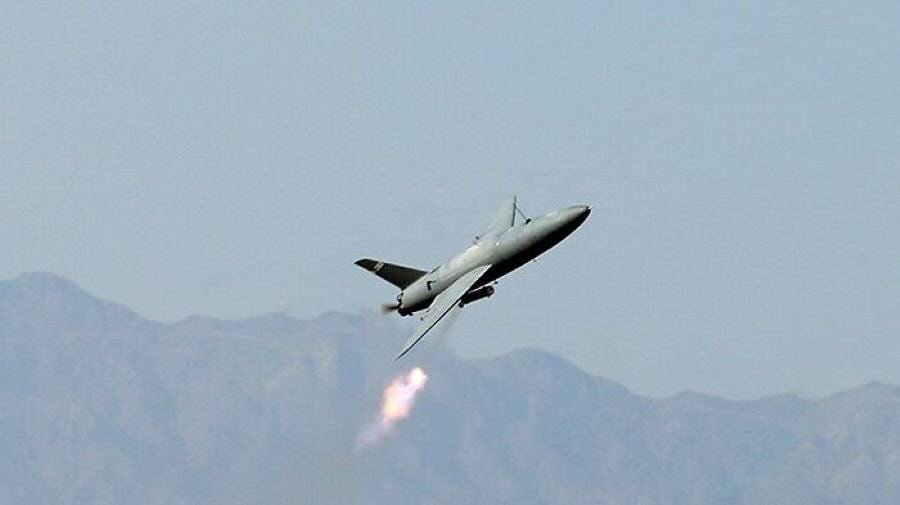
An Israeli drone strike targeted a vehicle in the southern Lebanese town of Yohmor al-Shaqif on the morning of 25 April 2026, Lebanese state-affiliated and regional media reported. At least one person was killed in the strike, according to initial reports carried by The Cradle Media and corroborated by witness accounts circulated on social media. The IDF has not officially confirmed the operation. The incident occurred as diplomatic efforts to cement a Gaza ceasefire continue in Doha — a process that has so far produced no parallel framework for the Israel-Lebanon frontier, where the absence of formal negotiations has left a volatile status quo in place.
A Pattern Along the Blue Line
The strike in Yohmor al-Shaqif fits an established pattern of Israeli operations targeting individuals and vehicles in southern Lebanon — territory where Hezbollah maintains a substantial presence, and where UNIFIL peacekeepers monitor a buffer defined by the Blue Line, the UN-mapped boundary between Israel and Lebanon. Yohmor al-Shaqif sits approximately 15 kilometres north of that line, placing it well inside Lebanese sovereign territory. The Israeli military has carried out dozens of similar operations in recent months, framing them as defensive measures against what it describes as an entrenched threat from Hezbollah's arsenal and forward positions. Lebanese officials and Hezbollah-affiliated media have characterised the same operations as violations of Lebanese sovereignty and acts of aggression that undermine the Rules of Engagement established under United Nations Security Council Resolution 1701, which ended the 2006 Lebanon War.
The strike follows a period of elevated tension along the border. On 25 April 2026, within hours of the Yohmor attack, Lebanese media reported Israeli aircraft flying at low altitude over the villages of Zahrani — a southern Lebanese town further west of the strike site. The proximate timing suggests the two incidents were part of a coordinated Israeli operation or, at minimum, reflected heightened Israeli air activity across the southern Lebanese corridor. Whether the Zahrani overflights were intelligence-gathering missions or part of a broader show of force remains unclear from available sources.
Hezbollah has not formally claimed the vehicle struck in Yohmor, and the identity of those killed has not been independently confirmed. Lebanese Armed Forces units were reported responding to the scene, according to Al Alam Arabic, though the degree of coordination between Lebanese army units and Hezbollah forces in the south varies and is a persistent source of diplomatic tension.
The Counter-Narrative: What Israel Says
Israeli officials have not publicly identified the target or targets of the Yohmor strike, a consistent practice with assassination operations of this kind. The Israeli military typically neither confirms nor denies individual strikes until a formal military advantage has been achieved and the operational picture is clear. The IDF spokesperson declined to comment when approached by wire services. Israeli security and defence analysts have long argued that the pace of operations is calibrated to degrade Hezbollah's capability and disrupt specific threat streams before they materialise — a justification that has been repeated across multiple administrations in Jerusalem and that frames each individual strike as part of a larger, legally sanctioned campaign of anticipatory self-defence.
From the Israeli perspective, UNIFIL's mandate has proven insufficient as a deterrent. Israeli officials have repeatedly argued that the peacekeeping force lacks the authority or the willingness to enforce Resolution 1701's arms-control provisions against Hezbollah, whose military infrastructure has grown considerably since 2006. The logic underpinning Israeli strikes in Lebanese territory, in this framing, is not aggression but the failure of multilateral mechanisms to address a documented threat. That argument has found some resonance in Washington, where successive administrations have supported Israel's right to self-defence while urging restraint to avoid triggering a wider conflict.
The Structural Frame: Two Conflicts, One Diplomatic Track
The striking feature of the 25 April strike is its timing relative to a separate, parallel process: the ongoing ceasefire negotiations in Doha aimed at ending the Israel-Hamas conflict in Gaza. Those talks have consumed the diplomatic bandwidth of the United States, Qatar, and Egypt for months. While the Gaza conflict and the Israel-Lebanon frontier involve distinct actors, threat assessments, and political constituencies, the absence of a dedicated diplomatic track for the north is not an accident — it reflects a deliberate, if contested, calculation by Washington and Jerusalem that managing the Hezbollah threat through targeted operations is preferable to engaging in negotiations that could legitimise Hezbollah's role at the table or require concessions on the Lebanese side that Beirut is unwilling and likely unable to make.
Hezbollah, for its part, has maintained that it will not accept any arrangement that does not address the broader context of the Gaza conflict — a position that has kept it tethered to the fortunes of Hamas and has effectively conditioned any northern normalisation on outcomes in the south. That linkage has frustrated Israeli and American diplomats but has proven durable as a negotiating posture. The result is a frontier where the Rules of Engagement are set by military operations, not by diplomatic consensus, and where escalation risk is managed incident by incident rather than through a durable framework.
The United Nations Interim Force in Lebanon, which patrols the Blue Line with approximately 10,000 troops, has repeatedly called for both sides to exercise restraint and has documented violations by both Israeli overflights and Hezbollah military activity near the boundary. But UNIFIL has no enforcement mechanism against Israeli air operations, and its reports have not produced meaningful diplomatic consequences. The force's limitations are structural, not procedural — a reflection of the Security Council's inability to agree on terms that would satisfy both Jerusalem and Beirut.
Stakes: A Conflict Without an Off-Switch
If the pattern of Israeli strikes continues without a corresponding diplomatic mechanism, the risk of miscalculation grows. A single operation targeting an individual perceived by Hezbollah as significant — whether a commander, a weapons facilitator, or an operative in a network the group considers integral — could trigger a response disproportionate to the original strike, creating an escalation cycle that neither side explicitly wants but both have thus far been willing to accept as a cost of their respective strategies. The 2006 war, which lasted 34 days and killed more than 1,000 people in Lebanon and 160 in Israel, began with a border incident that neither side had intended to be the opening of a full-scale conflict.
For Lebanon, the stakes extend beyond the immediate military calculation. The country is enduring a multi-year economic collapse, and its state institutions — including the army responding to incidents like the Yohmor strike — operate with severely constrained resources. A wider conflict would devastate infrastructure the country cannot rebuild and displace populations already displaced. For Israel, the northern border represents an open wound: communities evacuated in 2023 have not returned, and the political cost of prolonged uncertainty compounds the security cost.
The sources do not specify whether the individuals targeted in Yohmor were civilian or military, whether the strike was planned in response to a specific threat stream, or whether it was timed to coincide with the Doha negotiations as a signal. What is clear is that on 25 April 2026, the border between Israel and Lebanon was crossed by an Israeli drone, a vehicle was destroyed, and at least one person died. The machinery of unilateral escalation continues to run, and no diplomatic off-ramp is visible.
This publication's reporting on the Yohmor strike prioritised Lebanese and regional wire sources consistent with standard practice for cross-border incidents of this nature. Western wire reporting, which typically runs several hours behind regional outlets for events inside Lebanon, had not published at time of going live.
Wire provenance
This editorial synthesis draws on the following public wire/social posts:
- https://t.me/TheCradleMedia/
- https://t.me/wfwitness/
- https://t.me/alalamarabic/
- https://t.me/alalamarabic/
- https://t.me/rnintel/