Jeremiyah Love Leads Early ROY Odds as NFL's Rookie Class Enters Betting Crosshairs
Three days after the 2026 NFL Draft concluded, Jeremiyah Love has emerged as the clear favorite to win Offensive Rookie of the Year — but the path from favorite to winner is strewn with precedent that should temper early exuberance.
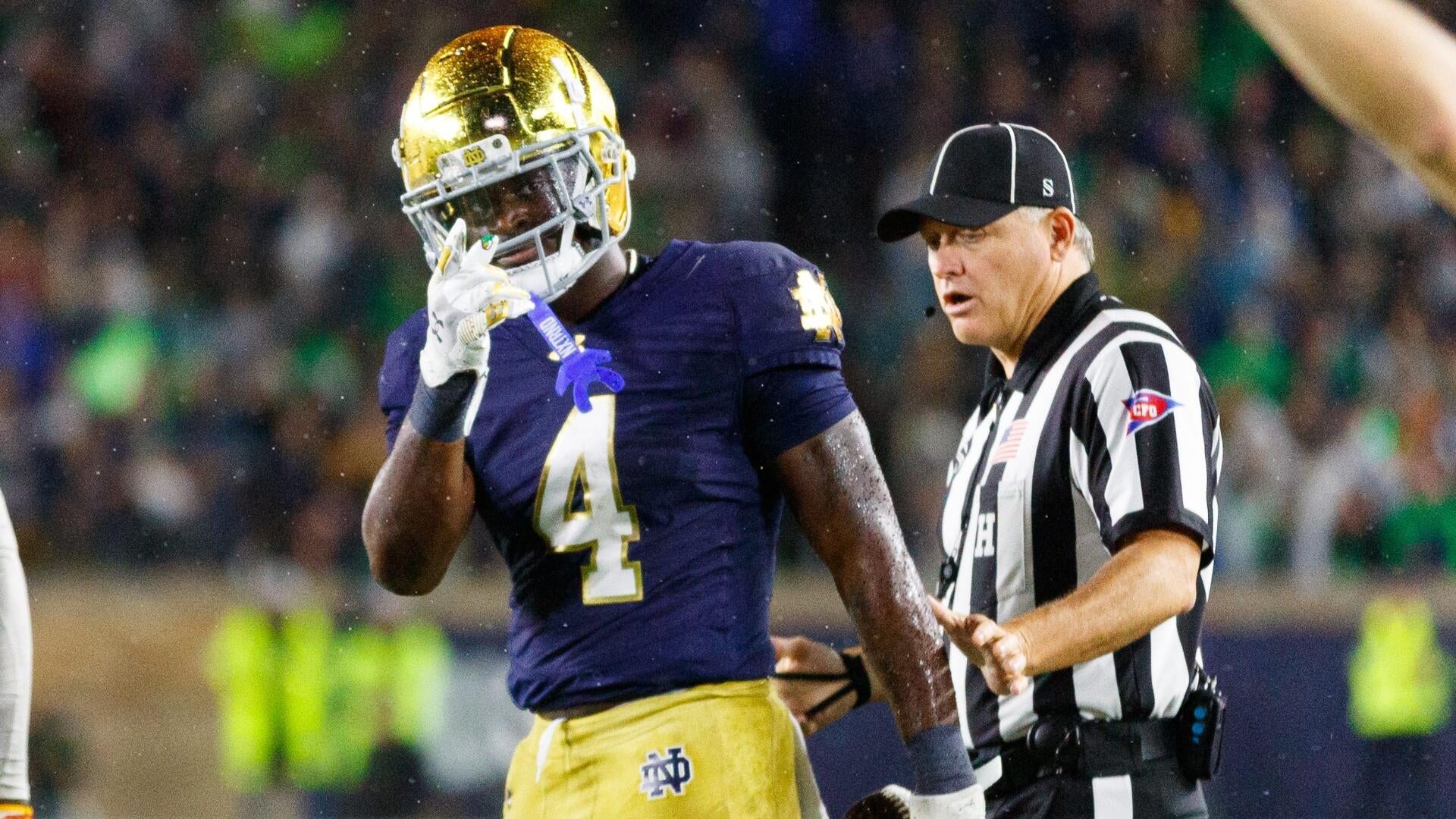
The moment the Las Vegas sportsbooks posted their first Offensive Rookie of the Year odds on 23 April 2026, Jeremiyah Love occupied the top line. That status — clear ROY favorite heading into a rookie season — brings with it a particular kind of pressure: the market has decided you are the pick of your entire draft class before a single regular-season snap has been taken.
Love, selected in the first round of the 2026 NFL Draft, enters the professional ranks with a pedigree that produced those favorable odds. He was the first pick in what observers called one of the deepest offensive rookie classes in recent memory. That distinction matters: ROY voting historically rewards players who produce early, produce visibly, and whose teams win. Love checks two of those three boxes on paper. Whether he checks the third will determine whether the opening odds hold or collapse.
The betting markets have not waited for the season to begin to draw sharp lines. Three distinct wagers have emerged as the most discussed among handicappers tracking the rookie class, according to ESPN reporting on 24 April 2026 — each one calibrated to a different theory about how this draft class will translate to professional performance.
The Favorite's Weight
Love carries the favorite's burden for a reason that transcends narrative: his selection slot projects immediate role and volume. First-round wide receivers and running backs who land with competitive teams tend to see targets early. The draft capital invested by his franchise signals an expectation of usage that rarely evaporates once the regular season begins.
But being the ROY favorite at the open is not a reliable indicator of winning it. The award has historically favored players who either posted overwhelming statistical seasons — the kind that force a national conversation — or who generated narrative momentum through team success paired with visible individual contributions. Love needs both. His supporting cast will matter as much as his own production. A middling team record can bury even excellent individual numbers, particularly at offensive skill positions where the award has concentrated its voting in recent cycles.
The sportsbooks setting those opening lines know this. The favorability in Love's odds reflects a combination of draft capital, positional value, and the market's read on his landing spot — not a prediction of individual season-long performance. Those are different things, and the gap between them is where most ROY upsets are born.
The Challengers Forming
Immediately behind Love on the odds board, according to ESPN's 24 April reporting, sit two names that veteran scouts flagged throughout the pre-draft process: Tate and Mendoza. Each arrives via a different pathway to professional relevance, and each presents a distinct argument against Love's odds holding.
Tate enters the conversation as a polished route-runner selected in the second round by a franchise that has shown consistent willingness to involve rookie wide receivers early in their development curve. The pre-draft analysis highlighted his ability to create separation in contested situations — a skill that translates well to the intermediate passing game and one that tends to produce receptions and yards even when a rookie offensive line is still developing chemistry.
Mendoza, the third name generating significant wagering interest, profiles differently. His pre-draft evaluation centered on downfield contested-catch ability and red-zone threat potential. If he lands a role in a red-zone heavy offense — or if his team shows a willingness to manufacture touches near the goal line for a player with his size-and-hands combination — his path to ROY contention runs through touchdowns, which tend to register more heavily in award voting than yards from scrimmage alone.
The three-name framing matters because it reflects how the market is thinking about this class: not as a two-horse race but as a cluster of candidates whose final order will depend heavily on opportunity structures that will not become legible until the regular season is underway.
What Makes This Class Different
The 2026 draft produced two franchise picks in its first three selections — a concentration of early talent that draft analysts described as unusually dense. That density has practical implications for the ROY conversation: when multiple first-round picks project as immediate contributors, the statistical competition for the award intensifies. There is no single obvious candidate. There are several, each carrying different risk profiles.
For Love specifically, the presence of Tate and Mendoza as credible challengers means that his path to ROY is not simply a matter of personal production. He needs to outpace players who were drafted with intention by franchises that may have made different strategic assessments about where their rookie contributions are most valuable. If Tate emerges as a reliable underneath option in a high-percentage passing game, his counting stats may prove less eye-catching than Love's but his offensive value could be proportionally significant. If Mendoza catches 40 balls but 10 of them are touchdowns, the narrative around his rookie season will dwarf whatever Love produces in volume.
The betting action around these three names suggests the market has not resolved those questions — it has simply placed Love first among a group of unresolved alternatives. That is a meaningful distinction. The odds board is not a prediction; it is a current-state assessment of how a group of handicappers is reading the available information. That assessment will shift once training camp practices and pre-season games begin to produce real usage data.
The Stakes and What Follows
For Love, the opening favorite status is a starting position, not a verdict. The NFL's history with ROY favorites who did not win the award is long and populated with players who produced solid rookie seasons without producing the kind of season that forces a movement in the voting. The award has proven resistant to narrative in the sense that it does not reliably credit players for being close — it rewards the candidate whose statistical season most clearly outpaces the field.
What the betting market has established, according to the April 2026 coverage, is that this rookie class has captured attention at a level that exceeds typical post-draft interest. The wagering volume around ROY odds — across Love, Tate, Mendoza, and the broader field — reflects an audience that sees real competitive density in the draft's top offensive talent. Whether that density translates to a contested award or to a dominant single-candidate season will become clear over the seventeen weeks of the regular season.
The opening line is set. The market has spoken. Now comes the part where the game answers the questions the odds cannot.