The Escalation Nobody Wants to Name
Israeli strikes in southern Lebanon on 25 April 2026 are not border friction. They are a deliberate pattern — and the absence of serious diplomatic pressure to stop them is itself a policy choice.
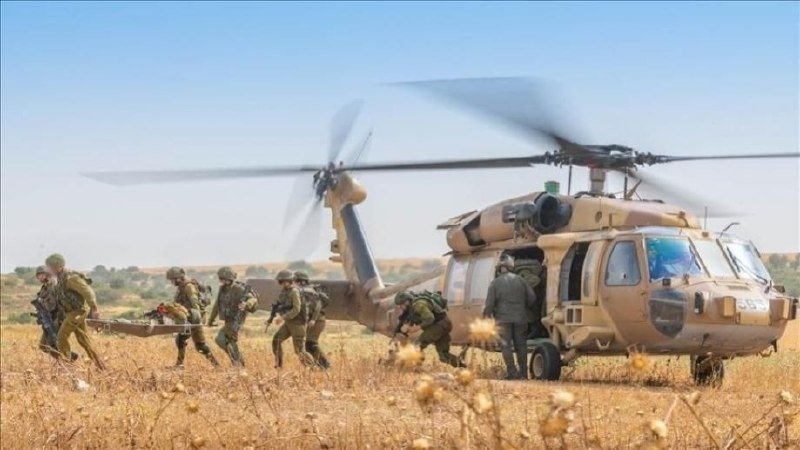
On 25 April 2026, Israeli forces struck a vehicle in Yohmor, southern Lebanon — an assassination-style operation, not a patrol response. Within hours, a separate Israeli drone strike hit another vehicle in the same area, Yohmor Al-Shaqif. Hezbollah responded with a drone attack targeting Israeli army engineering equipment in the south Lebanon zone. That same day, additional Israeli activity was reported in the border town of Yahmar al-Shaqif. Four incidents, one day, along a frontier that the world has grown accustomed to treating as background noise.
This publication does not treat it as background noise. Neither should anyone else.
The framing problem
The default language around Israel-Lebanon incidents — carried in wire briefs, government statements, and diplomatic communiqués — frames each strike as a discrete, defensible action within an ongoing security calculation. Targeted killings become "operations against terrorist infrastructure." Cross-border strikes become "defensive responses to threats." Drones targeting vehicles become "precision engagements." Each individual act is justified in isolation. The cumulative pattern is never named as what it is: escalation with intent.
The sources describing the 25 April events are partial by nature — Telegram channels, some with regional affiliations, reporting what is visible from the Lebanese side of the border. This publication attributes them as such: Lebanese media and regional channels reported an Israeli strike on a vehicle in Yohmor; war-adjacent OSINT accounts confirmed the drone strike on a second vehicle in the same town; Hezbollah's media arm reported the counter-strike on Israeli engineering assets. The Israeli military had not published a formal statement confirming operations at the time of filing. That asymmetry is itself revealing. Operations that require explanation are rarely announced before the fact; they are acknowledged, if at all, after.
What changes and what does not
The most consequential word in coverage of this conflict is "escalation." It is applied selectively. Western capitals have used it freely to describe Iranian nuclear advances, Venezuelan moves in disputed territory, or Chinese reclamation in the South China Sea. It is used far more reluctantly when the pattern originates from a Western-aligned state. The linguistic differential is not accidental. It reflects a calculation — sometimes explicit, sometimes institutional — that naming escalation by allies creates diplomatic costs without obvious benefit, while the security calculus of the actor in question is treated as given.
But the security calculus changes when assassination operations replace patrol responses. An army that strikes individual vehicles is not managing a frontier — it is clearing persons of interest. An armed movement that responds by targeting engineering equipment is not skirmishing — it is signalling escalation capacity. Both sides are moving up a ladder they have climbed before, in 2006 and repeatedly since. The difference now is that the diplomatic architecture that previously offered at least a notional ceiling — UN Security Council Resolution 1701, the ceasefire understandings, the various diplomatic back-channels — has been allowed to erode to the point of irrelevance.
The structural silence
There is no active ceasefire mediation between Israel and Hezbollah as of the filing date. There is no designated envoy. There is no international pressure campaign of the kind that accompanies equivalent flashpoints in other theatres. This is not an oversight. It reflects a deliberate choice — or a series of choices so consistent they amount to the same thing — to allow Israel maximum operational latitude in a secondary theatre while the primary diplomatic focus remains fixed on Iran.
The logic, from Washington and Tel Aviv, runs roughly as follows: Hezbollah poses a threat; that threat is most effectively managed through attrition, targeting, and signal destruction; diplomatic constraints on that campaign would limit operational options; therefore the diplomatic architecture is quietly deprecated rather than actively maintained. This publication finds that logic coherent but ultimately self-defeating — and not only because of the civilian toll on both sides of the border.
Hezbollah's leadership has made clear, through official statements and proxy messaging, that cross-border operations carry consequences. The 25 April drone strike by Hezbollah targeting Israeli engineering assets was not a message in isolation — it was a proof of concept. The group retains strike capacity despite three years of degradation. Absent a negotiated arrangement that addresses both the Israeli security concerns and the Lebanese state's territorial sovereignty, that capacity will be used again.
The stakes in plain terms
If the pattern of targeted operations and responses continues without a diplomatic off-ramp, the most likely outcome is a concentrated escalation episode — not a gradual, manageable friction but a sharp, short war fought at close range across populated terrain. Lebanon's state institutions, already strained, would face immediate humanitarian demands. Israel's northern communities would face rocket and drone saturation in ways the Iron Dome can mitigate but not eliminate. The refugees who fled from southern Lebanon in 2023 have not returned; a new displacement cycle would test UN agency capacity and regional state tolerance simultaneously.
The diplomatic cost of a new Lebanon war is not hypothetical. It would consume the remaining bandwidth of any administration attempting to manage a nuclear file, a Gaza file, and a Ukraine-adjacent file simultaneously. The argument that allowing operational latitude now prevents a larger war later has been made before. It was not conclusively validated in 2006, and it is not self-evidently validated by the current trajectory.
What responsible coverage looks like
This publication is aware that calling for diplomatic urgency in an Israel-adjacent context requires precision. Israeli security concerns are real and non-trivial. Hezbollah's operational posture is not defensive in the narrow sense — it includes offensive strike capabilities directed at Israeli civilian infrastructure. Both facts are first-order realities, not competing abstractions.
But first-order realism also requires naming the pattern. On 25 April 2026, Israel conducted at least two targeted strikes in southern Lebanon and was met by a Hezbollah drone operation. Neither side signaled appetite for de-escalation. Neither side was asked to signal it by any external actor with leverage. That absence — of a single public statement from any G7 capital calling for restraint and a return to Resolution 1701 terms — is a data point. It deserves to be read.
The frontier is not quiet. The silence from the capitals that once would have filled it is not neutrality. It is a policy, and it has consequences that will arrive whether or not anyone names them.
Wire provenance
This editorial synthesis draws on the following public wire/social posts:
- https://t.me/tasnimnews_en
- https://t.me/rnintel
- https://t.me/wfwitness
- https://t.me/alalamarabic