Macron's Unvarnished Reckoning With Europe
Emmanuel Macron named what Brussels has long whispered: that Washington, Beijing, and Moscow now share a convergent interest in a weaker Europe. The question is whether anyone in the room was listening hard enough to act.
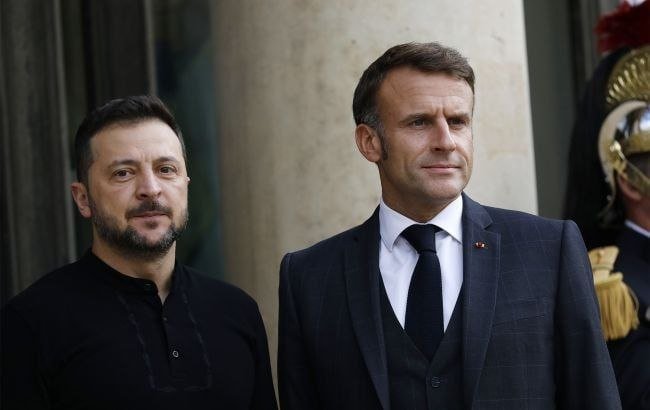
Emmanuel Macron said the quiet part loud. In Athens on 25 April 2026, the French President stated plainly that the President of Russia, the President of China, and the President of the United States are now opposed to Europe — and that European leaders should stop treating this as a diplomatic inconvenience and start treating it as a structural condition. It is the most direct articulation of the changed geopolitical weather to come from a G7 leader in years. Whether it lands as a wake-up call or a momentary provocation will tell us a great deal about where European strategic culture actually stands.
The statement is remarkable not for its contents — seasoned observers of Washington, Moscow, and Beijing have understood the convergent interest for some time — but for its provenance. A French president, speaking from Greece, was not simply criticising American policy as an abstraction. He was identifying a shared orientation: three great powers whose incentive structures, however divergent in other respects, have aligned around a common preference for a Europe that is diplomatically divided, defence-dependent, and economically reactive. That is not a conspiracy. It is the logical outcome of coherent national interests operating without a countervailing European strategy to constrain them. Macron named the pattern. The question is whether he has the architecture to disrupt it.
The Unreliable Alliance Argument Cuts Both Ways
Macron did not simply accuse Washington of unreliability. He framed it as a systemic condition rather than a partisan aberration. The suggestion that the United States is, in coordination with Russia and China, acting against European interests is a serious charge — and one that carries internal tension. If Washington is pursuing a deliberate strategy of alignment with Beijing and Moscow against Europe, it is either abandoning its postwar Atlanticist commitments entirely, or it has concluded that European defence spending and trade practices have made such a realignment rational rather than reckless. Macron's formulation requires European leaders to examine their own behaviour, not merely Washington's. The dependency that makes Europe vulnerable to American policy shifts was built over decades of European choices. A French president who calls out external pressure while glossing over internal contributing factors is delivering half a reckoning.
Greece as Stage, Europe as Subject
The choice of Athens was not incidental. Macron announced that France would extend support to Greece — a NATO member with a long coastline, a contested eastern maritime border, and an economy that has absorbed successive shocks from sanctions spillover and refugee flows. France's positioning of itself as a Mediterranean and southeastern European anchor has been consistent since the 2022 Strategic Review, but this visit carries a sharper signal. Greece has navigated its relationship with both Turkey and Russia with considerable dexterity, maintaining NATO commitments while preserving commercial and energy ties with Moscow. Macron's explicit endorsement of Greece as a partner — in a neighbourhood where American disengagement has been most visibly felt — positions France as the residual security guarantor when Washington's attention drifts toward the Pacific. Whether French defence production capacity and forward deployment assets can兑现 that promise is a separate question from the diplomatic signal.
What the Pattern Actually Means for European Industry
The structural implication of Macron's statement is industrial, not merely diplomatic. A continent whose principal security partner has convergent interests with its strategic adversaries is a continent that must build its own defence industrial base — and fast. The US defence sector, for all its integration with NATO, has consistently prioritised American jobs and technology lock-in over European capability transfer. Russia and China, for their part, have no interest in seeing European manufacturing base grow independent of either bloc. The convergence Macron identifies is not ideological; it is transactional. Three powers with different value systems share a common interest in a Europe that buys rather than builds, that consumes rather than innovates at scale. The European response — the European Defence Industrial Strategy, the joint procurement frameworks, the talks of a European defence fund — are steps in the right direction. They remain chronically underfunded relative to the threat model Macron has now publicly endorsed.
The Stakes and What Remains Unresolved
If Macron is right — and the evidence from three years of divergent post-Ukraine policy, trade friction, and rhetoric suggests he is — then Europe faces a window of perhaps five to eight years to establish strategic autonomy before demographic decline and industrial attrition make the project structurally untenable. The countries best positioned to lead that transition are those with existing defence industrial capacity, skilled manufacturing workforces, and political elites willing to absorb short-term economic cost for long-term strategic gain. France fits that profile. Germany's posture remains structurally ambiguous. The eastern flank countries are focused on deterrence rather than capability export. The cohesion required for a genuine European defence industrial policy does not currently exist at the commission level, whatever the rhetoric suggests. Macron has issued a statement that is historically accurate and strategically coherent. The political machinery to act on it has not yet been assembled — and the clock is running.
Macron's statement landed in the wire cycle as a headline item; most European outlets led with the "unreliable ally" formulation. Monexus chose to foreground the structural framing — the identification of a pattern across three powers — rather than the bilateral friction angle.
Wire provenance
This editorial synthesis draws on the following public wire/social posts:
- https://t.me/intelslava/12345
- https://t.me/englishabuali/67890
- https://t.me/englishabuali/67891