Mali's sovereignty mirage: the junta's narrative collides with reality
Coordinated attacks across Mali expose the hollowness of the junta's sovereignty claims — and raise uncomfortable questions about who actually benefits when the state's narrative collapses.
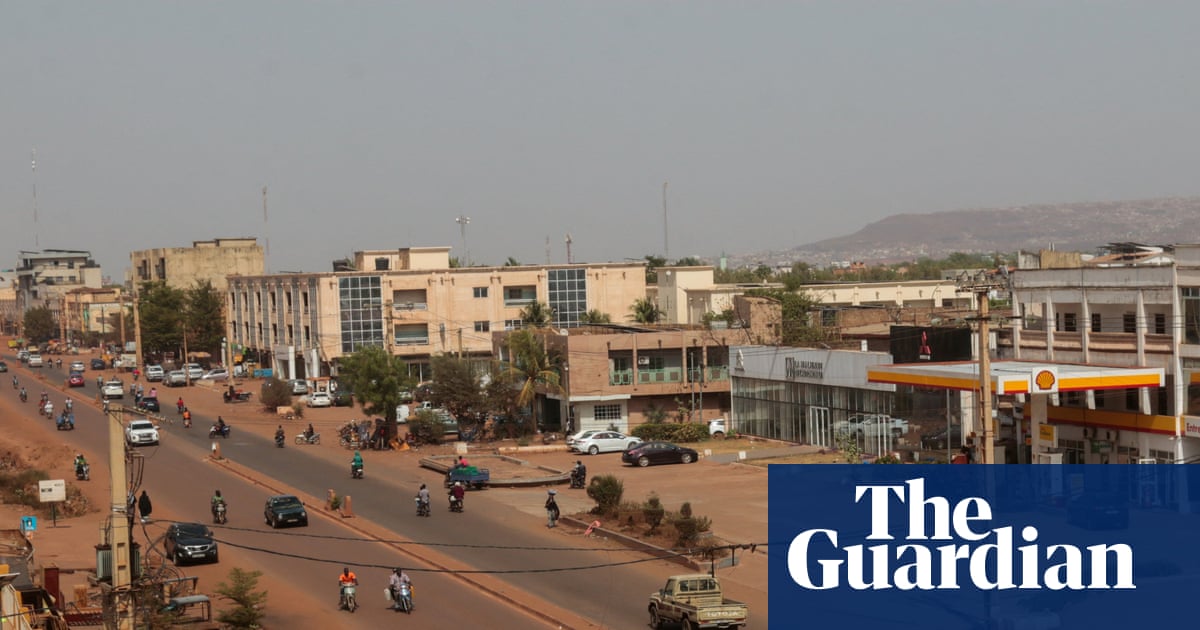
On 25 April 2026, Mali's army reported that coordinated attacks by unidentified armed groups had struck military positions across the country, including heavy gunfire in the capital, Bamako. The army described the assailants as "terrorist" groups — the same label the ruling military junta has applied to every security threat since seizing power in 2020. But the label is doing heavy lifting that the facts cannot support. What the attacks actually reveal is a sovereignty narrative in freefall, and a population paying the price for political choices made far above their heads.
The junta's position is clear and consistent: Mali was infantilised by decades of French and Western interference, and the only path to genuine security runs through sovereign self-reliance. French forces were expelled in 2022 and 2023. The United Nations peacekeeping mission, MINUSMA, was forced out in 2023 after the junta declared it an obstacle to sovereignty. Russian military contractors arrived to fill the gap. The message was unambiguous — Mali would stand alone. The events of 25 April suggest that standing alone has not delivered what was promised.
The sovereignty card
The junta's framing is not unique to Bamako. Across the Sahel, military governments that came to power through coups in Mali (2020, 2021), Burkina Faso (2022), and Niger (2023) have invoked sovereignty as both shield and sword. The argument runs that external military presence — whether French troops, UN peacekeepers, or American drone operators — is inherently destabilising, that it substitutes for domestic capacity rather than building it, and that its removal is a precondition for genuine security. There is a structural logic to some of these arguments. The record of foreign intervention in the Sahel is at best mixed. France's Operation Barkhane ran for nine years and failed to contain the jihadist insurgencies it was designed to roll back. MINUSMA, for all its operational commitment, was repeatedly accused by the junta of overreach and disrespect for Mali's sovereign choices.
But the counter-argument cuts deeper. The removal of external security guarantees has not produced a domestic alternative capable of filling the void. Mali's armed forces, understaffed, under-resourced, and now politically compromised by their integration into the ruling junta's power structure, are struggling to hold ground against insurgents who operate fluidly across vast territory. The events of 25 April — coordinated strikes on military positions across multiple regions — are not the hallmark of a counter-insurgency in control. They are the mark of an insurgency pressing its advantage.
The Russian question
The junta's pivot to Moscow was presented as strategic sovereignty — diversification away from a Western patron that had failed to deliver results. Russian military contractors, widely identified as affiliated with the Wagner Group before the Kremlin formalised its Africa presence, offered a different kind of partnership: no democratic conditionality, no human rights auditing, and a willingness to support authoritarian governments without public friction.
The results have not validated the pitch. Violence has increased, not decreased, since the Russian presence expanded. Civilian casualties from both insurgent attacks and government counter-operations remain high. The junta now confronts an acute security crisis without the international legitimacy that Western partnership provided, and without the operational capacity that Russian contractors were supposed to deliver. This publication's assessment is that the structural dependency has simply shifted external actors — the underlying fragility remains.
What the sources do not tell us
The reporting from France 24 and ClashReport on 25 April is clear on the fact of coordinated attacks and ongoing fighting. It is far less clear on several material questions: the identity and affiliation of the attacking groups, their strategic objectives, whether the attacks represent a new escalation or a continuation of existing patterns, and what the junta's response strategy actually is. Initial accounts use the junta's preferred language — "terrorist groups" — without independent corroboration of that characterisation. This matters, because the label determines how the conflict is understood, funded, and discussed internationally. Armed groups in the Sahel include jihadist organisations with transnational ambitions, ethnic self-defence militias, criminal networks, and factions with shifting allegiances. Conflating them serves the junta's political narrative but obscures the strategic complexity that any effective response would need to address.
The structural pattern
What we are watching in Mali is not an anomaly. It is a recurring pattern in states where political authority has been captured by military actors who mistake control of the capital for governance capacity. The junta has consolidated power; it has not built institutions. It has expelled external actors; it has not developed domestic alternatives. It has made sovereignty claims; it has not exercised sovereignty in any meaningful sense that improves the lives of ordinary Malians.
The attacks of 25 April do not absolve the international community of responsibility — for the arms flows that sustain the insurgents, for the climate pressures that compound rural fragility, and for the years of governance failures by successive Malian governments that created the conditions for military rule. But the primary accountability rests with those who made the choices. If Mali cannot secure Bamako today, the question the junta must answer is not whether sovereignty was worth defending in principle. It is whether the specific form of sovereignty they chose has made Mali safer — and the evidence from the morning of 25 April suggests it has not.
The attacks were ongoing at time of publication. Monexus will update this analysis as verified information becomes available.
Wire provenance
This editorial synthesis draws on the following public wire/social posts:
- https://t.me/France24_fr/98765
- https://t.me/France24_en/87654
- https://t.me/ClashReport/76543