Jermod McCoy's Draft Slide Reveals How NFL Teams Value Certainty Over Talent
Jermod McCoy fell 101 picks in the 2026 NFL Draft after medical red flags spooked a league that had him rated as a first-round cornerback. The Raiders took the gamble. The question now is whether anyone else was right.
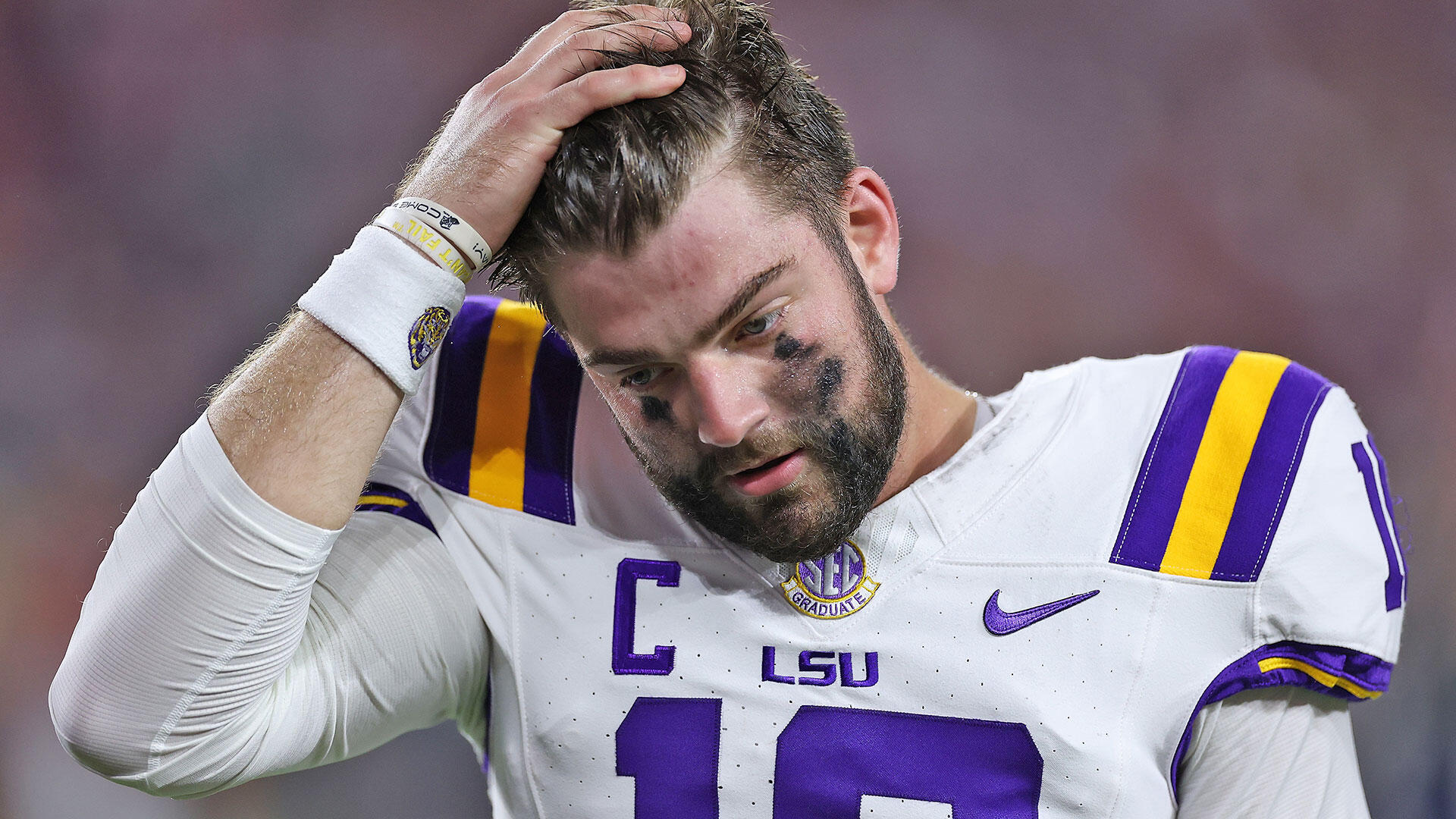
The Las Vegas Raiders selected Jermod McCoy with the 101st pick in the 2026 NFL Draft on 25 April 2026 — the first selection of Day 3 — hours after the cornerback told reporters his knee "feels good" and deferred to the team on whether another surgery is needed. The pick ended a remarkable freefall for a player whom multiple draft boards had ranked among the top defensive prospects in this class.
McCoy missed the entirety of the 2025 season with a torn ACL, and that absence was the entire story of his draft night. ESPN reported on 25 April 2026 that McCoy said his knee feels fine — but also acknowledged that the decision on further surgical intervention rests with the Raiders. Whether that uncertainty is a red flag or a manageable variable is a question the league answered by letting him fall past 32 teams.
The Fall
CBS Sports documented the slide in near-real-time. On 24 April 2026, its draft coverage identified McCoy as the biggest faller entering Day 2, noting that injury concerns had "clouded an elite cornerback" and that teams were weighing risk against upside as the first round unfolded without his name called. The cloud did not clear. By the time the Raiders went on the clock at 101, McCoy had become the draft's defining case study in how a single medical file can erase years of production.
Teams do not publicly explain why they pass on a prospect. The silence around McCoy's board is therefore informative: had one or two franchises been scared off by the knee, the other thirty would have moved. The fact that nearly every team reached Day 3 without selecting him suggests the injury concern was systemic, not idiosyncratic. Either the medical information was more ambiguous than a clean ACL recovery, or teams were applying a higher discount rate to uncertain knees than they had in previous cycles.
What Teams Were Actually Weighing
ACL tears are no longer career-enders. Modern surgical techniques and accelerated rehabilitation protocols have restored countless players to full performance. But the word that matters here is "full." Teams are not just evaluating whether McCoy can play again — they are pricing the probability that he returns to the level that made him a first-round grade.
That is a harder calculation than it sounds. Knee injuries carry variables that show up in pre-draft medical re-checks: quad atrophy, range-of-motion deficits, proprioception loss, graft choice, graft placement, concurrent meniscus damage. A player can be medically cleared and still lose a step. For a cornerback whose entire value proposition is footwork and hip fluidity, even a marginal reduction in explosiveness is not a rounding error.
The 2026 draft class also had depth at cornerback, which gave teams options. If you were going to take a chance on an injured prospect, you needed to believe the medical situation was manageable — or that the price was low enough to absorb the downside. The Raiders paid a Day 3 selection, which is effectively a lottery ticket at cornerback. That is a structurally different risk posture than using a first-round pick on a player whose 2025 season was a blank.
The McCoy Calculation
What we do not know is what McCoy's medical file actually contained. The sources describe a torn ACL and a missed season. They do not specify whether there were complications, additional structural repairs, or a slower-than-expected recovery timeline that would explain the league-wide hesitation. ESPN's reporting on 25 April 2026 quotes McCoy saying his knee "feels good" — but that is a player's assessment, not an independent medical opinion.
The ambiguity is the point. When a player has not played in over a year, teams are essentially forecasting based on limited data. Some saw a fully healed prospect who dropped through no fault of his own. Others saw a data set too thin to justify a high-selection investment. Both reads can be intellectually honest; they simply reflect different priors about how to handle uncertainty at a position of value.
What Comes Next
The Raiders now control McCoy's next chapter. If the training staff clears him without further surgery, he can begin proving the league wrong immediately — in training camp, in the preseason, in whatever window the team gives him to demonstrate that the 2023 and 2024 film was not a mirage. If they recommend another procedure, McCoy faces a second consecutive lost season, at which point his rookie contract will be largely theoretical.
The NFL has seen this movie before. Players fall on medical concerns, rediscover their form, and become foundational pieces. The league has also seen players whose recovery plateaus at 85 percent and never recaptures the burst that defined their game. The difference between those outcomes is not always visible in the pre-draft process. It shows up on the field, six months or two years later, when the film either holds up or does not.
McCoy's fall to 101 does not mean he is not a first-round player. It means thirty-two teams, each with independent medical staffs and independent risk tolerances, concluded that the certainty premium was too high to pay at that price. The Raiders disagreed — at the floor of the draft, on a contract that protects them if the knee does not hold. That is not sentiment. That is how professional sports manage the gap between talent and information.
—
McCoy is under no obligation to undergo additional surgery, per ESPN's 25 April reporting. The Raiders' medical staff will make that determination in the coming weeks. The team did not make its internal evaluation public as of publication.