Pakistan's Diplomatic Bridge: Inside Iran's Islamabad Mediation Gambit
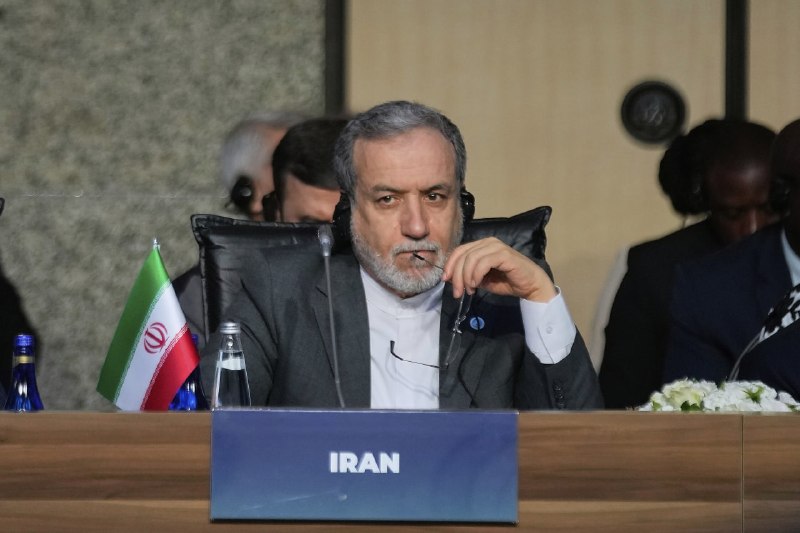
On the morning of 25 April 2026, Iranian Foreign Minister Seyyed Abbas Araqchi landed in Islamabad. By mid-morning he was seated across from Pakistan's Army Chief, Field Marshal Asim Munir. The agenda, according to the Iranian Foreign Ministry: discussions on the latest developments related to a ceasefire — one whose parameters have yet to be formally announced, but whose existence is now a diplomatic fact of the region's making.
The meeting carried the texture of work-in-progress rather than ceremony. Pakistani military sources indicated that Islamabad remains committed to continuing its mediation efforts until what they describe as "desired results" are achieved — language that suggests the Pakistani establishment sees itself as playing a longer game than a single diplomatic session allows. Araqchi, for his part, laid out Iran's positions and observations in full. Neither side issued a joint statement. None was expected.
What the encounter signals, however, is something more structurally significant: Iran and Pakistan have quietly built one of the more functional diplomatic channels in a region where most channels have broken down. And both governments are now leaning into that asset at a moment when the regional ceasefire architecture — whatever form it ultimately takes — is being negotiated by parties who do not always talk to each other directly.
The Regional Tour and Its Purpose
Araqchi's visit to Pakistan was not isolated. It was the opening leg of a broader regional tour, described by Iranian state outlets as a first destination in a programme designed to take Tehran's ceasefire views to multiple capitals simultaneously. The sequencing matters: Islamabad was chosen as the opening move because Pakistan occupies a position that is both proximate to Iran and connected, through different channels, to most of the powers involved in the current regional negotiations.
The ceasefire in question — the one Araqchi came to discuss — appears to involve multiple theatres. Iranian state media did not specify a single conflict, but the language of "ceasefire" in the context of Tehran's current diplomatic posture tends to encompass at least two overlapping tracks: the broader Middle Eastern dynamics involving Israel and Iranian-aligned groups, and the ongoing consequences of the Gaza war and its spillover effects across Lebanon, Yemen, and Syria. That Pakistan's Army Chief — not the civilian foreign ministry, and not the prime minister's office — was the primary counterpart, reflects a pattern that has become more pronounced in Islamabad's foreign policy conduct: the military maintains a parallel diplomatic channel that often moves faster and with more operational specificity than the formal civilian track.
What Araqchi conveyed to Munir is not public in full. Iranian Foreign Ministry statements described it as an explanation of "Iran's views and observations regarding the ceasefire" — phrasing that is deliberate in its imprecision. Tehran is not in a position to dictate ceasefire terms anywhere. But it is very much in a position to shape what any final arrangement looks like by making its red lines and preferences known in advance, to as many relevant capitals as possible, before the shape of the deal solidifies.
Pakistan's Role as Intermediary
The idea that Pakistan would serve as a mediating bridge for Iran is not new — the two countries share a 959-kilometre border and a complex history that includes periods of deep mistrust and periods of pragmatic cooperation. But the current configuration has given that potential new life.
Pakistan's relationship with the United States remains complicated, but it is no longer structured around the dependency that defined it during the Afghanistan decades. Pakistan's relationship with China is deep and institutionalised through the China-Pakistan Economic Corridor and the broader Belt and Road architecture. And Pakistan maintains working-level contacts with most Gulf states, with Turkey, and — through back-channels — with actors who do not formally recognise Tehran.
This positioning does not make Pakistan a neutral party. It makes Pakistan a useful party — which is a different thing, and often more valuable in mediation terms. A neutral party has no leverage over any side. A useful party can carry messages, test propositions, and flag misunderstandings before they become crises.
Field Marshal Munir has made clear, according to the Iranian Foreign Ministry's readout, that Pakistan is prepared to continue its mediation efforts "until the desired results are achieved." That language was not present in the initial framing of Araqchi's visit — it appeared in the follow-up statement, after the meeting, suggesting that the Pakistani side left the conversation with a renewed sense of the task's importance.
The Structural Picture
Any ceasefire arrangement in the current Middle Eastern context involves parties who view each other with profound hostility and who have fought, in multiple cases, without interruption for more than a year. The negotiating challenge is not merely technical — it is political in the deepest sense. What constitutes a ceasefire when one party's victory conditions are the other party's existential threat?
Iran does not enter these conversations from a position of strength in the conventional sense. Its economy remains under sweeping Western sanctions. Its nuclear programme is the subject of ongoing international tension. Its regional posture — expressed through aligned groups in Lebanon, Yemen, Iraq, and Syria — is both its principal source of leverage and its principal exposure to the kind of military pressure that Washington and its partners have signalled they are prepared to apply.
But Iran does enter the conversations with something else: a structured set of interests and red lines that are internally coherent, a regional network of partners who share some portion of those interests, and — critically — the ability to make any ceasefire deal either very costly to violate or very difficult to sustain without Iranian buy-in.
The United States, for its part, has been engaged in parallel conversations with multiple regional actors. The role of intermediaries — states that can talk to all sides without being formally aligned with any single one — has become more prominent precisely because the direct diplomatic channels remain either absent or deeply restricted. Pakistan occupying that role, on Iran's behalf, does not mean Islamabad is now Iran's advocate in the room. It means Islamabad is doing what a country with Pakistan's geographical and political circumstances does: keeping the door open on every track simultaneously.
What Remains Unresolved
The sources consulted for this article describe the Araqchi-Munir meeting in terms of information exchange rather than negotiation — Araqchi explaining Iran's positions, Munir conveying Pakistan's read of the regional temperature. The ceasefire discussions appear to be at the stage where parties are still mapping each other's positions rather than trading specific proposals.
What is not yet clear is whether the ceasefire framework being discussed in these regional capitals corresponds to a document or a set of principles that is shared across all the relevant parties, or whether each capital is working from its own version of what the arrangement might eventually look like. The absence of a joint statement from the Islamabad meeting suggests the latter is, at minimum, a possibility.
The structural question — whether a mediated ceasefire in the current environment is achievable without addressing the underlying grievances that produced the conflict — is one that neither side in this conversation has publicly engaged with. What the Pakistani mediation effort can do, at best, is buy time and create a sufficiently stable political environment for those harder conversations to eventually take place. Whether Iran and its adversaries are prepared to have those conversations is the question that this diplomatic architecture, for all its activity, has not yet answered.
Desk note: The wire coverage of this story drew heavily from Iranian state-affiliated outlets — Al-Alam Arabic and Tasnim News — whose framing naturally foregrounds Tehran's agency in the meeting. Western wire services had not published counterpart reporting on the Islamabad session as of this article's filing. Monexus has centred the bilateral channel as described in those sources while flagging, where the evidence allows, the structural context that gives Pakistan's mediation role its particular character in 2026.
Wire provenance
This editorial synthesis draws on the following public wire/social posts:
- https://t.me/alalamarabic/88432
- https://t.me/alalamarabic/88430
- https://t.me/alalamarabic/88429
- https://t.me/wfwitness/88107
- https://t.me/FarsNewsInt/66103
- https://t.me/tasnimnews_en/55791
- https://t.me/JahanTasnim/44318
- https://en.wikipedia.org/wiki/Iran%E2%80%93Pakistan_relations