Paper Thin: What Trump and Iran Can Agree On Is the Problem
A revealing exchange over the quality of a negotiating document exposes the deeper dysfunction at the heart of US-Iran nuclear diplomacy — and the gap between performance and substance that has defined this chapter of engagement.
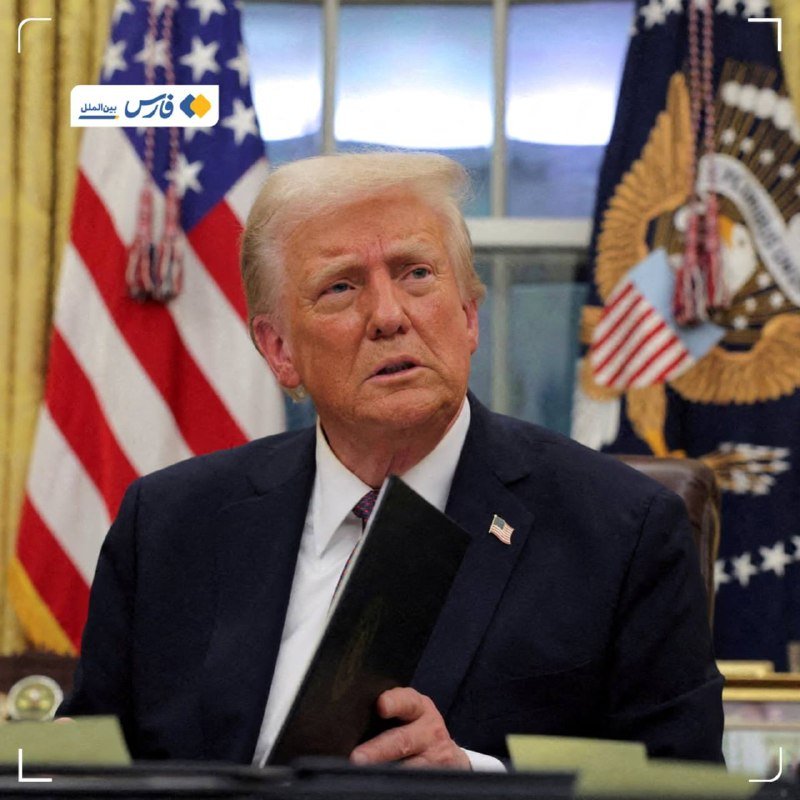
On 25 April 2026, President Trump offered a blunt verdict on an Iranian negotiating document: it was not good enough. The Iranians, he said, had presented a paper that should have been better — and he responded by canceling the departure of the American delegation. The exchange, reported via Telegram channels carrying Iranian opposition commentary, captures something that observers of US-Iran diplomacy have long recognised: the two sides are not merely far apart on substance. They are operating according to entirely different logics of what a negotiation is supposed to look like, and what constitutes progress.
The incident is small in isolation. But it condenses the central problem of nuclear diplomacy between Washington and Tehran into a single, almost theatrical moment. One side treats the document as the negotiation. The other treats the cancellation of a delegation as the negotiation. Both are signalling — to each other, to domestic audiences, and to third parties watching the talks — but the signals are in dialects neither party has fully learned to read.
The Document as Theatre
Trump's instinct, as public statements consistently indicate, is to treat negotiations as performance with consequences. The paper Iran presented failed a standard the administration had not publicly disclosed: it was not impressive enough to justify the optics of continued engagement. Canceling the delegation — suspending the moment of diplomatic contact — was itself meant to communicate. It was a move designed to shift leverage, to signal that American patience is not infinite, and to place the burden of next steps back on Tehran.
This approach has defenders who argue it reflects the realities of negotiating with an adversary whose default posture is strategic patience. Iranian negotiators have, over decades of sanctions and isolation, developed a tolerance for cycles of pressure and partial relief that Western counterparts often find maddening. A paper that meets the technical requirements of a draft agreement may still be, in the White House's calculus, a paper that fails the larger political test of demonstrating seriousness.
The Iranian Counterplay
The reaction from Iranian opposition voices — specifically an online activist cited in the thread reporting the exchange — frames Trump's move as predictable rather than shrewd. The activist characterises what they describe as the predicament of skilled Iranian negotiators who understand the art of the process, encountering an American negotiating style built on a different set of assumptions about what pressure accomplishes.
Iran's negotiators, under Supreme Leader Ayatollah Ali Khamenei's strict guidelines, have historically operated with a logic of resilience: absorb pressure, extract concessions at the margins, never appear desperate, and never sign a document that can be presented domestically as capitulation. The Iranian system is, in this sense, structurally allergic to the kind of visible, high-stakes transactional diplomacy that the Trump administration appears to prefer. When the paper came back and was rejected, Iranian officials likely read it not as a negotiating setback but as confirmation that the American side was primarily interested in a spectacle of strength rather than a document of substance.
The Gap Between Signal and Substance
What the 25 April exchange reveals is not a failure of communication but something more structural: a fundamental disagreement about what negotiations are for. American diplomacy — particularly in its current administration iteration — tends to treat negotiations as a sequence of moves toward a defined outcome, with visible concessions serving as progress markers. Iranian diplomacy treats negotiations as a context for managing an adversarial relationship, where the document produced is less important than the relationship preserved and the red lines maintained.
This is not a novel observation. It has been made, in various formulations, by every serious analyst of US-Iran relations over the past two decades. But the repetition of the pattern — the paper, the rejection, the cancellation, the gap between what each side says publicly and what it understands privately — suggests that structural understanding of the other's logic does not automatically produce the capacity to operate within it.
The media framing of these exchanges tends to flatten this complexity into a simpler story: progress or impasse, deal or no deal. The more interesting dynamic is what happens in the space between those poles, where both sides are simultaneously negotiating with each other and performing for their own domestic audiences. The paper Iran submitted was, by definition, a document both sides could claim as their own. The American rejection of it was, in part, a refusal to let that ambiguity stand.
What Comes Next
The immediate aftermath of such moments is typically a period of back-channel communication — intermediaries, unofficial channels, statements crafted to walk back the temperature without walking back the substance. The sources reviewed do not indicate whether such channels are currently active or what the Iranian government's formal response to the delegation cancellation has been. What can be said is that the underlying dynamic — American pressure, Iranian resilience, the absence of trust, the presence of mutual necessity — remains intact.
The stakes are not abstract. A collapsed negotiating track increases the likelihood of accelerated uranium enrichment, further sanctions, and a regional security environment in which both Israeli and American military options become more salient. Neither side has an interest in that trajectory, which is precisely why the cycle of paper-rejection-and-cancellation will almost certainly be followed by another attempt to restart the process. The question is whether the accumulated weight of failed openings makes the eventual breakthrough more or less likely — whether each public rupture burns the bridge or merely renovates it.
This publication's Telegram thread focused on Iranian opposition commentary and the Trump administration's public statements on the paper exchange. Western wire framing emphasised the delegation cancellation as a negotiating tactic; the thread framing gave greater weight to the Iranian internal perspective on what skilled negotiators face when engaging Washington's current style.
Wire provenance
This editorial synthesis draws on the following public wire/social posts:
- https://t.me/englishabuali
- https://t.me/englishabuali
- https://t.me/englishabuali