Shanoo Sharma's Wedding Spotlights Bollywood's Undercelebrated Casting Directors
When casting director Shanoo Sharma announced her marriage, Bollywood's A-list responded with unusual enthusiasm. The reaction reveals something telling about how the industry values the people who discover its stars.
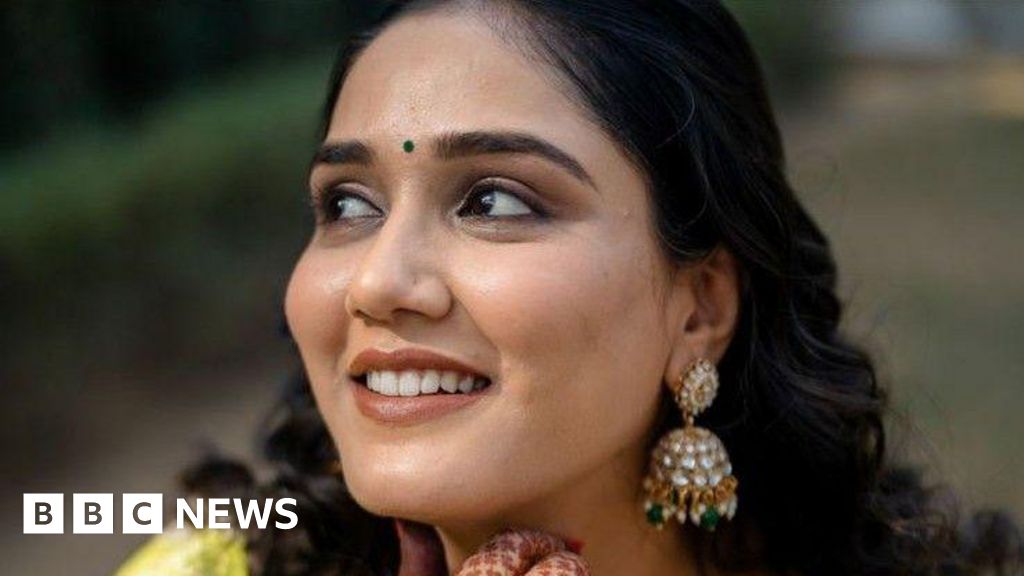
When Shanoo Sharma announced her marriage, the congratulations arrived from Ranveer Singh and Parineeti Chopra within hours. The warmth was genuine; so was the subtext. Bollywood celebrates actors, directors, producers — the names that appear on posters. Casting directors rarely generate this kind of public response, which makes the moment worth pausing over.
Sharma spent nearly two decades at Yash Raj Films, one of India's most consequential studios, before departing in 2023. During that tenure she cast dozens of films across the franchise spectrum, from high-budget spectacles to mid-tier dramas. She worked under Aditya Chopra's production regime and helped identify talent that became marquee names. The announcement of her wedding prompted widespread industry acknowledgment precisely because Sharma is not someone who typically occupies that public space.
The casting director role in Bollywood has historically occupied an ambiguous position: essential to production, largely invisible to audiences. Unlike Hollywood, where figures like Allison Jones or Deborah Aquiela have achieved genuine name recognition, India's casting professionals have operated largely behind a professional curtain. Sharma's public moment of recognition is unusual — and that unusualness tells us something about how Bollywood structures its hierarchies of prestige.
A Quiet Architecture
Every major Bollywood release involves casting decisions that shape not just individual films but the industry's talent pipeline for years. Sharma's work at Yash Raj involved identifying and vetting actors across multiple tentpole franchises. The studio's casting function under her watch was considered a genuine competitive advantage — a systematic approach to talent assessment in an industry where nepotism and networking often override systematic evaluation.
That systematic approach is worth noting. Bollywood's casting ecosystem runs on relationships, referrals, and the informal networks that characterize Indian film production. A casting director who builds a reputation for consistent, professional execution across a major studio's slate is operating against considerable structural inertia. Sharma's longevity at Yash Raj — nearly twenty years — suggests she succeeded in institutionalizing something that typically resists institutionalization.
Her departure from the studio in 2023 did not generate the same wave of public commentary as her wedding announcement has this week. The professional departure warranted industry attention; the personal milestone generated A-list response. This asymmetry is not unique to Bollywood — celebrity culture globally rewards personal narratives over professional achievements — but it is worth noting in an industry increasingly grappling with questions about who deserves credit for its products.
The Stardom Paradox
The congratulatory messages from Singh, Chopra, and others reflect genuine professional respect. But they also reveal something about how Bollywood constructs fame. Sharma's visibility spikes on an occasion that has nothing to do with her professional contribution — she becomes a subject of public discussion at a moment when she is not working, when the act being celebrated is entirely personal. The films she cast continue to circulate; the careers she helped launch continue to develop. Yet those professional accomplishments generate comparatively little public acknowledgment.
This is not a complaint about Sharma's recognition so much as an observation about the industry's signaling mechanisms. When a casting director becomes newsworthy through a wedding rather than a casting decision, it suggests the industry's public vocabulary is limited to a narrow band of events. The work that shapes careers, that determines who gets seen and who gets bypassed, remains invisible to the audiences whose consumption decisions validate the entire enterprise.
There is a structural argument here that goes beyond Sharma herself. Casting directors occupy a leverage point in the entertainment economy that their public profile does not reflect. They see more talent than almost anyone; they make filtering decisions that gatekeep access to the industry's most valuable resources. That kind of gatekeeping function attracts little public scrutiny because it operates below the threshold where audiences pay attention.
Professionalization and Its Limits
Bollywood's casting ecosystem has seen genuine professionalization over the past two decades. Organizations and certifications exist; standardized audition processes have become more common at larger studios. Sharma's career trajectory reflects this shift — her reputation was built on process, on systematic evaluation, on a professional practice rather than pure intuition or personal connection.
But professionalization has proceeded unevenly. Smaller productions still rely on informal networks; star recommendations still carry disproportionate weight; family connections still open doors that talent alone cannot. A casting director at a major studio operates in a different environment than one working the independent circuit, and the industry's overall structure reproduces those asymmetries at scale.
Sharma's prominence — the fact that her wedding generates industry-wide response — reflects her position at the apex of an imperfectly professionalized tier. The congratulations are real; so is the fact that most casting directors would not receive comparable acknowledgment. The signal value of the response tells us about Sharma's individual standing, yes, but also about the concentration of casting influence within a small number of high-visibility professionals at major studios.
The industry's response to her personal milestone is, in that sense, also a statement about its own hierarchies. Those hierarchies are real, and they shape what Bollywood looks like on screen. Whether they serve the industry's long-term creative or commercial interests is a separate question — one that casting directors like Sharma are uniquely positioned to observe but rarely positioned to resolve.
What the Moment Means
The public warmth directed at Sharma on this occasion is uncomplicatedly positive. Colleagues celebrating a colleague's life event is unremarkable. What makes it worth examining is the context: a profession that rarely receives this kind of acknowledgment finding itself briefly in the spotlight for reasons that have nothing to do with professional contribution.
Bollywood's casting infrastructure will continue operating regardless. The films in production will be cast; the talent pipelines will flow. Sharma herself, post-Yash Raj, appears to be in a different phase of her career. The attention she received this week reflects something genuine about how the industry values her — and something structural about how celebrity culture assigns visibility to functions that deserve more of it.
The gap between what casting directors do and what audiences know about them is not likely to narrow through wedding announcements. But the gap is worth noting, particularly as Bollywood grapples with questions about transparency, meritocracy, and who gets credit for shaping the industry's face.
Sharma's announcement drew industry response from multiple quarters on 25 April 2026. Monexus notes the wire focused on celebrity congratulation; the structural questions about casting's public profile warranted deeper examination.