Spain Refuses to Back US Iran Campaign, Pentagon Weighs Punitive Measures
The Pentagon reported a pressure campaign against Madrid over non-participation in a potential Iran operation; NATO moved quickly to affirm that Spain's membership is not conditional on joining US-led offensive actions.
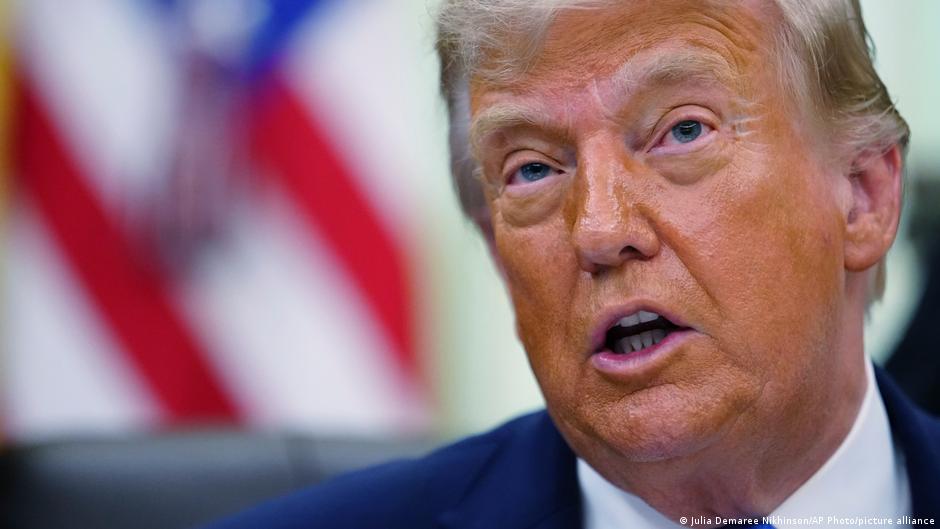
NATO confirmed on 25 April 2026 that the United States cannot suspend Spain from the alliance after a reported Pentagon communication warned Madrid that non-participation in a potential US operation against Iran carried consequences. The alliance's public statement — unusual in its directness — placed Spain's legal standing beyond Washington’s stated leverage, even as the episode exposed deep friction over how far NATO obligations extend toward unilateral American military initiatives.
Spain has declined to commit forces to a potential US campaign targeting Iran, a decision its government has framed as a matter of sovereign assessment rather than alliance disloyalty. The Pentagon's reported communication to Madrid apparently raised the prospect of formal consequences, a threat NATO officials moved swiftly to undercut. Spain remains a committed member of the alliance's collective defence structure, the statement suggested, but participation in an offensive Middle Eastern operation sits outside that framework.
The legal question NATO settled
The alliance's founding architecture was built around Article 5 — an armed attack against one member triggers a response from all. That obligation has never been interpreted to require participation in US-led offensive campaigns against states that have not attacked the alliance. Spain's non-participation in a potential Iran operation, by this reading, does not breach any NATO commitment.
The Pentagon's reported communication to Spain apparently carried language suggesting suspension from the alliance was on the table. NATO's response on 25 April made clear that no such mechanism exists under current treaty provisions. The alliance does not have a suspension framework that could be triggered by a member's refusal to join a non-collective-defence operation.
Structural implications for the alliance
The episode raises a harder question than the legal one: whether a superpower can compel a willing alliance member to join a conflict it has chosen to sit out. Legally, the answer is clearly no. Politically, the pressure itself signals something about how Washington is managing the alliance at a moment when the broader Middle East posture remains in flux.
Spain has held to its position despite the reported communication. Prime Minister Sánchez and Defence Minister Margarita Robles have both affirmed Spain's Article 5 commitments while making clear that participation in a potential Iran operation is a separate matter. The distinction matters: Spain is not refusing collective defence, it is refusing to be drawn into a campaign that carries no NATO mandate and that the United States launched without international authorisation following its 2018 withdrawal from the Iran nuclear deal.
What happens if this trajectory continues
Spain's position has structural advantages the article cannot fully measure. NATO's institutional backing matters. The legal clarity of Spain's argument matters. The likely preference of major European allies — France, Germany — for a Spain that holds the line also matters. Whether those advantages hold depends on variables the sources do not fully illuminate.
Spain is not alone in declining participation. Several NATO members have signalled scepticism about a campaign that lacks UN authorisation and that regional actors have largely not endorsed. If the Iran campaign fails to achieve its objectives, or if Iran's regional position stabilises, Spain's judgment looks vindicated. If Iran escalates and Washington treats non-participants as unreliable, Spain faces pressure whose consequences the current sources do not specify.
The precedent matters. If Washington successfully treats non-participation in unilateral operations as a breach of alliance trust, the definition of alliance obligation shifts. A NATO where membership is conditional on following US directives wherever Washington chooses to apply them is a different alliance from the one Spain joined — and the one most of Europe assumed it was reaffirming.
What the sources do not specify
The CubaDebate post from 17:18 UTC on 25 April 2026 cites the Pentagon communication and frames it as a test of alliance cohesion. The unusual_whales post, also from 25 April, carries NATO's response to a reported Pentagon email. Between those two poles, several questions remain open. The sources do not specify how many other NATO members are under similar pressure, or whether Spain's situation is singular or part of a broader campaign. They do not clarify whether European allies have made representations to Washington about the handling of Spain, or whether the pressure has shifted Spain's calculus in any way. The institutional friction is real; the internal calculations of multiple alliance governments are not visible from these inputs.
Spain's position rests on a legal argument NATO has affirmed, a sovereign calculation the government has articulated, and — probably — the understanding that solidarity with allies is better defended by holding a coherent line than by yielding to pressure that lacks any legal basis. Whether that holds through whatever comes next is the open question the sources do not yet answer.
This publication covered the Pentagon-Spain friction differently from the wire. The dominant framing treated it as a bilateral dispute; the structural frame here identifies it as a test case for how alliance obligations are defined in practice — and who gets to define them.
Wire provenance
This editorial synthesis draws on the following public wire/social posts:
- https://x.com/unusual_whales/status/1914218309420400640
- https://t.me/CubaDebate/124581