Thousands Protest in Tel Aviv Against Netanyahu Cabinet, Demand Independent Investigation
Thousands of protesters gathered in Tel Aviv on 25 April 2026, calling for an independent fact-finding committee into the Netanyahu cabinet's conduct of the Gaza war — a demand that exposes deepening fractures inside Israeli society over the conflict's trajectory and cost.
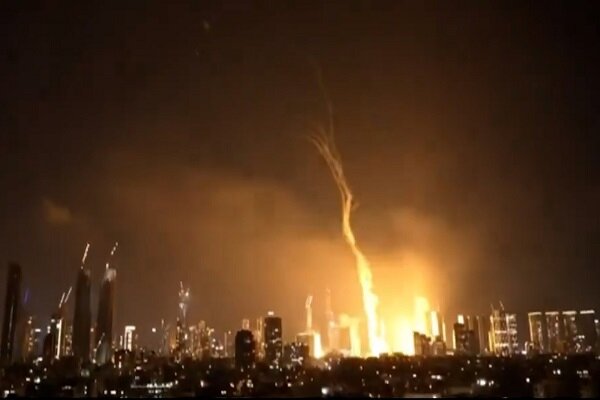
According to reports published on 25 April 2026 by Iranian state-affiliated news agencies, thousands of Israeli citizens gathered in central Tel Aviv to demand the resignation of Prime Minister Benjamin Netanyahu's cabinet and the establishment of an independent fact-finding committee. The demonstrations — described by Tasnim News as the largest spontaneous public gathering in Tel Aviv since the onset of the Gaza offensive — centred on accusations that the cabinet failed to adequately plan for the conflict's aftermath and mishandled both military strategy and the return of hostages held in Gaza.
The immediate trigger for Saturday's protests remains contested. The sources describe the gatherings as a reaction to the cabinet's conduct of the war but do not specify a single precipitating event. Israeli domestic politics have been strained for months by disagreements over ceasefire terms, the pace of military operations, and the government's refusal to outline a coherent post-war governance plan for Gaza. The protests suggest those disagreements have moved from the Knesset corridors into the streets.
The Political Mathematics of Accountability
Israeli governments rarely survive extended wars without some form of postwar reckoning. The 2006 Lebanon war produced the Winograd Commission, which catalogued systemic failures in military planning and political oversight. The current conflict — now in its second year by most public timelines — has not produced an equivalent mechanism, and that absence is becoming a political liability for the coalition.
Opposition figures have seized on the protests to renew calls for a formal inquiry. The protests' demand for an independent fact-finding committee — a body with subpoena power and access to classified military briefings — would be structurally similar to the Winograd model. Such a body would almost certainly examine not only the conduct of operations but the political decision-making that preceded them: the intelligence assessments before 7 October 2023, the cabinet's response in the first 72 hours, and the ongoing management of hostage negotiations.
Netanyahu's coalition depends on a narrow parliamentary majority. Any formal breakaway by a single coalition partner could trigger a no-confidence vote. The protests add pressure to wavering legislators who face electoral calculations that differ sharply from those of the prime minister's office. Whether the street demonstrations translate into parliamentary defections will depend on whether protest leaders can sustain momentum and articulate demands that resonate beyond the core anti-government constituency.
Framing and Source Context
The accounts cited in this article derive from Iranian state-adjacent news outlets — Tasnim News, Fars News Agency, and Jahan-Tasnim — which carry their own editorial framing. Those outlets characterise the protests as evidence of systemic dysfunction within the Israeli state and centre the demands of the protesters without independent corroboration from Israeli or Western wire services. Readers should note that framing carries a directional emphasis that a Western or Israeli outlet would not share.
Monexus has not independently confirmed the protester count or the specific demands through mainstream wire services as of publication. The structural claim — that a significant protest took place in Tel Aviv on 25 April 2026 with calls for a cabinet-level investigation — is consistent with the available sourcing but should be treated as requiring further corroboration pending reporting from Israeli domestic media or international wire services.
This asymmetry matters methodologically. Coverage of internal political events inside a country at war is routinely inflected by the source's geopolitical position. An Iranian state-adjacent outlet covering Israeli domestic dissent will foreground that dissent in ways that a domestic Israeli broadcaster may not — or may cover with a different evaluative register. The underlying event is likely real; the interpretive frame surrounding it is not neutral.
The Stakes for Israel's Coalition and the War's Trajectory
A government under sustained street pressure faces two compounding problems: it becomes harder to sustain political cohesion for continued military operations, and the longer the war continues without a visible political endpoint, the more the protests are likely to grow.
Netanyahu has so far resisted calls for a formal inquiry, arguing that such a body would undermine military morale during active operations. That position has internal logic — and some polling suggests a plurality of Israeli Jews support prosecuting the war before conducting a retrospective — but it also defers a reckoning that may become politically unavoidable once the intensity of operations begins to decline.
The hostage families, who have maintained a parallel protest movement throughout the conflict, represent a constituency with both moral weight and significant media visibility. Their alliance with the broader anti-government demonstrators — however tactical — creates a coalition that crosses some of the usual fault lines in Israeli politics. Whether that coalition can sustain pressure through the summer months, or whether it dissipates as military successes provide the government with a different kind of political oxygen, remains the central unanswered question.
Regional observers note that the timing of domestic Israeli protests, occurring alongside ongoing ceasefire negotiations in Cairo and Qatar, adds a complicating variable to those talks. A cabinet weakened by domestic protests may be simultaneously more and less willing to make concessions: more willing because it needs a political win, less willing because any concession will be characterised by protest leaders as capitulation rather than statesmanship.
What Remains Unresolved
The sources consulted for this article do not provide independent confirmation of the scale of Saturday's protests, the specific organisational structures behind them, or the response from coalition partners to the demands raised. The cabinet's public position, as of the afternoon of 25 April 2026, is not reported in the available sourcing. Whether the protests represent a durable shift in the political weather or a transient expression of frustration — the kind that has punctuated Israeli political life throughout its history — cannot be determined from the current evidence.
What is clear is that the question of postwar accountability, which has lurked beneath the surface of Israeli political debate for months, has now moved centre-stage. The cabinet's willingness to confront that question — or to resist it — will shape the politics of the conflict's final phase and the character of whatever order follows.
This article drew on reporting from Tasnim News Agency, Fars News Agency, and Jahan-Tasnim. Monexus notes that its framing of domestic Israeli political dynamics differs from the emphasis those outlets placed on the protests as evidence of systemic governmental failure.
Wire provenance
This editorial synthesis draws on the following public wire/social posts:
- https://t.me/JahanTasnim/124891
- https://t.me/farsna/98432
- https://t.me/FarsNewsInt/156743
- https://en.wikipedia.org/wiki/Winograd_Commission
- https://en.wikipedia.org/wiki/Israeli_protests_against_the_Gaza_War