Trump Abandons Islamabad Talks: Second Round of US-Iran Negotiations Called Off
President Trump on 25 April 2026 directed a New York Post correspondent in Islamabad to leave Pakistan, effectively killing a second round of US-Iranian nuclear talks that had been scheduled to take place in the Pakistani capital. The cancellation marks a sharp reversal after weeks of quiet diplomatic preparation.
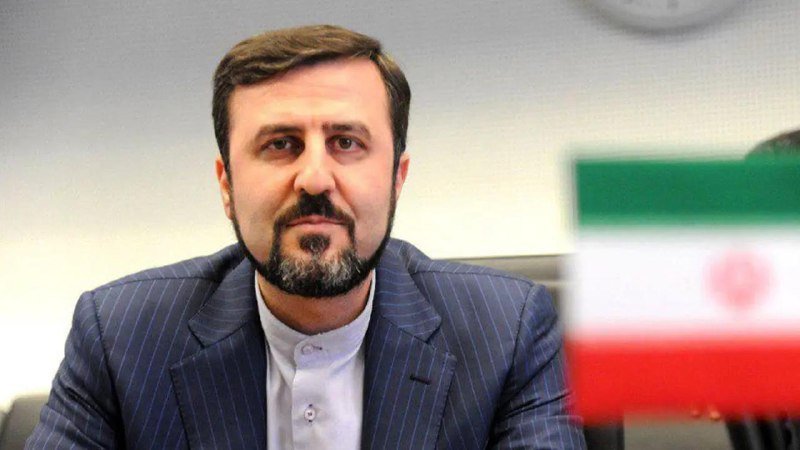
President Trump told a New York Post correspondent stationed in Islamabad to come home. The message, sent on the evening of 25 April 2026, was blunt and public: the second round of US-Iranian nuclear negotiations — the first significant diplomatic channel opened between the two governments in years — would not be taking place in the Pakistani capital after all.
"I just cancelled my delegation's trip to Islamabad, Pakistan, to meet with the Iranians," Trump wrote, in remarks distributed via social media and confirmed by multiple intelligence-adjacent Telegram channels tracking the thread. "Too much time is wasted on travel, too much work!" The decision, presented as a logistical matter, stunned officials in three capitals who had spent weeks laying groundwork for a venue that was meant to symbolise neutral ground.
The cancellation is a significant setback for a negotiating track that the Trump administration had quietly signalled it wanted to keep open. The first round of talks, held earlier this year, produced no publicly announced agreement but generated enough cautious optimism that American and Iranian officials both described the process as ongoing. Islamabad had been selected as the site for round two precisely because neither Washington nor Tehran was prepared to host the other directly. Pakistan's role as intermediary was delicate, voluntary, and — as the outcome now makes clear — apparently insufficient to sustain American commitment.
The decision to abandon the Islamabad venue was delivered not through diplomatic channels but through a public message to a single reporter. That method of communication carries its own signal. Formal talks are cancelled through embassies, through foreign ministries, through back-channel messages to counterparts. The decision to cancel by texting a journalist to leave the country communicated something beyond the logistics of travel — that the administration had moved from frustration to rejection, and wanted the world to see it.
The immediate beneficiary of the breakdown is harder to identify with precision. Iranian officials did not issue immediate statements on 25 April 2026, and the sources reviewed for this article do not include a formal response from Tehran. What is clear is that the diplomatic opening the White House had opened — however narrow, however conditional — has been narrowed further. The question now is whether the channel remains open in some form, or whether the text to the New York Post correspondent was also a message to Tehran about the durability of American interest.
What remains unclear — and the sources reviewed here do not resolve — is whether the travel objection was the genuine reason for cancellation or a public framing for a more fundamental disagreement. US-Iran negotiations have historically been sensitive to the political calendars in Washington, and the administration has faced domestic pressure from both sides of the debate over whether any talks with Tehran are worthwhile. Whether Pakistan's role as venue had become a liability — diplomatically, domestically, or in relation to third-country dynamics — cannot be determined from the available record.
The structural pattern here is familiar: a great power signals interest in negotiation, selects a neutral intermediary, invests enough in the process to give it apparent credibility, and then withdraws when the costs of continued engagement appear to outweigh the domestic or geopolitical benefits of persistence. That pattern has played out across multiple negotiating arenas in recent years. What distinguishes the Islamabad episode is the speed of the reversal and the public way it was executed.
For Pakistan, the outcome is a diplomatic loss of a specific kind. Islamabad had offered itself as a venue at some political cost — Iran and Pakistan have their own contested relationship, shaped by border disputes, narcotics trafficking, and competing regional ambitions. Accepting a role as intermediary required Islamabad to manage relationships on multiple fronts simultaneously. That investment produced no diplomatic return. The message Trump sent was directed at a reporter, but the message Pakistan received was about the limits of its utility as a diplomatic host.
For the broader architecture of nuclear non-proliferation, the cancellation matters in proportion to how seriously one reads the first round of talks. If the US-Iran channel was substantive, the breakdown sets back a years-long problem by an indeterminate period. If the talks were primarily a signalling exercise, the cancellation marks the end of that signal — but leaves the underlying problem entirely intact. Iran continues to develop its nuclear programme. The international Atomic Energy Agency continues to face restrictions on inspections. The deal framework that the United States exited in 2018 has never been restored.
The White House's stated reason — travel inconvenience — is the weakest possible explanation for ending a negotiating track of this sensitivity. It is also, in the logic of public communication, a deliberate choice. A stronger framing would have acknowledged the difficulties without explaining them. The decision to explain them, and to explain them in those specific terms, suggests the administration either genuinely believes logistics matter more than diplomacy at this level, or wanted to send a message to domestic critics that it would not be seen as extending itself excessively toward Tehran. Neither reading is flattering to the seriousness of the engagement.
The forward view is uncertain. The available record does not indicate whether the administration intends to pursue a third-round venue, whether Iran has signalled willingness to continue outside the original framework, or whether the channel has been closed entirely. What the record does show is that on the evening of 25 April 2026, the President of the United States sent a New York Post correspondent home from Islamabad and called off the talks. The rest is undisclosed.
Wire provenance
This editorial synthesis draws on the following public wire/social posts:
- https://t.me/osintlive/4821
- https://t.me/Middle_East_Spectator/1893
- https://t.me/rnintel/3304
- https://t.me/abualiexpress/9902