Trump's Cancelled Iran Diplomacy Tells You Everything About His Actual Strategy
The abrupt cancellation of Witkoff and Kushner's Pakistan trip exposes a White House improvising its way through a conflict it helped ignite — and markets reacted accordingly.
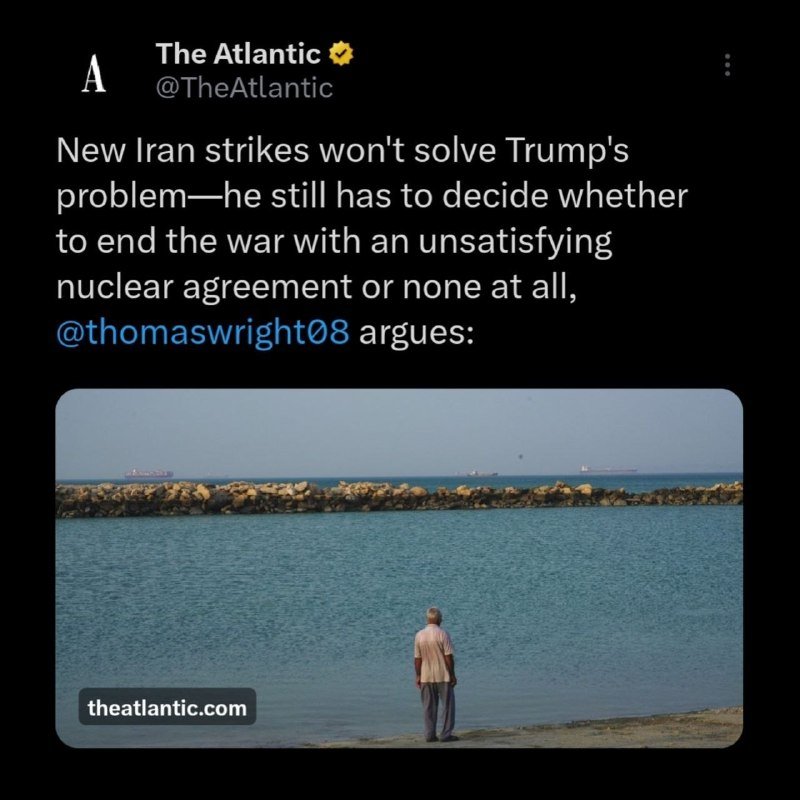
The administration that spent weeks threatening Tehran with "fire and fury" quietly called off its own peace mission on Friday. Steve Witkoff and Jared Kushner, the two envoys dispatched to Pakistan for what was publicly framed as a bridge to Iranian negotiators, will not be travelling. The conflict is into its ninth week. Thousands are dead. The Strait of Hormuz remains a flashpoint. And the most powerful man in the world decided the diplomatic channel wasn't worth keeping open.
That cancellation tells you more about this White House's Iran strategy than any public statement in the past two months.
A Mission That Wasn't
The trip had been confirmed by CNN as recently as 24 April 2026, with reporting describing Witkoff and Kushner as en route to Islamabad for talks that would, in theory, create space between Washington and Tehran. Fox News broke the cancellation on 25 April, citing presidential direction as the source. Reuters confirmed the same timeline — mission announced, then scrubbed, within thirty-six hours.
The administration offered no public explanation for the reversal. No statement from the White House press shop, no background leak to the usual suspects, no follow-on threat. Just silence where a rationale should be.
What replaced the diplomatic opening was a Bitcoin correction. CoinDesk reported a sharp drop in the price of the dominant cryptocurrency shortly after the cancellation news hit wires, with traders apparently reading the aborted talks as a signal that military escalation had become more, not less, likely. Markets are blunt instruments. They don't do nuance. And their verdict on the cancelled mission was unambiguous: something had gone very wrong.
The Pattern Nobody Wants to Name
This is not the first time Trump has announced a diplomatic initiative and then withdrawn it before the plane left the ground. The Korea summits that weren't. The tariff pauses that became tariff escalations. The peace deals that dissolved into the same rhetoric they were meant to replace. What the Iran case exposes, with unusual clarity, is an administration that treats negotiation as performance rather than process — a thing done for optics, to be abandoned the moment the optics shift.
The problem with treating diplomacy as a media event is that the other side watches. Tehran watched. Islamabad watched. Beijing watched. Every foreign ministry in the world with an interest in the Strait of Hormuz or the broader architecture of Gulf security watched an American president send envoys, then recall them, without explanation. What signal does that send about American reliability? About the continuity of any commitment made by this White House?
The conflict's ninth week is not an abstraction. It means the escalatory cycle has been running long enough to develop its own momentum — to generate its own constituencies within the Iranian political structure who have an interest in continuation, whatever the official line from Tehran's foreign ministry. It means the Israeli strikes that began this cycle have produced a retaliation dynamic that is not self-limiting. And it means that the window for a diplomatic off-ramp, never wide, has narrowed with every passing day.
What the Cancellation Actually Signals
There are two readings of what happened on 25 April, and both are unflattering.
The first is that the cancellation reflects a genuine rethink — that internal pressure from the national security apparatus, from Gulf allies watching their trade routes threatened, or from the economic fallout of sustained conflict convinced the White House that talks were premature. If that's the case, it suggests a functioning decision-making process under considerable stress. That reading requires you to believe the administration is playing a long game it hasn't bothered to explain publicly.
The second reading is darker: the trip was always a gesture. A thing done to show Western allies and domestic constituencies that the military pressure was accompanied by diplomatic effort. When the political cost of appearing to negotiate with Tehran — with an election calendar in view, with an Israel-first coalition in Congress — became too high, the gesture was pulled. The actors involved — Witkoff, Kushner — are both longtime loyalists whose proximity to the president is personal rather than professional. Sending them to Pakistan was a signal about seriousness. Cancelling them was a signal about something else entirely.
Neither reading is comforting. The first requires a competence this administration has not consistently displayed. The second requires a cynicism about process that, if true, means the diplomatic channel was never really open to begin with.
The Strait and the Stakes
Let's be specific about what is at risk. The Strait of Hormuz carries roughly 20 percent of global oil trade. It is not a theoretical choke point — it is the single most critical artery in the world's energy infrastructure. A sustained disruption, even a temporary one, would send Brent crude to levels that make 2022 look tame. European industries already under pressure from the Russia-Ukraine carry-through would face an second supply shock they cannot absorb. Asian importers — India, Japan, South Korea — would face energy inflation at precisely the moment their central banks are trying to manage debt overhangs from the previous cycle.
The administration knows this. The national security apparatus knows this. Which means the cancellation of a diplomatic mission into a conflict zone adjacent to that waterway is not a minor logistical footnote. It is a decision made with full knowledge of what the alternatives to diplomacy are.
The question the White House has not answered — and appears to have no intention of answering — is what its endgame in Iran actually is. Regime change? A negotiated freeze? A sustained military campaign with no defined termination condition? Without that clarity, sending envoys is Kabuki. Cancelling them is just the curtain call.
Markets saw it first. The rest of the world is still catching up.
This publication's approach to the Iran conflict differs from the wire consensus in one key respect: it reads the Witkoff-Kushner mission not as a sincere diplomatic effort that fell through, but as a test of domestic political tolerance that failed. The dominant framing treats the cancellation as a temporary setback within a coherent strategy; this article argues the incoherence is the strategy.
Wire provenance
This editorial synthesis draws on the following public wire/social posts:
- https://x.com/reuters/status/1913543820146696449
- https://x.com/unusual_whales/status/1913518123455377637
- https://x.com/unusual_whales/status/1913368123455377637