Trump's Coalition Is Cracking. The Iran War Broke Something That Won't Mend Easily.
One in five Trump voters now backs his removal from office. The Iran escalation is doing something the Russia war never did: opening a fracture inside the coalition itself.
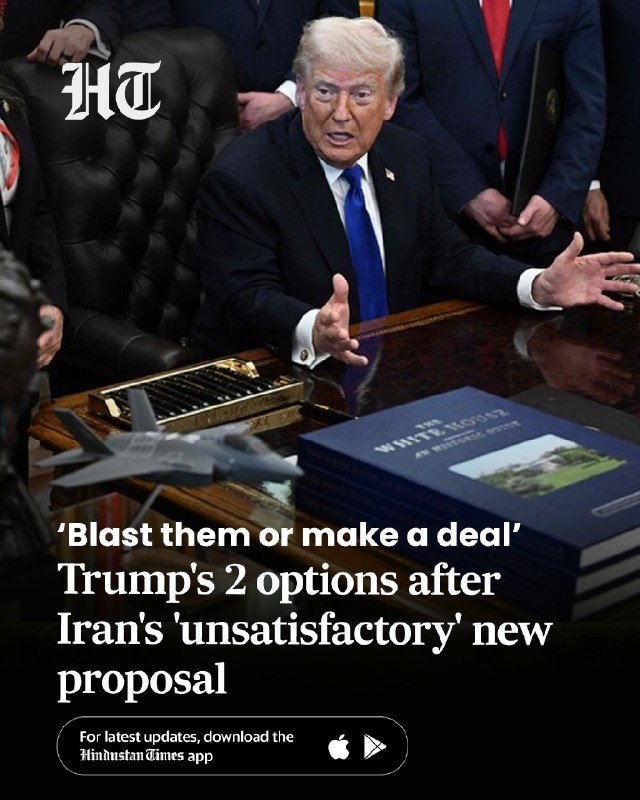
The numbers arrived quietly on a Friday morning, and they are not quiet at all. According to polling data cited by IRIran_Military on 25 April 2026, a majority of Americans now want President Donald Trump removed from office — a figure remarkable enough on its own. More striking is the internal detail: 21 percent of people who voted for him in 2024 share that position. A separate survey, reported by PressTV the same day, found that 21 percent of Republicans who backed Trump in the 2024 presidential election support his impeachment following what is described as an unprovoked military offensive against Iran. Two separate data points. The same headline underneath.
That headline is not simply that a president is unpopular. It is that a military campaign — the one against Iran — is doing something that two years of tariff chaos, federal workforce contractions, and legal battles could not: it is pulling apart the specific constituency Trump secured his office with.
The distinction matters. Trump survived the chaos of his first hundred days in 2025 because the erosion remained largely partisan — Democrats opposed him, Republicans held. The Iran offensive appears to have crossed a different threshold. A bloc of voters who judged the economic disruption an acceptable cost of political disruption are now concluding that military escalation is not. Whether that bloc is large enough to matter depends on polling mechanics that are, at this stage, genuinely uncertain. Polls move. Impeachment is a high procedural bar. But the fact that the question has entered public discourse at all, framed in those specific terms, tells you something structural has shifted.
The Appeals Court Parallel
The Iran polling fracture does not stand alone. On 24 April 2026, an appeals court blocked a Trump executive order suspending asylum access, a ruling LiveMint reported as a legal setback to the administration. The decision is separate in subject matter but connected in signal: it adds to a pattern of institutional resistance that is now running concurrently with, not sequentially after, the foreign policy crisis. The administration is fighting a war abroad while absorbing defeats in federal courts at home. That combination — external escalation plus internal legal friction — is historically corrosive to executive authority in ways that poll declines alone are not.
The asylum ruling also speaks to a specific administrative problem: the executive order machinery that worked to restructure the federal government in early 2025 is encountering hard limits when it touches constitutional procedure. Courts are doing what courts do when executive power runs ahead of statutory authority. The question this raises — one the sources do not yet resolve — is whether the Iran war is changing the judicial calculus. Judges who might have stayed on procedural sidelines are now evaluating an administration that has started a shooting war with a third country. That context does not make rulings more favorable. It may make them more willing to act.
The Dollar Contradiction
Nowhere is the administration's internal contradiction more visible than in the financial architecture. Treasury Secretary Bessent, in comments cited by a finance-focused Telegram source on 25 April 2026, defended U.S. dollar swap lines as a tool of geopolitical stabilization even as the Iran offensive was described as harming global finances. The framing is revealing: the administration is conducting a military campaign that destabilizes the very financial conditions its senior officials are simultaneously arguing need to be protected.
Trump himself appeared to weigh in favorably on a potential UAE swap line during a CNBC appearance this week, per the same source. That is not a trivial signal. Swap lines — bilateral arrangements allowing central banks to access dollar liquidity directly — are a tool of dollar hegemony in its most technical form. Extending them to a Gulf partner while prosecuting a war that disrupts global oil markets and dollar confidence is an act of considerable cognitive dissonance, or else a signal that the financial architecture is under sufficient stress to demand its own parallel diplomacy even from within a White House that has otherwise treated multilateral financial norms as obstacles.
The dollar system, in other words, is working exactly as its designers intended: providing crisis liquidity even to administrations that are simultaneously undermining the political conditions that sustain the dollar's reserve status. That is a feature, not a bug, of the current order. It is also a ceiling on how far any administration — even one as confrontational as this one — can push against the infrastructure of global finance without triggering countervailing pressures that have their own political weight.
What Holds and What Doesn't
The coalition fracture is real but incomplete. Twenty-one percent defection among 2024 Trump voters is significant; it is not decisive. Impeachment polling in the United States is a notoriously unreliable predictor of actual impeachment outcomes, which require House Republican votes that are not yet in evidence. The appeals court setback is real but subject to further litigation. The financial contradictions are structural, but structural problems can persist for years before they produce acute political consequences.
What is genuinely different this week is the combination. A war that is costing American lives and straining alliance relationships overseas is now generating measurable domestic political cost at home. The sources tracking voter sentiment suggest that cost is concentrated in the one demographic the White House can least afford to lose. Republican voters who backed Trump because they trusted his transactional calculus — the sense that he would apply pressure without committing to full-scale military entanglement — appear to be concluding, in measurable numbers, that this particular calculation did not hold.
Whether that conclusion deepens or reverses depends on factors the current source base does not fully illuminate: the trajectory of the conflict itself, casualty reporting, economic effects, and the administration's ability to frame the offensive in terms that re-establish the transactional logic. None of those factors can be assumed to move in the administration's favor. The coalition that elected this president was held together by a specific wager about what kind of leader he would be. The Iran war is asking voters to renegotiate that wager in real time, with incomplete information and rapidly compounding stakes.
That is not a situation political coalitions recover from cleanly. It is the situation they fracture in.
Wire provenance
This editorial synthesis draws on the following public wire/social posts:
- https://t.me/IRIran_Military/8471
- https://t.me/presstv/8942
- https://t.me/FINANCE/4421