Trump's Crypto Darling Act Is Also an Autocracy Enabler
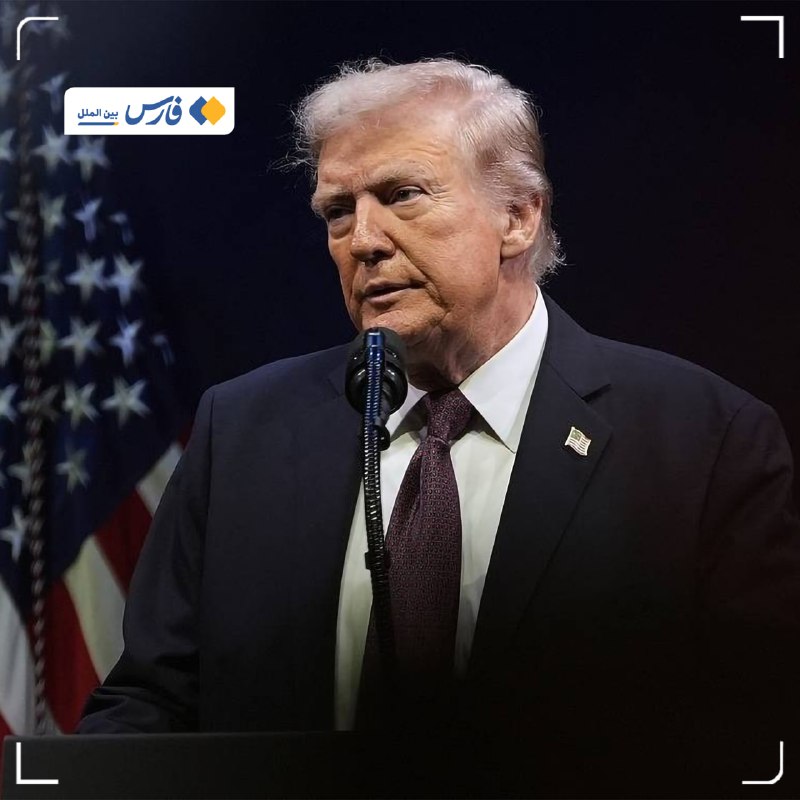
Donald Trump has spent the past week doing something unusual even by his standards: broadcasting, in near-real-time, the machinery of his administration's dual-track strategy. Track one is the crypto industry's best friend. Track two is democracy's most reliable antagonist. Taken together, they describe something the American constitutional order was explicitly designed to prevent.
On 25 April 2026, Trump told assembled reporters that his investigation into Federal Reserve Chair Jerome Powell is "not dropped." That same day, he declared he feels an "obligation" to ensure the crypto industry prospers. Twenty-four hours earlier, his political operation hosted the largest holders of the $TRUMP meme coin at Mar-a-Lago, with Mike Tyson as the entertainment draw. The sequencing is not accidental.
The Fed Gambit
The Powell investigation — launched under the flimsiest pretexts — is the clearest signal yet that the administration intends to subordinate monetary policy to executive preference. The Fed's operational independence exists precisely because concentrated political control over interest rates and money supply has historically been the hallmark of autocratic governance. Trump knows this. That is presumably why he wants it gone.
The pattern from other jurisdictions is instructive. Governments that have moved to control their central banks have typically done so not through frontal constitutional assault — that generates headlines and legal challenges — but through quieter erosion: investigative pressure on sitting chairs, pressure campaigns on sitting governors, and the strategic placement of loyalists. The Powell probe fits this template precisely.
What makes this distinctively American is the speed and the nakedness of the ask. No diplomatic language. No institutional cover. Just: the investigation is not dropped, and the crypto industry will benefit from my protection.
Mar-a-Lago as Transaction Venue
The 25 April gathering at Mar-a-Lago — limited to the largest $TRUMP token holders, with Mike Tyson as a guest speaker — was not a policy conference. It was a stakeholder maintenance event. The $TRUMP token, launched with apparent proximity to Trump's re-election operation, has been the subject of ongoing regulatory scrutiny and Securities and Exchange Commission inquiries into whether it constitutes an unregistered security.
That the administration frames its relationship with the crypto sector as a "partnership" rather than a matter of regulatory enforcement tells you everything about where power actually sits in this arrangement. The crypto industry gets a friend in the Oval Office. The Oval Office gets a donor class with a direct financial stake in regulatory leniency — and, critically, a new pool of people with reasons to oppose any future administration that might take a different view.
This is not a novel mechanism. It is the oldest mechanism in politics: concentrate benefits on a loyal class, and that class becomes a lobbying force. The novel element is the speed of the transaction and the blockchain provenance of the loyalty.
Voting Restrictions as the Missing Piece
None of the above works, of course, if the electoral math changes. Which brings us to the 23 states and the District of Columbia that moved, on 24 April 2026, to block the administration's mail-voting restrictions before the midterm cycle. The challengers' language is notable: the restrictions would "massively disrupt" elections, the filing argues. That is not rhetorical excess. If mail-in voting becomes harder to use in targeted jurisdictions — and the administration's pattern of targeted enforcement suggests targeting is precisely the design — the electoral consequences fall unevenly.
The connection to the crypto play is not incidental. A significant share of early $TRUMP token adopters skews toward a demographic that is both crypto-native and politically activated through digital channels rather than traditional door-knocking or phone-banking. That same demographic is, notably, less likely to rely on mail-in voting. The voterID restrictions and mail-voting limits being challenged in court do not burden their own constituency in equal measure.
Crypto and voter suppression, in this framing, are not parallel stories. They are the same story with different operational layers: one aimed at capturing the financial regulatory apparatus, the other at ensuring the electoral outcomes that make that capture durable.
The Stakes Are Institutional, Not Ideological
It is tempting to frame this as a partisan dispute — one side worried about executive overreach, the other defending a popular president's right to govern. That framing misses the structural point. The Fed's independence is not a partisan asset; it is a constitutional one. Mail-in voting access is not a Democratic priority; it is a democratic one. The concern about memcoin-adjacent governance is not nostalgia for the Biden-era SEC; it is alarm at the speed with which financial instrument and political instrument are being fused into a single mechanism.
What the sources describe, taken together, is an administration that has identified the constraints on executive power and is systematically working through them — not with a single audacious act that would invite challenge, but with a series of interlocking moves each of which can be defended in isolation. The Powell probe is regulatory. The crypto partnership is private-sector. The mail-voting restrictions are procedural. Individually, each has a defence. Collectively, they describe a project.
Whether it succeeds depends on whether institutions designed for a slower era of political competition can move fast enough to respond — and whether the crypto industry's newly activated stakeholder class can be matched by a voting public that understands what is at stake.
Monexus will continue tracking the legal challenges to mail-voting restrictions and any developments in the Powell investigation.
Wire provenance
This editorial synthesis draws on the following public wire/social posts:
- https://x.com/unusual_whales/status/1913847123450913356
- https://x.com/polymarket/status/1913831928769483077
- https://x.com/polymarket/status/1913748912345678901
- https://x.com/polymarket/status/1913412098765432109