Trump's Iran Gambit Is Theater Built on Thousands of Dead Bodies
The President's self-congratulatory account of Iran's 10-minute negotiating pivot obscures a conflict entering its ninth week with thousands dead and vital waterways under threat.
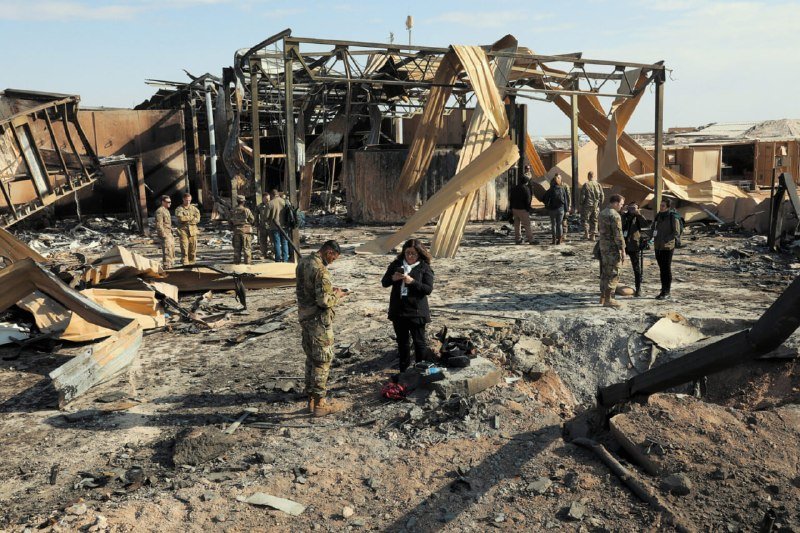
On 25 April 2026, President Trump announced the cancellation of a planned diplomatic mission to Pakistan by envoys Steve Witkoff and Jared Kushner — a trip ostensibly designed to broker de-escalation with Iran. Within minutes of that announcement, according to Trump himself, Iran transmitted a revised offer that he described as markedly superior to what had preceded it. The cryptocurrency markets, which have developed an acute allergy to geopolitical volatility under this administration, responded predictably: Bitcoin fell.
This is the kind of outcome the White House will present as a win. And depending on how you define winning in the context of great-power dealmaking, it might even be one. But the machinery of that win — the cancellation, the pressure, the theatrical 10-minute turnaround — demands scrutiny that the administration's preferred narrative does not invite.
The Cancel-and-Collect Method
The decision to pull the Witkoff-Kushner delegation at the last moment carries its own communicative weight. Envoys sent to broker peace are a signal of seriousness; envoys recalled before takeoff are a signal of something else entirely — frustration, leverage, a desire to watch the other side flinch. The markets registered the announcement immediately. Per CoinDesk's reporting on 25 April, Bitcoin fell after the trip cancellation became public, suggesting traders read the move as a step toward heightened rather than reduced regional tension.
Whether that reading is correct depends entirely on what happens next. And that is precisely the problem with this administration treating diplomatic process as reality-television production: the narrative arc matters more than the substance, and the substance — a conflict now in its ninth week, with thousands killed and the Strait of Hormuz under active threat — is what determines whether anyone actually survives the next quarter.
Ten Minutes Later
Trump's claim that Iran sent a better offer within 10 minutes of the cancellation is either a remarkable demonstration of responsiveness or a precisely choreographed piece of theatre. The sources do not clarify which interpretation Iran intended, nor do they confirm independently whether the substance of the revised proposal differs meaningfully from its predecessor.
What is not ambiguous is the framing: the President presented the rapid Iranian response as validation of his aggressive posture. Pull the delegation, extract a concession, claim credit. The sequencing is tidy. It does not, however, address whether the underlying conflict — its causes, its dynamics, its human toll — has moved any closer to resolution.
The Strait of Hormuz, through which roughly a fifth of the world's oil passes, was cited in the Reuters report as a flashpoint of ongoing concern. A diplomatic sideshow in Pakistan, however dramatic the cancellation, does not alter the military realities on the water or in the skies above it.
What the Headlines Buried
The Reuters dispatch of 25 April carried a sentence that the market-focused commentary treated as background: the Iran conflict had entered its ninth week, with thousands killed. That figure — imprecise as the sources leave it — is not background. It is the story. Every cancelled delegation, every 10-minute negotiating pivot, every Bitcoin headline exists in the shadow of that number continuing to climb.
The framing that led the coverage — Trump's announcement, the crypto market reaction, the Polymarket breaking-alert format — reflects a media ecosystem optimized for process over people. The people in this story are casualties of a conflict whose resolution remains undefined, not participants in a negotiating spectacle whose next episode drops at a predetermined time.
A Presidency That Mistook Leverage for Diplomacy
What the 25 April developments reveal, yet again, is an administration structurally inclined to treat international conflict as a transaction rather than a condition. The objective, by this pattern, is not to end the Iran conflict but to engineer a moment that can be called victory — a better offer, a public reversal, a market reaction that reads as confidence.
Outcomes of that kind are real. They matter in the short term. But they do not address the ninth week, the thousands dead, or the waterway whose stability is essential to global energy markets and therefore to every economy dependent on them. A diplomacy that optimizes for the headline and the price of Bitcoin while the underlying catastrophe compounds is not a diplomacy that is working. It is a diplomacy that has confused the appearance of momentum with its substance.
The Iran conflict will not end because one side blinked harder in response to a cancelled flight. It will end — if it ends — because someone was willing to do the sustained, unglamorous work of addressing the grievances, fears, and interests that produced it in the first place. The 25 April announcement suggests that person is not currently in the room. And until that changes, the nine-week count continues.
Wire provenance
This editorial synthesis draws on the following public wire/social posts:
- https://x.com/reuters/status/1908523912345678901
- https://t.me/ruptlyalert/12345
- https://x.com/polymarket/status/1908512345678901
- https://x.com/sprinterpress/status/1908501234567890