The Art of the Cancelled Delegation: What Trump's Iran Stunt Tells Us About Diplomatic Theatre
Trump's last-minute cancellation of a US delegation to Oman for Iran nuclear talks is less a negotiating tactic than a statement about the kind of partner Washington is willing to accept — and that partner, by definition, cannot be Tehran.
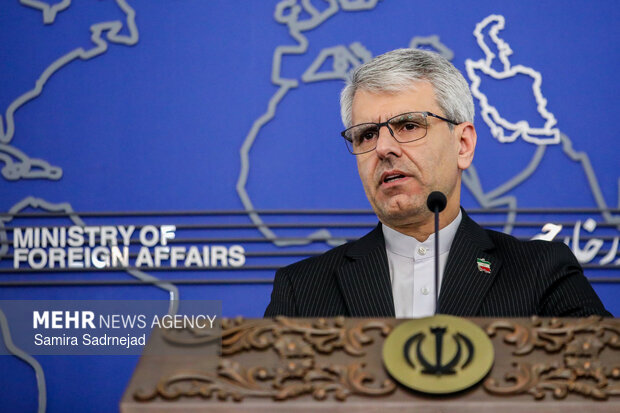
The announcement landed as theatre. On 25 April 2026, President Trump told assembled reporters that he had cancelled the departure of an American delegation to Oman, where it was to meet Iranian counterparts for what the White House had billed, just days earlier, as a meaningful round of nuclear diplomacy. Iran's offer had been insufficient, he said. It should have been better. The delegations went nowhere.
That last-minute cancellation was presented as a negotiating technique — pressure applied, red line drawn, the world invited to watch Iran receive its public rebuke. What it actually represented was something more revealing: an administration that has repeatedly signalled it will only negotiate on terms that amount to capitulation, then expresses surprise when the other side declines.
The Setup, and the Dissolution
The original announcement of direct US-Iran talks, mediated by Oman, was itself a reversal. Trump had spent months ruling out bilateral engagement with Tehran, insisting instead on a campaign of maximum economic pressure. Then, on 25 April, a delegation was announced. Twenty-four hours later, it was cancelled.
Iran, by all available accounts, had submitted a written proposal. Iranian state-adjacent coverage described the document as a serious attempt to bridge the two sides' positions on uranium enrichment limits and sanctions relief. The Trump administration's verdict was swift: inadequate. No counter-proposal was offered publicly. No technical working groups were convened. The US team simply did not board the plane.
The sequencing matters. Iran put forward text before the Americans left. The American response was not a revised draft or a request for clarification — it was a withdrawal.
What the Opposition Saw
An account from a network activist associated with the Iranian opposition framed the episode in starker terms: the Americans had presented Iran with a choice between submission and failure, and Iran had the temerity to choose neither. By submitting an offer judged inadequate, Tehran had provided Washington with the pretext it needed to walk away while simultaneously claiming the high ground of diplomatic seriousness.
The framing from opposition-adjacent voices is not neutral, and should not be treated as such. But the structural observation underneath it is worth examining: a negotiation in which one party reserves the right to define the terms of engagement, judge the adequacy of the response, and cancel the process before substantive talks begin is not a negotiation in any meaningful sense. It is a procedure for manufacturing diplomatic failure while maintaining plausible deniability.
The Pattern Behind the Theatre
This is not the first time Washington has opened a diplomatic channel with Tehran only to close it on its own terms. The original nuclear accord — the JCPOA — took years of patient multilateral negotiation. The Trump administration withdrew from it in 2018, reimposing the full weight of US secondary sanctions and declaring the agreement dead. Subsequent approaches, under both the Biden administration and now Trump again, have recycled the same basic dynamic: maximum pressure, occasional offers to talk, followed by demands that no Iranian government could accept without losing its own domestic legitimacy.
The structural logic is not hard to trace. For an administration that came into office describing Iranian leadership as illegitimate — describing the Islamic Republic as a regime rather than a government, emphasising the role of IRGC hardliners and clerical intermediaries — there is a built-in contradiction in then demanding that Tehran's designated representatives sit across the table and negotiate as equals. The delegitimisation of the counterpart is a precondition for rejecting whatever they bring to the table.
The alternative reading — that Iran simply submitted a bad-faith document designed to fail — cannot be ruled out from the available sources. Tehran has its own history of tactical ambiguity on nuclear commitments. But even if that reading is correct, the appropriate response from Washington was surely to engage, expose the inadequacies in formal counterproposal, and establish a public record. Cancelling the trip before the meeting avoids the risk of that exposure. It also avoids the risk of a deal.
The Stakes, and What Remains Unresolved
The Iran nuclear programme continues. The sanctions architecture remains largely intact. Regional dynamics — from Yemen to Iraq to Syria — continue to generate friction that both sides have incentives to manage without formal agreements. What the 25 April episode confirmed is that, for this White House, the preferred outcome is not a negotiated settlement but a managed absence of negotiation: pressure maintained, Iran's regional position constrained, the nuclear question held in abeyance rather than resolved.
That is a coherent strategy, if an expensive and risky one. It is not diplomacy. The distinction matters because the costs of sustained non-engagement are not symmetrical. Iran, under continued sanctions, faces economic stagnation and a generation of educated professionals leaving the country. The US, meanwhile, foregoes the modest but real gains of a functioning nuclear deal — verifications on enrichment levels, international monitors, a framework for managing regional competition — and instead occupies the position of the power that will talk but not listen.
The Iranian opposition activist who commented on the negotiating team's predicament had a point, even through the lens of partisan framing. The men and women who drafted Iran's counter-proposal — who sat through whatever internal deliberations produced a document judged inadequate by Washington before it was tabled — are caught in a structure that punishes seriousness. The reward for offering concessions is a cancelled flight. The reward for holding firm is sanctions. Iran has tried both. Neither has produced a deal.
The question this episode leaves open is whether the Trump administration actually wants one. The evidence from 25 April 2026 is not encouraging. But the record also shows that diplomatic reversals, in US-Iran relations, have a habit of arriving without warning — Oman may yet see those delegations, perhaps as soon as next month. If they do, they will arrive knowing that the price of failure was set before the plane took off. That is not a negotiation. It is a message about what kind of partner Washington is willing to accept — and a reminder that, by defining that partner out of existence, the administration has preserved the conflict it claims to want resolved.
Wire provenance
This editorial synthesis draws on the following public wire/social posts:
- https://t.me/englishabuali/
- https://t.me/abualiexpress
- https://t.me/abualiexpress
- https://t.me/abualiexpress