Wall Street Prices Peace. Iran Isn't Selling.
The S&P 500 closed at record highs on 24 April 2026 — the same day Iranian state media reported Tehran had decided against entering talks with Washington. The two events sit uncomfortably together, and neither the market optimists nor the diplomatic pragmatists are asking the right questions.
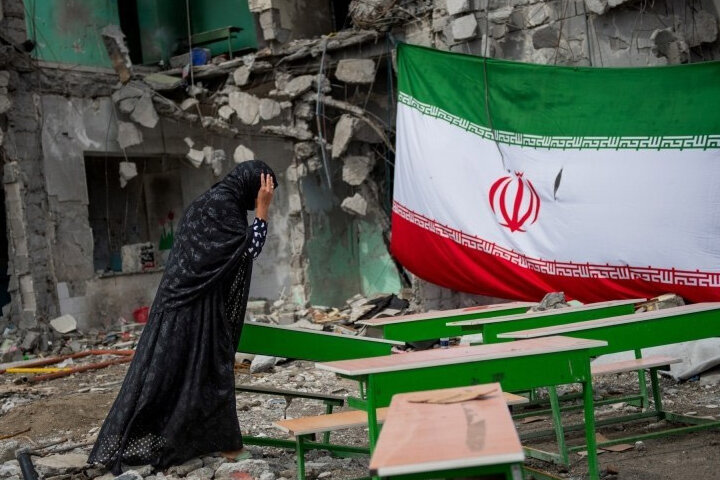
On 24 April 2026, the S&P 500 closed at an all-time high. That same day, Tasnim — the semi-official Iranian news agency — reported that Tehran had decided against entering negotiations with the United States. No decision to engage. No diplomatic off-ramp. The same markets that swung on Federal Reserve minutes two weeks prior absorbed a geopolitical hardening with what looked, from the data, like complete indifference.
That indifference is worth examining. Not because markets are irrational — they rarely are, in the short run — but because the price signals contain an implicit theory of the world. To buy US equities at record levels while Iran's negotiating posture hardens is to make a bet: either the Islamic Republic will blink, or it doesn't matter if it doesn't.
Both assumptions deserve scrutiny.
What the Wire Actually Said
The thread report from Al Alam Arabic, citing ABC sources, carried a useful refinement: there is "no clear evidence of divisions in the decision-making process in Iran, and the differences may be in style." That is a carefully worded sentence. Style suggests execution, not will. If the divisions within Iran's leadership are about how to say no rather than whether to say no, the practical implication for Washington is identical to an outright consensus against talks.
Tasnim's reporting — carried via the unusual_whales wire on X at 19:44 and 19:10 UTC on 24 April — was unambiguous. Iran has reportedly decided not to enter negotiations with the US at this time. The qualifier "at this time" is doing significant work. It leaves diplomatic space for later. But the decision to announce it now, through Tasnim rather than a formal statement, is itself a signal: measured, directed at multiple audiences, calibrated to avoid the appearance of panic.
The Market's Theory of the Case
Financial history offers several templates for how markets price geopolitical risk. The first is the Gulf War model: a sharp, bounded conflict that resolves quickly, with US military dominance as the implicit hedge. The second is the sanctions regime model: slow strangulation that punishes the target without destabilising global supply chains. The third is the irrelevance model: the event is real but peripheral to the earnings drivers of S&P 500 constituents.
None of those templates maps cleanly onto a scenario where a major oil-adjacent state formally removes itself from the diplomatic table while sanctions pressure intensifies. Iran produces roughly 4 million barrels per day under optimal conditions. It sits adjacent to the Strait of Hormuz. Its enrichment programme operates outside any binding constraints for the first time since 2015. Calling that peripheral requires a deliberate act of cognitive filtering.
The more plausible reading is that the S&P 500's record close reflects the earnings power of technology and financial sector constituents, not the geopolitical risk premium embedded in energy-adjacent names. The index is not a proxy for national security. It is a weighted average of corporate profits. Those two things occasionally diverge sharply — and this may be one of those moments.
The Dollar Problem Nobody Is Naming
If there is a structural distortion in play, it runs through the dollar's reserve status. US equities denominated in dollars benefit from a form of implicit insurance: when geopolitical risk rises, the demand for dollar assets can actually increase, driving asset prices up even as underlying risk grows. This is not a new phenomenon. It has been observed in every post-Cold War moment of acute stress — the yield on US Treasuries fell during periods of peak international tension because capital flew toward the dollar's reserve-currency premium.
The consequence is that American investors — retail and institutional — face a muted signal. The price of their equities tells them the world is fine. The underlying geopolitical reality may suggest otherwise. This is not a conspiracy. It is a structural feature of a monetary system in which the unit of account and the unit of risk are denominated in the same currency.
Tehran understands this dynamic. The Iranian leadership has watched sanctions erode its dollar access for fifteen years. Its decision to refuse talks is partly a negotiating posture and partly a structural bet: that a multipolar financial architecture — less dependent on dollar-cleared transactions — is slowly becoming a viable alternative for enough of the Global South that the dollar's risk-insulation effect weakens over time.
That bet may be premature. But it is not irrational.
The Stakes: Who's Right, and When Does It Matter
If the S&P 500 is correctly pricing the situation, then Iran's refusal to negotiate is either a bluff — timed to extract concessions before eventual talks — or a genuine hardening that produces a negotiated outcome anyway, on US terms, within the next eighteen months. In that scenario, the record close looks prescient.
If the market is mispricing the risk, the consequences will arrive through energy price spikes, disruption to shipping in the Gulf, and a renewed inflationary impulse at a moment when the Fed has limited room to cut. The American consumer absorbs the cost; the earnings of S&P 500 energy and industrial names adjust accordingly; the index gives back some of its 24 April gains.
The third scenario — the one Tehran appears to be betting on — is that the dollar's structural premium erodes gradually, that the financial architecture of the Global South becomes more resilient to secondary sanctions, and that the cost of excluding Iran from formal financial channels exceeds the cost of including it. That scenario plays out over years, not months. It is the hardest to price. It is also the one that current market signals are least equipped to capture.
The record close on 24 April tells us something about where capital is today. It tells us almost nothing about where the structural equilibrium lies. And that is precisely the kind of uncertainty that tends to metastasise quietly until it no longer can.
Monexus covered the Iran-talks story as a wire short on 24 April; this piece runs the structural analysis the wire format did not permit.
Wire provenance
This editorial synthesis draws on the following public wire/social posts:
- https://t.me/alalamarabic
- https://x.com/unusual_whales/status/1913492012344549381
- https://x.com/unusual_whales/status/1913468766879629445
- https://x.com/unusual_whales/status/1913463076179906794