Washington Targets a Chinese Teapot Refinery — and Wakes Up an Entire Trade Architecture
The Trump administration's decision to blacklist a mid-sized Chinese refiner for Iranian crude purchases exposes the limits of maximum-pressure tactics and the growing fractures in dollar-based oil settlement architecture.
The Trump administration blacklisted a mid-sized Chinese independent refinery on 24 April 2026, accusing it of purchasing billions of dollars' worth of Iranian crude in violation of existing sanctions — a move that immediately reignited tensions between Washington and Beijing while raising pointed questions about the durability of the maximum-pressure strategy against Tehran.
The target, widely described in industry circles as a so-called "teapot" refinery — the designation for China's privately held, smaller-scale independent processors — represents only a fraction of China's total refining capacity. But the timing and selectivity of the designation suggest the White House is attempting to send a calibrated signal rather than conduct a comprehensive enforcement sweep. Beijing, for its part, responded through diplomatic channels that such measures "undermined the legitimate commercial interests of Chinese enterprises," in language that mirrored previous MFA rebuttals to US sanctions pressure.
The episode arrives against a backdrop of deteriorating US-Pakistan relations — the same week, the White House confirmed it had cancelled a planned US delegation visit to Pakistan. President Trump, speaking to reporters on 25 April, said the trip was scrapped after intelligence indicated Pakistan was not willing to offer sufficient concessions on trade or security cooperation. "We have all the cards," Trump said. "We're not gonna spend fifteen hours going somewhere where we don't know what's happening." The cancellation, while not directly tied to the Iranian oil question, underscores the degree to which Washington's transactional foreign policy is creating new rifts across multiple theaters simultaneously.
A Strategy Running Out of Ammunition
The sanctions on the Chinese refiner follow a familiar script: a maximum-pressure designation designed to demonstrate that buying Iranian oil carries concrete financial consequences. The Obama administration'sJCPOA had temporarily lifted oil-related sanctions in exchange for verified nuclear rollback. The Trump administration withdrew from that agreement in 2018 and reimposed layers of secondary sanctions targeting any entity — Chinese, European, or otherwise — that continued purchasing Iranian crude.
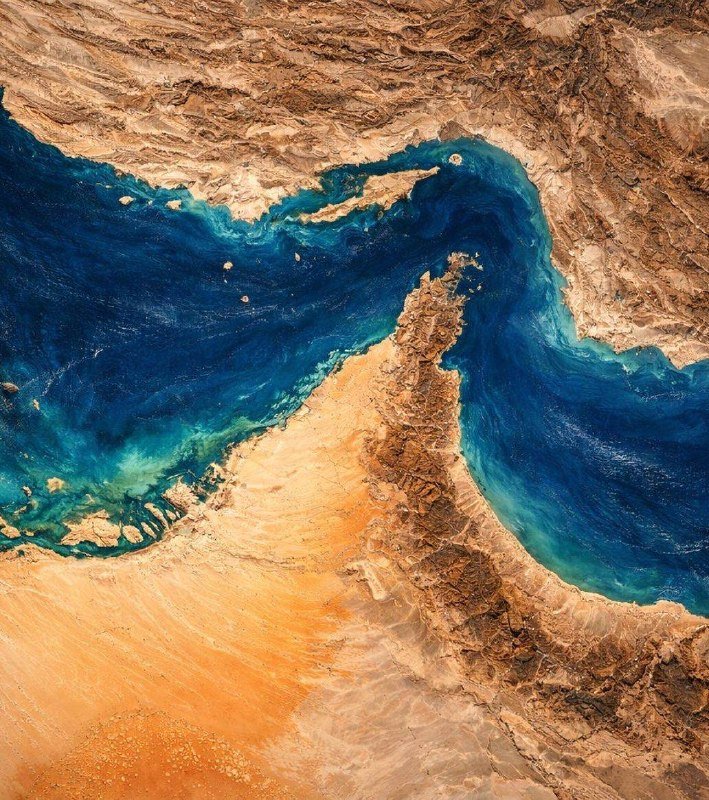
The difficulty, then as now, is enforcement. Iranian oil exports have not disappeared under the sanctions regime; they have migrated. Ship-to-ship transfers in the Gulf of Oman, falsified origin certificates, and barter arrangements denominated in non-dollar currencies have allowed Tehran to continue moving crude to buyers, primarily in China, despite the formal restrictions. A United Nations panel report published in 2024 documented continued violations of the arms embargo on Iran; the oil flow, while less visible, follows a similar architecture of circumvention.
China's independent refiners have proven particularly adept at exploiting these gaps. The teapot sector — many of which operate with flexible procurement strategies designed to take advantage of discounted crudes — has been a persistent irritant for US enforcement teams. The April 2026 designation represents the sixth such targeting of a Chinese entity under the current administration, according to a count of public OFAC records. Each designation has produced a brief dip in Iranian crude flows before patterns reassert themselves.
Tehran's domestic media, meanwhile, has responded with characteristic symbolism. Iranian state channel PressTV distributed footage on 25 April depicting a child firing missiles at an image of President Trump — content framed as patriotic in the broadcaster's description. The imagery, while unlikely to influence Washington policy, serves a domestic signaling function for an Iranian leadership facing genuine economic strain from sustained sanctions.
Beijing's Calculus: Sovereignty Over Compliance
The Chinese government's response to the sanctions has been consistent in form if not in outcome: it disputes the legitimacy of unilateral US secondary sanctions imposed outside a UN framework, and it asserts that its energy procurement decisions are a matter of national sovereignty. The framing is not merely rhetorical. China's 2021 formalization of yuan-denominated oil contracts through the Shanghai International Energy Exchange was explicitly designed to create settlement infrastructure independent of dollar clearance systems — a structural hedge against precisely this kind of financial leverage.
Beijing has also deepened energy relationships with Tehran incrementally, not because it seeks to subvert US policy per se, but because its own energy security calculus — facing rising domestic demand, a slowing domestic oil production growth curve, and a strategic imperative to diversify supplier risk — aligns naturally with Iranian crude availability. Iranian oil, sold at a discount relative to Brent benchmarks due to the sanctions overhang, presents an economically rational choice for Chinese independent refiners operating on tight margins.
This structural alignment makes punitive designations structurally difficult to sustain. Each time Washington targets a teapot refinery, Beijing's state-owned banking sector quietly redirects settlement flows through alternative channels. The effect is not to halt Iranian oil exports but to increase the transaction costs and shift the architecture toward less dollar-denominated instruments.
The Global Times, a Chinese state-linked publication, noted in recent coverage that US sanctions measures "failed to achieve their stated objectives" and served primarily to "accelerate the decoupling of energy trade from dollar settlement systems" — a framing that has the advantage of being largely accurate, even if stated with evident satisfaction.
The Dollar Question
The deeper story in the April 2026 designation is not about the specific refinery but about the dollar infrastructure that underpins global oil trade. The US Treasury's leverage over Chinese energy buyers rests on a single, fragile assumption: that Chinese entities will continue to use dollars for settlement and therefore remain subject to OFAC jurisdiction. Every sanctions cycle that accelerates yuan-denominated oil contracts, every shipment routed through non-SWIFT clearing houses, and every barter arrangement that removes the dollar from the transaction chain erodes that assumption incrementally.
Iran has been at the leading edge of this shift for years. The Iranian oil Bourse, launched in 2008 and expanded in subsequent iterations, was designed specifically to allow oil sales in non-dollar currencies. Venezuela and Russia have followed similar logic. The cumulative effect of these parallel efforts — even where they have not fully displaced dollar oil trade — has been to establish functional alternatives that reduce the cost of exit for any actor willing to absorb US political pressure.
For the Trump administration, which has simultaneously pursued trade negotiations with Beijing while maintaining aggressive Iran sanctions, the contradiction is becoming difficult to paper over. The sanctions designation may produce short-term political optics — a firm action against a bad actor — without achieving the durable suppression of Iranian oil revenues that the policy nominally targets.
What Comes Next
The immediate question is whether the April 2026 designation will be followed by secondary sanctions on the banks and shipping intermediaries that facilitated the transactions — a step that would represent a genuine escalation and one that Beijing would find difficult to ignore at the diplomatic level. Based on historical precedent, the current administration has preferred targeted entity designations over comprehensive intermediary action, likely to avoid triggering a retaliatory response from China that destabilizes ongoing trade talks.
The Pakistan cancellation adds a secondary complication. Washington appears to be conducting a simultaneous pressure campaign across multiple relationships — China on Iran, Pakistan on security cooperation — without the diplomatic bandwidth to sustain credible leverage in all directions at once. "We have all the cards" reads differently when the deck is spread across three tables simultaneously.
For Tehran, the sanctions designation and the accompanying media spectacle of anti-Trump imagery serve overlapping purposes: demonstrating to domestic audiences that resistance carries a symbolic payoff, while continuing to extract whatever economic value the remaining Chinese pipeline can deliver. The pipeline itself, despite sustained US pressure, shows no sign of closing entirely. The architecture of circumvention is too deeply embedded in the interests of multiple parties — Chinese independent refiners, Iranian state oil buyers, and the shipping networks that service them — to be dismantled by a single OFAC designation.
What the April 2026 episode does confirm is that the maximum-pressure framework, now entering its second decade, has produced neither regime change in Tehran nor a cessation of Iranian oil exports. What it has produced is a diversification of payment infrastructure away from the dollar — a consequence that may prove more enduring than any immediate policy win.
The sources available to this publication do not include independent verification of the specific volume of Iranian oil reportedly purchased by the targeted refinery, nor do they confirm whether the administration has evidence that settlement occurred in dollars versus a non-dollar mechanism. Those details will matter for assessing whether the designation represents a genuine enforcement escalation or another cycle in a pattern that has become structurally predictable.
This desk chose to frame the sanctions designation as a structural signal about dollar architecture rather than a simple enforcement action — a framing the wire services partially covered but did not foreground. The Iranian state media counter-narrative received no coverage in the initial Western wire dispatch.
Wire provenance
This editorial synthesis draws on the following public wire/social posts:
- https://x.com/polymarket/status/1913738912340459520
- https://t.me/presstv/147891
- https://t.me/wfwitness/2853