When Family Clinical Disclosures Meet Diplomatic Cues
Mary Trump's explicit dementia comparison to her grandfather, alongside Meloni's calibrated reassurances about USsolidity, exposes the gap between what Washington communicates and what allied capitals are quietly probing for.
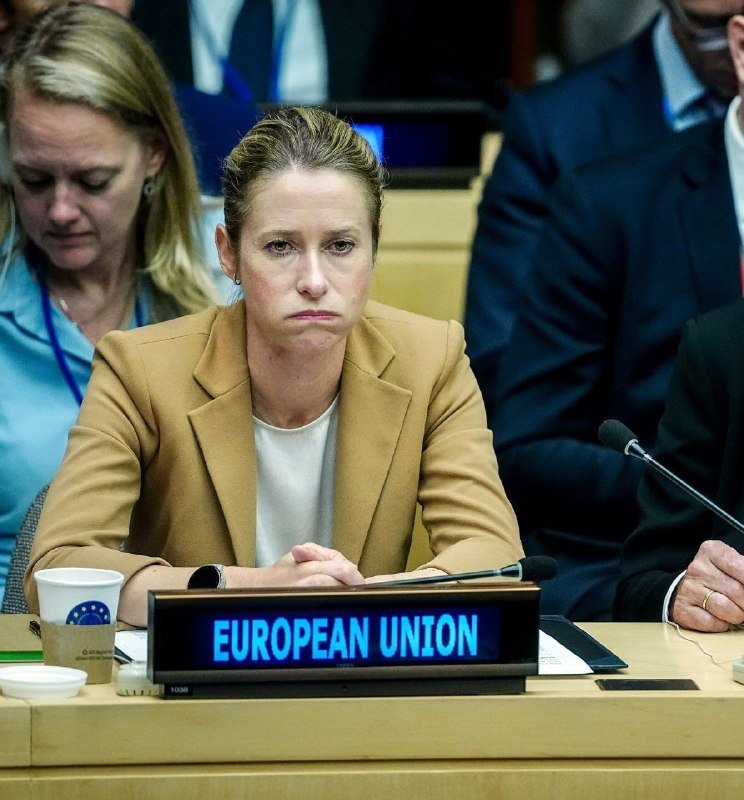
On 25 April 2026, Mary Trump — the President's niece and author of a 2020 memoir detailing her family's dynamics — went on record with a direct clinical comparison. Her grandfather, Frederick Christ Trump, had shown dementia symptoms at the same age Donald Trump now is. The current President, she said, was showing analogous signs: emotional dysregulation, diminished impulse control, and a deterioration pattern she described as tracking closely with the family medical history.
The timing matters. This was not a background whisper to a sympathetic journalist. It was a pointed, public assertion delivered through channels that travel beyond the US wire cycle — reaching audiences in capitals that have spent months calibrating their Washington posture around precisely this question.
Within hours, Italian Prime Minister Giorgia Meloni addressed the question of transatlantic solidity at a press conference. The bilateral relationship, she said, was "always solid." Her own relationship with Trump, she was careful to note, was "nothing in particular" she was doing at that moment — a formulation carefully constructed to suggest continuity without intimacy, alliance without dependency.
The anatomy of a family intervention
Mary Trump's intervention is structurally unusual. Family members who publicly challenge a sitting President's cognitive fitness are rare precisely because the political cost is asymmetric. The accuser risks being dismissed as embittered or biased; the accusal, once made, cannot be retracted. What Mary Trump has done is anchor her claim in intergenerational medical pattern rather than partisan grievance. The framing positions her observation as clinical pattern-recognition — the kind of assessment that, once entered into the public record, does not require vindication from a news cycle.
The sources do not specify whether this statement was coordinated with any broader opposition strategy, and this publication cannot verify any such coordination. What is clear is that the content is not new: her 2020 book, "Too Much and Never Enough," documented family dynamics that included the President's relationship with his father. The dementia parallel, however, represents an escalation — a shift from behavioural description to medical inference.
What allied capitals are actually asking
The Meloni statement is instructive precisely because of what it does not say. A leader of a G7 economy, visiting Washington within the past twelve months and maintaining active diplomatic contact with the administration, was asked directly about the President's cognitive state and chose to answer through the proxy of institutional continuity rather than personal assessment.
"Solid" describes the relationship between states, not between individuals. It is the language of bureaucracies and treaties — the infrastructure of statecraft that outlasts any single occupant. Meloni's carefully hedged personal characterization — "nothing in particular" — signals that she has calibrated her exposure. She is not in a position to verify or dispute the clinical question; equally, she is not willing to stake diplomatic capital on an answer she cannot control.
This is the posture that multiple allied capitals are quietly adopting. The public framing is continuity; the private calculus is contingency. Officials in capitals with active US basing agreements, trade relationships, and security commitments are, according to accounts in regional and specialist diplomatic reporting, conducting internal reviews of what "continuity" means when the personified channel to Washington carries the noise Mary Trump's statement introduces.
The information asymmetry that structured this moment
Coverage of the President's cognitive fitness has operated under a structural constraint common to situations where official assessment is unavailable or suppressed. When the executive branch itself provides no routine public accounting — no release of medical records, no structured cognitive disclosure, no press briefing in which such questions can be asked directly — the information vacuum fills from the edges. Family members, former staff, congressional interlocutors who have spoken to the President privately.
The edge-sources do not have the standing to settle the question. But they do have the standing to introduce it into public discourse in terms that resist easy dismissal. Mary Trump's statement, anchored in family history rather than political opposition, occupies that space. It is the kind of source that mainstream US outlets, operating within the conventions of access journalism, have been reluctant to amplify — not because the claim is implausible, but because the source is compromised by family interest.
The irony is that the constraint that has kept mainstream US outlets from reporting this line of inquiry directly has not kept the information from circulating. It has simply directed the circulation toward international audiences and non-mainstream channels that face different editorial conventions. The result is an information asymmetry: allied capitals, reading international coverage and monitoring their own intelligence channels, may have a more complete picture of the family-level discourse than domestic audiences who rely on mainstream outlets alone.
What this signals for the transatlantic architecture
The stakes are concrete and bilateral. If the question of the President's cognitive fitness becomes a settled public assumption in allied capitals before it becomes a settled public question in Washington, the diplomatic asymmetry that creates is structurally consequential. Allied governments will manage their Washington relationships with a reserve they would not otherwise maintain — holding proposals longer, avoiding commitments that require presidential follow-through, positioning themselves to respond to a transition that may arrive by means other than the electoral schedule.
Italy, under Meloni, has positioned itself as the most consistently pro-Washington government in the G7. Her measured statement, read against that context, is not reassurance — it is insurance. The "solid" language keeps the institutional channel open regardless of who occupies the Oval Office and regardless of their cognitive standing. It is the language of a capital that has learned, from the experience of managing an administration whose internal coherence is a live question, to maintain its options.
The sources do not indicate whether other G7 leaders have been queried on the same framing. This publication cannot verify the posture of Berlin, Paris, or London on this specific dimension. What the Meloni statement makes legible is the structural logic that is operating across allied chancelleries: publicly, the fiction of full cognitive equivalence; privately, the managed hedging of a relationship whose primary channel is, by any clinical comparison now in the public record, not operating normally.
Desk note: The wire cycle on this story in mainstream US outlets focused on Meloni's diplomatic language while treating the Mary Trump disclosure as a family grievance. Regional and international coverage gave both elements closer to equal weight. Monexus has structured this piece to foreground the interaction between the two — the clinical disclosure as a diplomatic signal, not just a domestic political event.
Wire provenance
This editorial synthesis draws on the following public wire/social posts:
- https://t.me/tasnimnews_en
- https://t.me/mehrnews
- https://t.me/JahanTasnim
- https://t.me/ClashReport