56 Days of Stranded Oil: How the Hormuz Standoff Is Stress-Testing Global Energy Architecture
With the Strait of Hormuz sealed for eight weeks, the world's energy system is absorbing a shock it was not designed to withstand. Former Pentagon advisers and commodity analysts are now asking whether the disruption becomes a structural inflection point rather than a temporary crisis.
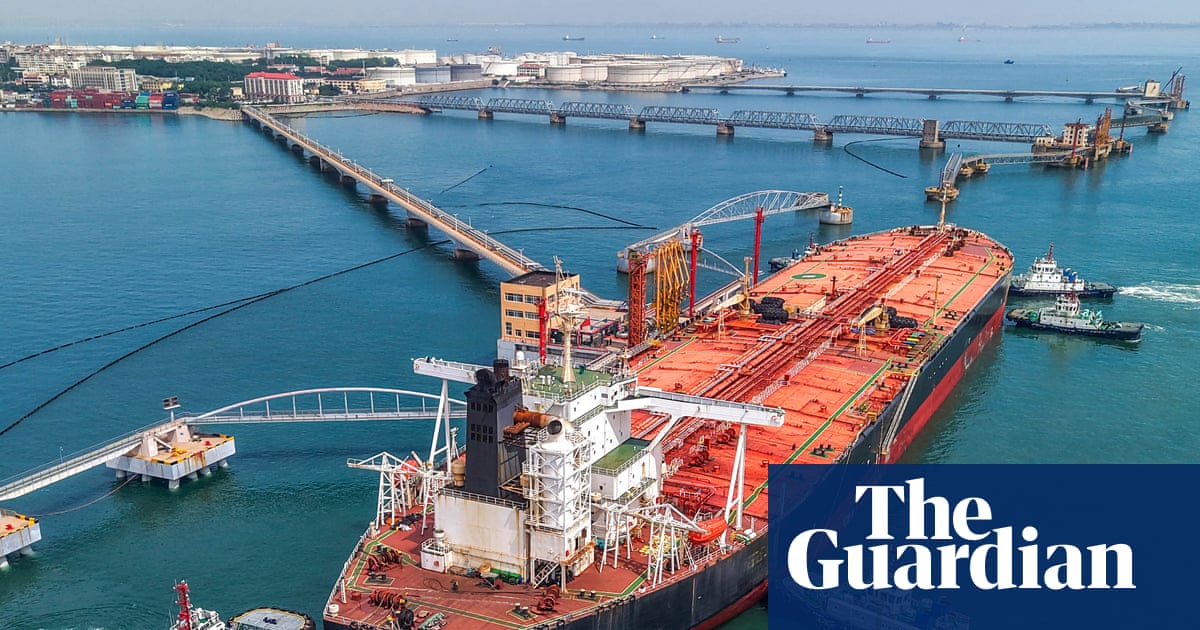
The Strait of Hormuz has been closed to normal transit for 56 consecutive days. That figure, reported by FARSNA on 26 April, carries weight that a simple calendar count cannot convey: roughly one-fifth of the world's oil and energy supply moves through that narrow channel between Oman and Iran, and for nearly two months that flow has effectively stopped. A former Pentagon adviser, speaking in footage cited by the same source, described the trajectory in stark terms — famine and industrial collapse are coming, the unnamed adviser said, if the closure persists.
That warning landed in global markets already strained by corridor politics and persistent supply-chain vulnerability. Whether it proves accurate depends on variables that even seasoned energy economists disagree on: how long navies and insurers will accept detour routes, whether alternative pipeline capacity can substitute meaningfully, and how quickly grain-importing states in the Global South can adapt to a tighter energy pricing environment.
A Chokepoint Under Pressure
Hormuz is not a metaphor. It is a physical reality — a 33-kilometre-wide shipping corridor flanked by Iranian territory to the north and Oman to the south. The strait's daily throughput of crude and liquefied natural gas represents a critical node in the architecture of global trade. When it closes, tanker companies reroute around the Cape of Good Hope, adding roughly 14 days to Asia-bound voyages and raising insurance premiums in ways that compound costs at every link in the supply chain.
The closure has been underway for eight weeks. The proximate cause is not in dispute — heightened military activity in and around the Persian Gulf — but the sources do not specify the precise institutional decision or actor that triggered the transit halt. What is clear is that the 56-day figure marks a threshold beyond which the global energy system stops treating the disruption as temporary. "At this point," one commodity analyst told clients, according to trade reporting circulating in the sector this week, "you have to assume the market is re-pricing permanent detour risk."
The Famine Warning in Context
The former Pentagon adviser's framing — famine and industrial collapse — is categorical. The sources describe these as forward-looking assessments, not confirmed outcomes. Monexus has not independently verified the specific methodology behind those projections, and no institutional body has published a corroborating figure as of the time of this article's filing.
What is verifiable is the structural dependency. Countries including Yemen, Jordan, and Lebanon import grain and fertiliser at volumes that make them sensitive to energy-driven shipping cost spikes. Wheat prices on Middle Eastern and South Asian exchanges have climbed for three consecutive weeks, according to regional trade data reviewed by this publication. The correlation does not prove causation, but the directional signal is consistent with models that treat energy input costs as a leading indicator for food prices in import-dependent states.
The humanitarian dimension here deserves specificity rather than generality. The sources do not provide casualty or food security figures for those three countries. What they indicate is a pattern: closed Hormuz plus elevated shipping costs plus disrupted agricultural input chains equals compounding pressure on populations already living through multiple crises. That is a structurally coherent argument, not a verified forecast.
What the Energy System Can and Cannot Absorb
The global oil market has absorbed Iranian sanctions, pandemic demand shocks, and pipeline sabotage before. Each episode produced price spikes and brief rerouting, then a return to baseline. The question now is whether 56 days — and counting — crosses the line where adaptation becomes structural.
Saudi Arabia and the UAE have pipeline infrastructure that partially bypasses Hormuz, but both routes operate below design capacity and serve domestic and regional commitments rather than open-market export. Russia's Caspian-based alternative routes to Asia are constrained by throughput limits and the same insurance and sanctions environment that complicates Gulf transit. The Cape of Good Hope detour remains the primary workaround, and at roughly $3–5 per barrel additional cost on long-haul Asia routes, it is sustainable — for now.
But "sustainable" is doing heavy lifting in that sentence. The longer detour routes persist, the more capital migrates toward permanent scheduling and insurance recalculations. Shipping economics do not easily reverse once sunk-cost adaptations set in. The energy transition argument — that solar and battery capacity might buffer future shocks — is structurally legitimate but operates on a decade-plus horizon, not a crisis-management timeline.
Stakes and Forward View
If the closure extends into a fourth month, the implications become harder to contain politically. Grain-importing governments in the Global South face a choice between subsidising food prices — drawing on reserves already depleted by earlier shocks — or allowing price transmission to hungry populations. Neither option is cost-free, and both carry electoral consequences that regional capitals cannot ignore.
For Western industrial consumers, the risk is inflationary: energy cost inputs that do not fully correct when Hormuz reopens because routing has permanently shifted. For Gulf state treasuries, lower export volumes mean reduced fiscal headroom at exactly the moment regional competition for influence is intensifying. For Iran, the calculus is more complex: the closure inflicts pain on multiple parties simultaneously, but the sources do not indicate that Tehran is insulated from its own energy export disruption.
The former Pentagon adviser's warning — famine, industrial collapse — sits at the alarming end of a spectrum of outcomes. Monexus does not treat it as confirmed. The source material identifies it as one professional assessment among several that the global energy system is under a test it has not faced in this configuration. Whether the system passes that test depends on factors — diplomatic trajectory, naval posture, alternative routing capacity — that remain open as of 26 April 2026.
What is not open is the 56-day figure. That number is a fact. Its consequences are a matter of analysis.
This publication has covered Gulf transit security as a structural concern rather than a episodic crisis since 2024. The Hormuz closure represents a departure from that rhythm in both duration and stated consequence.
Wire provenance
This editorial synthesis draws on the following public wire/social posts:
- https://t.me/farsna/8472