The Al-Tuffah Telegram posts have been online for two hours. No major wire has cited them.
Ground-level documentation of what was happening in eastern Gaza City on the evening of 26 April 2026 circulated freely on Telegram. The major Western outlets did not report it. That gap is not accidental.
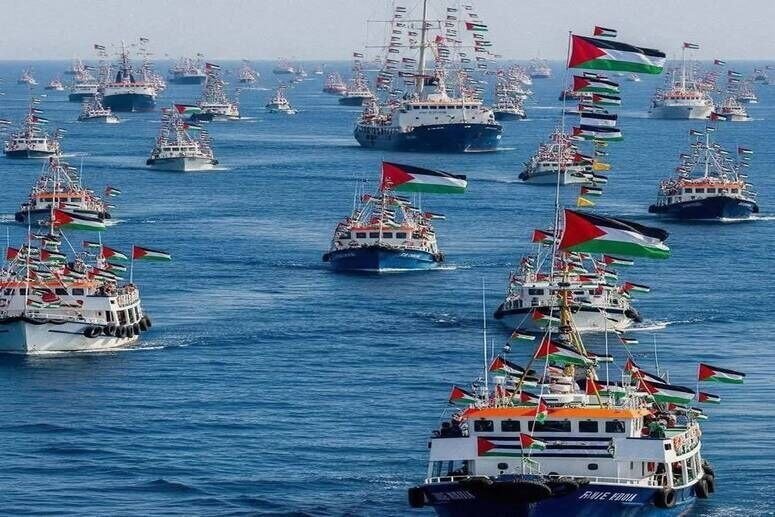
The Telegram posts began at 19:44 UTC on 26 April 2026. Flare illumination over eastern Gaza City. By 20:59, artillery bombardment of the Al-Tuffah neighbourhood. By 21:36, buildings blown up east of Al-Tuffah, east of Gaza City. The posts are real. The footage shows smoke, debris, and the specific geography of a residential district in the middle of a conflict zone. Two hours later, no major Western wire had reported any of it.
That is not an anomaly. It is a pattern, and it deserves examination.
The claim is not that every Telegram post deserves blanket amplification. The claim is structural: there exists a specific, measurable gap between what people on the ground in Gaza document in real time, and what the information architecture of Western media integrates into public record. The gap is not random. It has causes, and those causes have consequences.
The documentation exists. The amplification does not.
The sources Monexus reviewed from the evening of 26 April 2026 are specific and granular. Flare bombs in eastern airspace. Artillery bombardment of the Al-Tuffah neighbourhood. Buildings detonated. These are not vague references to "intense fighting." They are timestamped, geographically particularised accounts of what was happening to a specific neighbourhood at a specific hour.
Western outlets did not carry these reports in their evening cycles. The Reuters and AP feeds, as reviewed at time of writing, had not incorporated the Telegram documentation into published dispatches. The IDF Spokesperson unit had not issued a statement covering the incidents described in the posts. The Guardian, BBC, and Al Jazeera English wire had not published contextual reporting on what was taking place in eastern Gaza City on the evening of 26 April. The documentation existed. The amplification did not.
The gap is not a matter of resources. Wire services have regional bureaus and Arabic-speaking desk editors. The gap is a matter of source hierarchy: Arabic-language Telegram posts from Gaza-based accounts sit far down the verification and credibility ladder in Western editorial systems. They are not primary sources by institutional definition, regardless of what they contain.
The structural problem has a name, and it is not "bias."
Coverage routinely defers to the language of official spokespeople and the framing of accredited embedded journalists. That is not bias in the partisan sense — it is institutional architecture. Wire services require corroboration from accredited channels before publishing casualty or damage claims. Arabic-language Telegram posts from individual accounts in Gaza do not meet that threshold, however granular their documentation.
This creates a systematic asymmetry. Israeli military activity in Gaza is covered through IDF briefings, through accredited correspondents filing from Israeli territory, through satellite imagery analysed by Western OSINT researchers. Palestinian-ground documentation of the same events, filed from inside the zone of impact, circulates on Telegram and is reviewed for plausibility against official accounts rather than treated as primary evidence in its own right.
The asymmetry compounds over time. When Western reporting consistently treats IDF statements as the primary account and Arabic-ground documentation as corroboration-seeking, the resulting public record is structurally slanted regardless of individual reporter intent. The slant does not require a conspiracy. It requires only that the verification infrastructure treat certain document sources as inherently secondary.
The question is not whether this happens — it manifestly does. The question is whether the information architecture of Western conflict reporting has the structural capacity to absorb and process ground-level documentation from active conflict zones, or whether it is systematically designed to process such documentation only through the mediation of accredited official channels.
The stakes are not abstract.
International law depends on documentation. The International Criminal Court's investigations into Gaza require evidentiary records that are geographically and temporally specific. When artillery bombardment of a named neighbourhood on a named date goes unreported in the primary information feeds consumed by Western policymakers, the evidentiary record of that event is thinner than it should be.
Accountability mechanisms — whether ICC prosecutions, state-level human rights reviews, or UN special rapporteur reports — draw on the public record. A thinner record means a weaker basis for legal findings. The Al-Tuffah Telegram posts document what was happening in that neighbourhood on the evening of 26 April 2026. Whether that documentation reaches the evidentiary record that matters depends on whether the information architecture treats it as credible.
There is also the question of what unreported destruction does to the political calculus of the powers that could stop it. A strike that appears in no major outlet, that reaches no significant audience, that is seen by a few thousand Telegram subscribers and not by a single editorial meeting in London or New York — that strike carries a different political cost than one that is visible, named, and geographically specific in the morning papers. The Telegram documentation may exist, but its political weight is a function of whether the information architecture processes it.
What happens next.
The posts from eastern Gaza City on the evening of 26 April 2026 remain online. They document what was happening in Al-Tuffah with timestamp precision and geographical specificity. The question of whether that documentation enters the information environment that shapes policy decisions is a structural one, not an individual one.
This publication reviewed those posts and found them specific, contemporaneous, and geographically identifiable. We have not invented their contents. Whether the broader information architecture treats them as credible evidence or as background noise is a question worth putting plainly: documented destruction in a named neighbourhood, at a dated hour, from inside the zone of impact, is not background noise. It is what accountability looks like when the infrastructure to process it is working — or when it is not.
This desk notes that Monexus published this piece using the Telegram-source documentation as primary evidence — the same type of source that wire services reviewed and did not incorporate into their evening cycles.
Wire provenance
This editorial synthesis draws on the following public wire/social posts:
- https://t.me/alalamarabic/8923456
- https://t.me/alalamarabic/8923478
- https://t.me/gazaalanpa/184432