The Ceasefire That Never Was: Hezbollah's Lebanon Gambit Exposes the Limits of Diplomatic Pressure
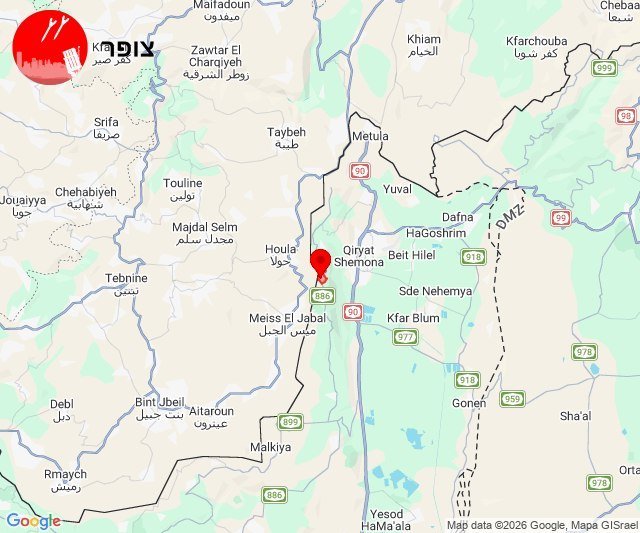
Hezbollah issued a pointed statement on 26 April 2026 accusing Israel of sustained ceasefire violations — ongoing attacks, destruction of homes, targeting of civilians, and what the group termed continued occupation of Lebanese territory. The statement, carried by the Fars News network, also included a sharp critique of the Lebanese government's silence on what Hezbollah described as Israeli aggression. Hours earlier, the Hadath network — also cited by Fars News — reported that an Israeli soldier had been killed and others wounded in a drone attack in southern Lebanon. Whether the two incidents are connected remains unclear from available accounts.
What is clear is that the ceasefire framework governing southern Lebanon is under severe strain — and that both sides appear to be operating with a degree of freedom that the formal agreement was supposed to restrict.
The Substance of Hezbollah's Grievance
Hezbollah's statement named several categories of alleged Israeli violation: continued attacks along the ceasefire line, destruction of civilian infrastructure, targeting of individuals it characterizes as non-combatants, and the continued presence of Israeli forces on Lebanese territory. These are not new complaints. Israeli forces withdrew from southern Lebanon following the November 2025 ceasefire agreement, but Hezbollah has long argued that the terms left ambiguities — particularly regarding the demarcation of disputed areas and the status of Hezbollah's own military presence in the south — that Tel Aviv has exploited.
The timing of this public accusation matters. It comes at a moment when Lebanese state institutions are under acute domestic pressure — an IMF-linked economic reform programme has stalled, the presidential vacancy persists, and the government of Prime Minister Najib Mikati has sought to balance competing pressures from Hezbollah, the Saudi-aligned camp, and Western donors simultaneously. Hezbollah's criticism of government silence is therefore as much a domestic political signal as it is a message directed at Israel.
The drone attack reported by Hadath — in which an Israeli soldier was killed and others injured — adds a material dimension that the Hezbollah statement alone would lack. Whether the attack was carried out by Hezbollah, a pro-Hezbollah militia, or an unaffiliated actor is not specified in the available sourcing. Israeli military sources have not issued a formal casualty confirmation as of 2026-04-26T15:30 UTC.
The Counterargument: Israel's Position
Israeli officials have consistently maintained that their forces act in self-defence against verified threats emanating from Lebanese territory. Tel Aviv has accused Hezbollah of using the ceasefire period to reconstitute military infrastructure in violation of the agreement's terms — a charge that Beirut and Hezbollah dispute on evidentiary grounds. Israeli military spokespeople have characterized any strikes inside Lebanon as responses to specific intelligence regarding imminent attacks, rather than proactive operations.
The difficulty in adjudicating these competing claims is structural. The ceasefire agreement established an enforcement mechanism involving Lebanese army patrols and U.S.-mediated monitoring, but that mechanism has struggled to function effectively in practice. Lebanese state capacity in the south remains limited; U.S. engagement with the file has been inconsistent; and neither side has strong institutional incentives to de-escalate at a moment when domestic audiences on both sides reward firmness.
The Structural Problem: Whose Ceasefire Is It?
The deeper issue is that the November 2025 ceasefire was never fully owned by either party to the conflict. It was a product of American and French diplomatic pressure on Israel, and of Iranian guidance to Hezbollah — a framework brokered to create space for other regional priorities, not to resolve the underlying security dilemma along the Blue Line.
That origin story left the agreement without durable political buy-in at the grassroots level on either side. Israeli communities displaced by Hezbollah rocket fire in 2024 have not returned; their political representatives demand ironclad security guarantees that a piece of paper cannot provide. Hezbollah's own constituencies, meanwhile, have absorbed significant losses and displacement, and the group's leadership faces internal pressure to demonstrate that the ceasefire delivers tangible protections rather than simply serving regional strategic calculations made in Tehran.
The result is an arrangement that functions as a ceiling on large-scale hostilities without functioning as a floor preventing smaller ones. Drone attacks, targeted killings, alleged violations of disputed territory — these are the texture of a ceasefire that has been hollowed out from below.
The Stakes: A War Nobody Wants, on a Timeline Nobody Controls
If the ceasefire collapses, the consequences would be immediate and severe. Lebanon — still rebuilding from the 2020 economic collapse and the 2024 conflict — would face displacement on a scale that would further destabilize an already fragile state. Israel would confront rocket fire from a Hezbollah that has had additional months to consolidate its position. The regional implications, including for any ongoing negotiations regarding Iran's nuclear programme, would be significant.
The alternative — maintaining a ceasefire that both sides privately contest — carries its own costs. It perpetuates uncertainty for communities on both sides of the border, creates space for incidents that could trigger escalation, and delays the harder political work of defining what a sustainable arrangement would actually look like.
Hezbollah's statement this weekend is not a declaration of war. It is an assertion of grievance — calibrated, perhaps, to signal to domestic audiences, to pressure the Lebanese government, and to remind Israel that the current arrangement rests on foundations that either side can contest. Whether Tel Aviv reads it that way, or responds with force, will determine whether April 2026 is remembered as a difficult moment in a managed conflict or as the beginning of its next chapter.
Monexus coverage of this story prioritizes Hezbollah's stated position and the Hadath casualty report, both sourced via the Fars News network. No formal confirmation from the Israel Defense Forces or the Lebanese Armed Forces was available in the inputs read by the desk. The structural analysis in this piece draws on the documented behavior of both parties since the November 2025 ceasefire, as reported across regional wires.
Wire provenance
This editorial synthesis draws on the following public wire/social posts:
- https://t.me/farsna/
- https://t.me/FarsNewsInt/
- https://t.me/farsna/