The geography of atrocity fatigue
Three incidents on a single April afternoon in Gaza received minimal Western wire coverage. The pattern is structural, not incidental — and its consequences extend well beyond the newsroom.
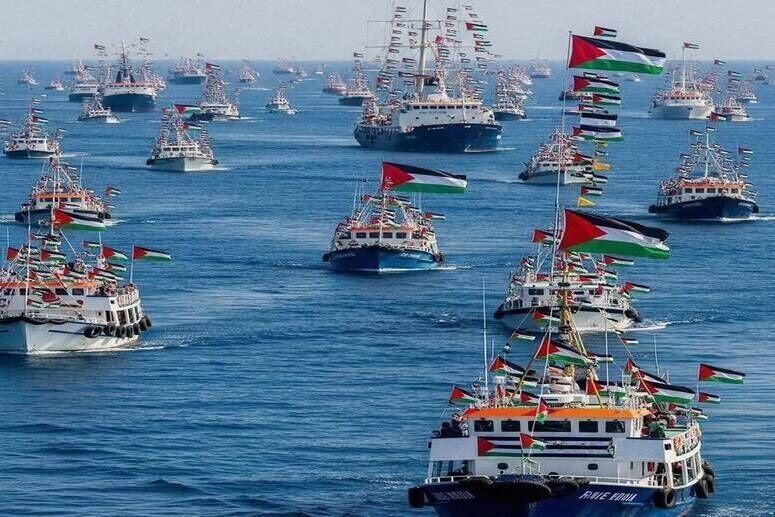
On the afternoon of 26 April 2026, three separate incidents were reported from within the Gaza Strip. Israeli naval vessels opened fire toward northwestern areas of the territory. A civilian sustained a gunshot wound to the abdomen in Al-Faluja, in the northern sector, described by the source as the result of random fire by Israeli occupation forces. Northeast of Nuseirat refugee camp, in central Gaza, artillery shelling was reported. The accounts appeared on a single Telegram channel, datestamped within a twenty-minute window between 19:09 and 19:29 UTC. They did not generate significant pickup in major Western wire services that evening.
The gap is not a mystery. It is a structure.
The repetition problem
There is a well-documented phenomenon in conflict journalism: the cumulative cost of covering the same story for an extended period produces, in editors and audiences alike, a form of cognitive desensitisation. Events that would command a front page in week one of a conflict are re-badged as background noise by week sixty. Gaza has now exceeded that threshold several times over. The events of 26 April are not, numerically, exceptional — they are among dozens of similar incidents that have been reported since October 2023. That very ordinariness, from a wire-editor's desk, is what makes them invisible.
The Telegram channel reporting these incidents operates as an on-the-ground aggregation feed, drawing on local contacts and Palestinian civil defence sources. Its dispatches are unsponsored, unverified by a third-party editorial process, and they carry no byline. Those are legitimate grounds for scepticism. They are not, however, grounds for indifference — particularly when the cumulative weight of similar dispatches, cross-referenced against UN agency statements and wire-service reporting from earlier phases of the conflict, paints a consistent picture of ongoing harm to a civilian population under a blockade that has now lasted more than eighteen months.
The asymmetry of newsworthiness
Western wire services apply a rough heuristic: an incident is newsworthy when it is novel, when it involves casualties at scale, or when it represents a departure from a prior state of affairs. None of the three 26 April incidents satisfies the first criterion. Casualty figures for individual shootings or artillery exchanges are typically low — one to several people — and the incidents therefore fail the threshold test for breaking-news wire alerts. The departure-from-prior-state criterion is also absent: Israeli military operations in Gaza have been continuous since late 2023. An ongoing occupation does not, by definition, generate the novelty wire editors seek.
The consequence is a systematic filter that treats Gaza as a background condition rather than a site of ongoing events. A mortar strike on a refugee camp in eastern Ukraine, reported from an OSINT feed with similar sourcing characteristics, would likely generate faster wire pickup. The differential is not explained by the reliability of the sourcing. It is explained by the perceived news value of the conflict itself — and that perception is itself a product of editorial geography.
What the structural frame obscures
The filter does not only obscure individual incidents. It obscures the aggregate. Civilian harm in Gaza — whether measured in casualties, in infrastructure destruction, or in displacement — has been documented by UN agencies, by the International Court of Justice in its January 2024 provisional measures order, and by a range of NGOs operating under access constraints. The pattern is not in dispute among serious analysts. What is less visible is the granular, day-by-day texture of life under that pattern: the civilian in Al-Faluja who sustained a gunshot wound, the families in the northwestern sector who came under naval fire, the residents of Nuseirat who heard artillery to their northeast on a Saturday evening.
The argument that this granular reporting is unimportant because the macro picture is already established gets the causality backwards. It is precisely the granular failure — the absence of day-to-day coverage — that allows the macro picture to be normalised. When an event stops being reported, it starts being assumed. Assumptions calcify into policy positions. Policy positions rationalise further inaction.
The stakes, stated plainly
Both sides of this conflict have suffered grievously. Israeli security concerns are genuine, and the hostage situation that drove much of the early phase of the war remains an unresolved human tragedy for the families involved. Monexus has reported those concerns consistently, and nothing in this piece should be read as relativising them.
But the question of media attention is separable from the question of moral weight. Palestinian civilian harm is also a first-order fact of this conflict, and it does not receive equivalent column inches in the outlets that set the agenda for English-language coverage globally. When that asymmetry combines with the repetition effect — when the cumulative weight of months of reporting produces editorial fatigue — the gap widens further.
The result is a coverage environment in which a civilian shot in the abdomen in Al-Faluja on a Saturday afternoon can go unremarked by every major wire service by the time the evening news cycle closes. That is not a failure of any individual journalist. It is a structural outcome, and it has consequences: policy drift toward normalisation, eroded space for accountability, and a public that is neither fully informed nor fully ignorant — simply, selectively inattentive. The Telegram dispatches from 19:09 to 19:29 UTC on 26 April 2026 are a precise record of what that inattention obscures.
Wire provenance
This editorial synthesis draws on the following public wire/social posts:
- https://t.me/gazaalanpa/7891
- https://t.me/gazaalanpa/7892
- https://t.me/gazaalanpa/7893