The Geopolitical Jujitsu of Middle East Stability Claims
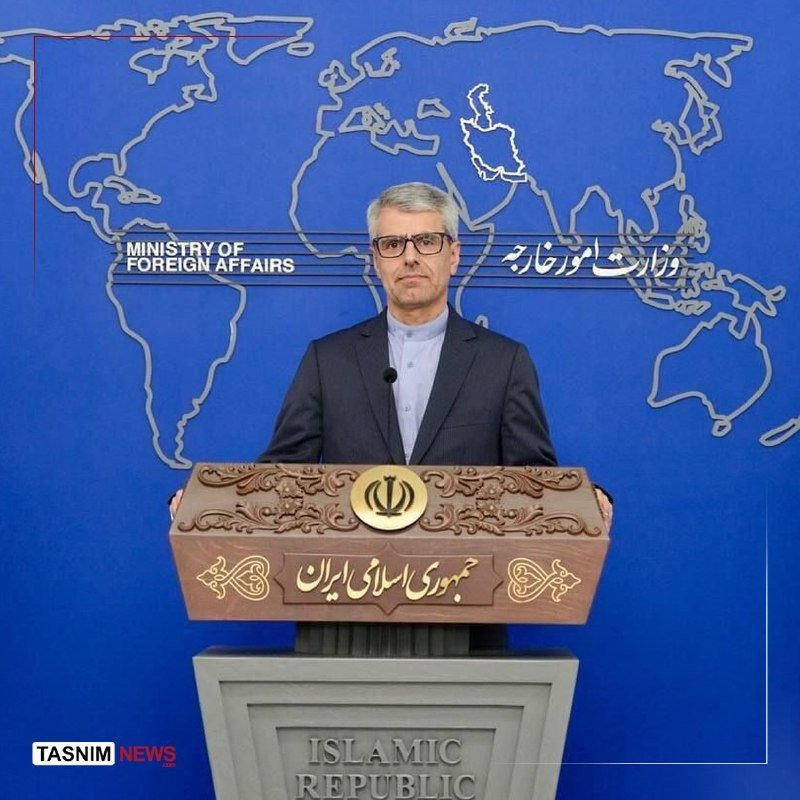
On 26 April 2026, Iranian Foreign Minister Abbas Aragchi delivered a statement laying blame for Middle Eastern instability squarely at the feet of external powers — specifically naming the United States military presence as the central driver of insecurity and division. He called for a regional security architecture built without outside interference. That same day, speaking in a context where his remarks were captured and distributed online, former President Donald Trump offered his own diagnosis: blow up the Middle East, watch European markets follow, and watch it come for the United States. We are not going to let that happen, he said.
Two statements, one news cycle. Neither is subtle about what it wants the listener to fear.
The Oil Market Is the Argument
Trump's framing is not diplomatic language — it is financial risk communication. When he says that a Middle Eastern conflict triggers stock market deterioration that reaches Europe and then the United States, he is translating geopolitical chaos into the only currency that reliably moves audiences in Washington. The logic is familiar: the petrodollar system, Brent crude benchmarks, and the freight-cost indices that govern global supply chains are all tethered to the same geography. A strike on Iranian energy infrastructure — or a prolonged disruption of Straits of Hormuz transit — moves WTI and Brent simultaneously. Retail investors who have never read a think-tank brief on Gulf sovereignty understand a spike at the pump.
This is not new as a rhetorical move. Administrations across both parties have used oil-price anxiety as a justification for Middle Eastern engagement, from the Carter Doctrine onwards. What is specific to this moment is the transactional framing: stability is good for markets, markets are the metric, therefore stability is the policy. The argument collapses the distinction between American strategic interests and American portfolio interests — a collapse that suits an administration more comfortable with business-language than diplomatic vocabulary.
Tehran's Counter-Suite
Aragchi's statement, reported by Middle East Eye on 26 April 2026, operates in a different register but serves a structurally similar function. The Iranian foreign minister is not making an economic argument — he is making a sovereignty argument — but the political work is identical: presenting the United States as the author of the problem the United States claims to be solving. By calling for a regional security framework free of external interference, Aragchi is asking the same question that has animated Iranian foreign policy since 1979: why does a country with legitimate security concerns need foreign boots on the ground to address them?
The answer from Washington is predictable: because regional actors cannot guarantee stability on their own, and instability has global economic consequences. That answer is not wrong. It is, however, incomplete. It elides the degree to which the US military architecture in the Gulf has been shaped by petrodollar recycling needs, by the preference of Gulf monarchies for external security guarantees that relieve them of the political cost of domestic militarisation, and by the leverage those guarantees give Washington over Allied energy consumers. The regional security framework Aragchi proposes would eliminate a significant portion of that leverage — which is precisely why it has no traction in the State Department, regardless of its internal coherence as a governance model.
The Stability Racket
What connects these two framings is a shared assumption that stability is the prize worth arguing over. Trump and Aragchi disagree on the cause of instability; they agree that instability is bad. That consensus is not neutral. It builds a rhetorical structure in which the continuation of current arrangements — American military presence, regional deference to that presence, the pricing of risk into oil futures accordingly — appears as the rational choice against a clearly worse alternative. Neither statement interrogates whether the arrangement itself produces the instability it promises to cure. The question of whether forty years of US bases in the Gulf has generated the security dividends claimed for them — or whether it has instead generated the threat inflation that justifies the bases — is the question neither side in this exchange has any interest in asking.
That is the structural service the discourse performs. Both Tehran and Washington benefit from an audience that accepts the premise that their preferred arrangement is the only realistic barrier to chaos. The audience that internalises that premise makes policy debates easier: the choice is never between the arrangement and something better, it is between the arrangement and catastrophe.
The Economic Framing Is the Point
What has changed in the past decade is not the underlying geopolitics of the Gulf — it is the audience's frame of reference. Oil executives in Houston and fund managers in London who once received classified briefings now consume geopolitical risk through commodity trading screens and options market vol signals. The information environment has flattened. When Aragchi says external interference drives insecurity, his audience in European capitals and among Gulf Cooperation Council members may encounter that framing not through diplomatic cables but through the price of their own retirement accounts.
This creates a new pressure point that Aragchi's predecessors did not have. If Iran can credibly position itself as the party advocating for the very stability that global markets demand — while positioning the United States as the agent of disruption — it shifts the burden of proof. The argument is no longer "Iran is a threat and we need American bases to contain it." The argument becomes: "The bases are themselves the source of the instability that the markets correctly fear, and here is a regionally-sourced alternative." Whether that alternative is feasible, how it would be verified, and what happens during the transition period are questions that the framing deliberately defers. The framing wins the immediate argument; the feasibility questions can be contested later, in a context where the burden of proof has already shifted.
The Iranian foreign minister's statement on 26 April should be read as a contribution to that longer argument, not merely a position paper on current force posture. The call for a regionally-owned security architecture is a decades-long project that no single statement advances or concludes. But in the context of a Washington that has increasingly framed its Middle Eastern presence as a market-stability service — as Trump explicitly did in his remarks the same day — it is a framing that finds more resonance than it did a decade ago. The audience for "security through external presence" has a shorter tolerance for disruption than it did when the Gulf was a reliable hedge against European and Asian economic competition. That shift in audience temperament is the real story this pair of statements is telling.
Wire provenance
This editorial synthesis draws on the following public wire/social posts:
- https://x.com/middleeasteye/status/1914325678943596864
- https://x.com/unusual_whales/status/1914367823450120277
- https://x.com/unusual_whales/status/1914367823450120277