Hezbollah Claims Drone Strike on Israeli Forces in Southern Lebanon as Cross-Border Tensions Persist
Lebanese armed group Hezbollah says it carried out two attacks targeting Israeli soldiers in the town of Taybeh on Sunday, 26 April, in what it described as retaliation for ceasefire violations. The IDF had not issued a public statement at time of publication.
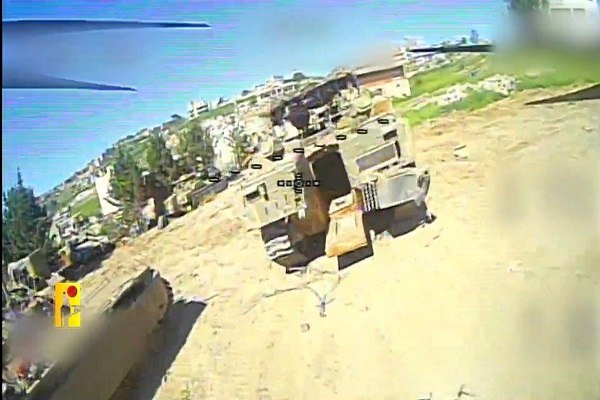
Hezbollah issued two separate operational claims targeting Israeli forces in the southern Lebanese town of Taybeh on the morning of Sunday, 26 April 2026, according to statements released by the Lebanese armed group and verified across open-source intelligence channels. The first operation, reportedly launched at 09:40 local time, involved an attack drone directed at what Hezbollah described as a gathering of Israeli soldiers, causing what the group stated were confirmed casualties. A second operation was announced in a subsequent statement, with the group framing both attacks as direct retaliation for what it termed Israeli ceasefire violations.
The Israel Defense Forces had not issued a public statement confirming, denying, or providing details of the incidents at the time of publication. Taybeh sits in southern Lebanon, approximately 5 kilometres north of the Blue Line — the UN-drawn boundary that marks the frontier between Lebanon and Israel — placing the reported strike squarely within the area that has seen the highest frequency of cross-border exchanges since the cessation of major hostilities in the Israel-Hamas conflict.
The claims arrived amid an environment of persistent, low-grade hostilities along the Lebanon-Israel frontier. A fragile understanding governing the rules of engagement has been in place — with varying degrees of adherence from both sides — since the November 2024 Gaza ceasefire, but that arrangement has shown consistent strain. Israeli operations described as ceasefire enforcement in southern Lebanon have continued intermittently, and Hezbollah has repeatedly characterized such operations as violations warranting response. What constitutes a permissible operation under the unspoken terms of the arrangement remains a point of contention that both sides have interpreted broadly in their own favour.
What We Verified and What We Could Not
Monexus was able to confirm the following through the available source material: Hezbollah released two written statements on 26 April 2026 claiming attacks on Israeli soldiers in Taybeh, southern Lebanon. One statement specified an attack drone strike at 09:40 targeting a gathering of soldiers, and claimed confirmed casualties. Open-source monitoring channels independently reported the same claims without contradiction. The IDF had not commented publicly at time of publication, leaving the Israeli military's assessment of the incidents unconfirmed.
Monexus could not independently verify the following: the actual casualty figures, if any, resulting from the reported strikes; the specific Israeli military positions or personnel affected; whether a ceasefire understanding was in force at the time of the alleged violations cited by Hezbollah; whether Israeli forces were operating inside Lebanese territory at the time of the attacks; or the operational status of the ceasefire framework more broadly. The open-source channels carrying Hezbollah's statements noted the IDF had not commented but did not independently corroborate the strikes through visual evidence or official sources.
The structural imbalance in available evidence is worth flagging. Hezbollah released statements and imagery; Israeli sources did not. Open-source monitors reported what the group said it had done. In the absence of IDF confirmation or independent verification from international monitors on the ground, the scope of what can be stated with confidence is limited to Hezbollah's own characterisation of events.
The Ceasefire Framework and Its Contested Boundaries
The patchwork of understandings governing cross-border hostilities between Israel and Hezbollah is not a formal peace agreement. It is a set of loosely defined parameters — tacitly negotiated through American and French mediation, with indirect Lebanese government involvement — that has managed to contain a return to full-scale war while tolerating a sustained level of violence below the threshold that would trigger re-escalation. Both sides have exploited that ambiguity. Israel has continued what it describes as counter-terrorism operations along the northern frontier; Hezbollah has described those operations as incursions and responded accordingly.
The result is a cadence of strikes and counter-strikes that neither side formally acknowledges as warfare but neither fully restrains. Hezbollah's framing of its attacks as retaliation is structurally consistent with its posture since November 2024 — it has maintained that it retains the right to respond to Israeli operations and has exercised that right on multiple occasions. Israel, for its part, has conducted strikes inside Lebanon it characterises as enforcement of its security perimeter, with the implicit backing of continued American diplomatic support.
The ambiguity of the framework is not accidental. A precise written agreement with clear definitions of prohibited conduct would constrain both sides' operational flexibility. The current arrangement allows each to calibrate its actions against the other's in near-real-time. What it does not provide is any mechanism for independently adjudicating whether a violation has occurred — which means each side's characterisation of the other's actions as violations carries inherent self-interest that outside observers must weigh carefully.
Regional Context and the Shadow of the Gaza Conflict
Hezbollah's sustained engagement along the Lebanon-Israel border cannot be understood in isolation from the broader regional dynamics that followed the October 2023 Hamas attack on Israel and the subsequent Israeli military operation in Gaza. Hezbollah entered the conflict on the assumption that its operations would relieve pressure on Hamas — tying down Israeli forces and resources in the north. When the Gaza campaign extended far beyond initial expectations, Hezbollah adjusted its posture but never fully withdrew its operational commitment along the southern Lebanese frontier.
The November 2024 ceasefire in Gaza did not resolve the Lebanon question. It created a new phase of managed ambiguity in which Hezbollah's leadership calculates the acceptable cost of maintaining its deterrent posture against what it frames as Israeli occupation of Lebanese territory — specifically the Shebaa Farms area — while avoiding the full-scale war that would follow a clear, unambiguous breach of the tacit understanding. The strikes claimed on 26 April are consistent with this posture: assertive enough to demonstrate capability and willingness to act, calibrated to avoid triggering the level of Israeli response that would shatter the framework.
Israeli Prime Minister Benjamin Netanyahu's government has repeatedly stated that restoring security to the northern border is a core war objective, alongside the return of hostages held in Gaza. The tension between those two objectives — a ground operation in Lebanon versus the diplomatic and military constraints that a full incursion would create — has kept the northern front in a state of suspended conflict. Neither a decisive Israeli victory nor a Hezbollah surrender is achievable under current parameters, which reinforces the attritional logic that both sides are operating within.
Stakes and Forward View
The immediate stakes of the 26 April strikes are contained: a limited exchange within a framework designed to absorb precisely this level of friction. Both sides have strong incentives to absorb the incidents without escalation. Hezbollah avoids giving Israel a pretext for the ground incursion it has repeatedly threatened. Israel avoids the operational and diplomatic costs of a second front while its Gaza operations continue in reduced form. The tacit framework holds — for now — because neither side has found a better alternative.
The longer-term trajectory is less stable. The buffer zone that Israel insists upon in southern Lebanon — whether enforced by the Lebanese army, UN peacekeepers, or some other arrangement — does not exist in practice. Hezbollah's military infrastructure remains present in southern Lebanon despite Israeli demands for its withdrawal. Israeli surveillance and strike capabilities continue to probe that infrastructure. Each strike, each response, each claimed violation adds friction to a framework that was designed to be friction-absorbent but is showing signs of wear.
The critical variable is not the tactical exchange but the strategic calculus in Jerusalem. If the Israeli government determines that the tacit arrangement has failed to deliver the security improvement it requires for the northern border — and if it believes American pressure for restraint has diminished — the incentives for a more aggressive approach increase substantially. The strikes claimed by Hezbollah on 26 April do not themselves represent that threshold. They represent the background noise of a conflict that has not ended and has not been resolved.
This article was filed from open-source and Telegram-sourced reports. Monexus will update if the IDF or official Lebanese government sources provide corroborating or contradictory information.
Wire provenance
This editorial synthesis draws on the following public wire/social posts:
- https://t.me/AMK_Mapping
- https://t.me/TheCradleMedia
- https://t.me/thecradlemedia
- https://t.me/wfwitness
- https://t.me/osintlive