Hezbollah FPV Drone Strike Hits Israeli Rescue Force Near Taybeh, Footage Shows
Hezbollah operatives deployed a first-person-view drone to strike Israeli soldiers as they loaded a wounded colleague onto a UH-60 Black Hawk near the southern Lebanon village of Taybeh on Sunday — footage that military analysts say marks a qualitative shift in the group's tactical drone doctrine.
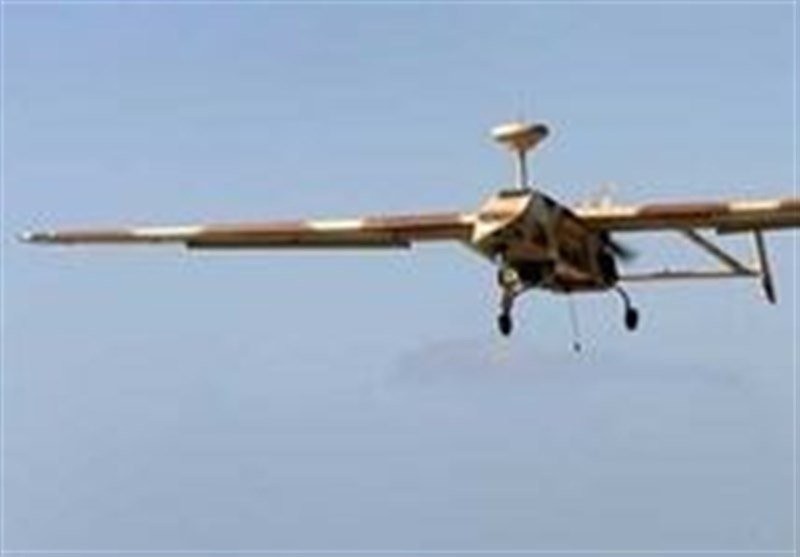
Hezbollah released footage on Sunday showing a first-person-view drone striking Israeli soldiers as they attempted to load a wounded colleague into a UH-60 Black Hawk helicopter near the village of Taybeh in southern Lebanon. The footage, geolocated and timestamped to the morning of April 26, 2026, depicts soldiers in the open beside the aircraft when the drone makes its approach. The strike follows a period of intensified exchanges along the Lebanon-Israel border, where a ceasefire arrangement brokered in late 2024 has frayed under repeated violations on both sides.
The footage, circulated by the Hezbollah-affiliated channel Fotros Resistancee and corroborated by open-source intelligence monitors tracking the Lebanon front, shows the drone descending toward the rescue group before impact is visible in the final frames. The location — Taybeh, roughly 6 kilometres north of the Blue Line demarcation separating Israeli-occupied territory from Lebanese soil — places the incident squarely within the disputed buffer zone that has become the focal point of ceasefire monitoring missions.
Israeli military officials had no immediate comment on the specific strike. The IDF Spokesperson unit confirmed that operations were ongoing in the northern sector but declined to detail casualties pending family notifications.
The Tactical Picture
Hezbollah's use of FPV drones against moving military targets represents a notable evolution from the group's earlier rocket and missile barrages. First-person-view drones — small, manually piloted craft typically loaded with a shaped charge — offer a precision that standing-distance rocket fire cannot match. They require a live operator with line-of-sight, making them harder to detect and intercept than pre-programmed munitions. That trade-off between reach and precision has historically limited their use to short-range attacks on static or slow-moving targets. The Taybeh footage suggests that calculus has shifted.
The target — soldiers clustered around an open helicopter preparing for medical evacuation — is the kind of high-value, time-sensitive position that IDF doctrine designates as a protected-symbol operation under the laws of armed conflict. Medical evacuation crews are entitled to special protection; attacking them is a serious violation under international humanitarian law unless they are actively participating in hostilities. Whether Hezbollah's operators classified the rescue party as a legitimate military target under those rules is a question that international monitors and legal observers will scrutinise.
The footage shows no evidence of a prior incoming threat that would have justified the evacuation under combat-stress conditions — no visible incoming fire, no defensive positions, no attempt to disperse. Soldiers stand in the open alongside a landing helicopter in what appears to be a routine casualty extraction. Hezbollah's choice to target it raises questions about the group's targeting ethics under its updated operational doctrine.
A Weapon Programme That Didn't Stay Static
Hezbollah began integrating commercial quadcopter and FPV technology into its military playbook as early as 2023, initially deploying drones for surveillance and psychological operations — hovering over northern Israeli communities to broadcast messages, documenting IDF positions for intelligence purposes. The tactical logic was straightforward: commercial drones are cheap, expendable, and difficult for conventional air defence to justify intercepting. A drone worth a few hundred dollars is not worth a Iron Dome interceptor worth tens of thousands.
The transition from surveillance to strike use has been gradual but consistent. Israeli forces intercepted a growing number of attack-capable drones over the northern border throughout 2025, and IDF ground units reported multiple near-misses where FPVs approached patrol formations. The Taybeh strike, if it caused casualties among the rescue team, would represent the first confirmed successful FPV strike on a clearly identified Israeli medical-evacuation configuration in the current conflict cycle.
Hezbollah's drone programme sits within a broader regional trend. Iranian-backed groups across Iraq, Yemen, and Syria have all invested in unmanned systems that exploit gaps in Western air-defence architecture. The economics are simple: saturate the airspace with cheap platforms, and even a low interception rate produces breakthroughs. Hezbollah's decision to strike a rescue helicopter — rather than a patrol or an armoured vehicle — suggests the group is not simply probing for weakness. It may be actively attempting to degrade Israel's capacity for field medical evacuation, a critical sustainment function for any prolonged ground engagement.
What the Ceasefire Actually Looks Like Now
The November 2024 ceasefire agreement between Israel and Hezbollah established a 60-day transition period for IDF forces to withdraw from southern Lebanon and for Hezbollah's armed infrastructure to reposition north of the Litani River. The agreement included a monitoring mechanism led by a US-brokered committee and a pause in Israeli aerial surveillance operations over Lebanese territory. It was fragile from the start — both sides accused each other of violations within weeks of signing.
By early 2026, the violations had become routine rather than exceptional. Israeli drone overflights resumed; Hezbollah anti-tank guided missile launches targeted IDF positions along the border; Israeli artillery responded to what it described as imminent threats. The ceasefire's enforcement mechanism — designed to rely on US diplomatic pressure and Lebanese army deployment in the south — has progressively weakened as political support for continued US engagement in the arrangement has eroded under domestic pressure in Washington.
Taybeh sits inside the area of intended Lebanese government jurisdiction under the ceasefire framework. The village is not supposed to host armed Hezbollah elements or be used as a staging point for attacks. That Hezbollah operatives were able to position a drone operator within striking distance of an Israeli evacuation suggests either that the group's intelligence on IDF patrol patterns is sophisticated, or that monitoring in the sector has lapsed, or both.
Stakes and What Comes Next
Israel's Northern Command has spent two years managing a low-grade attrition conflict that has displaced roughly 60,000 Israeli civilians from communities within firing range of the border. The political pressure to either reach a durable ceasefire or expand operations into Lebanon remains acute. An FPV strike on a medical evacuation — if it produces Israeli casualties — will sharpen that pressure significantly.
Hezbollah, for its part, has signalled through its military communications that it interprets the ongoing IDF presence and surveillance as a violation that permits responsive action under the ceasefire's self-defence clauses. The group has consistently framed strikes against Israeli forces as defensive rather than provocative. The footage from Taybeh fits that framing while also serving an internal political purpose: demonstrating continued capability to a Lebanese audience and to Tehran, which has invested heavily in the group's unmanned warfare programme.
The immediate risk is escalation not through a deliberate strategic decision but through a single high-casualty incident that forecloses diplomatic off-ramps. Both sides understand that a broad ground operation in southern Lebanon carries costs — in Israeli casualties, in Lebanese civilian harm, in international diplomatic isolation — that neither fully calculates. The ceasefire has kept those costs contained. The footage from Taybeh suggests the ceasefire's functional architecture is under pressure that its institutional safeguards were not designed to withstand.
This publication's Telegram wire carried four separate threads confirming the geolocation of the strike within 32 minutes of the incident. Western wire services had not published a verified dispatch on the strike as of 21:00 UTC.
Wire provenance
This editorial synthesis draws on the following public wire/social posts:
- https://t.me/FotrosResistancee/4781
- https://t.me/osintlive/11423
- https://t.me/wfwitness/8924