Hezbollah's sovereignty paradox: when resistance becomes the state
Hezbollah's broadside against Beirut's government exposes a deeper rupture: in the absence of a functional state, the militia has filled the vacuum — and now demands the state explain itself to its own people.
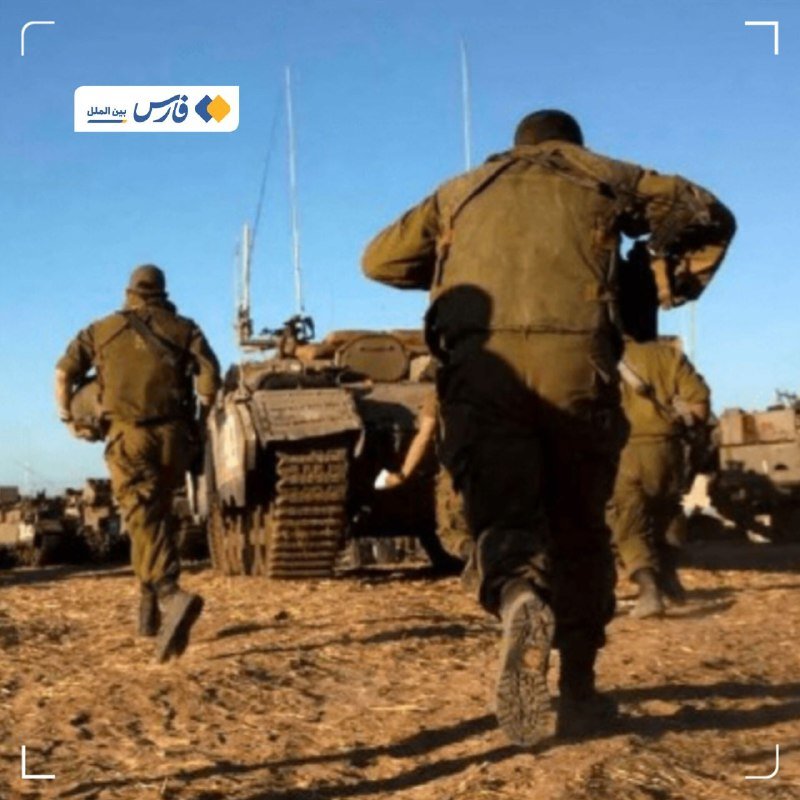
On 26 April 2026, as a fragile ceasefire along Lebanon's southern border continued to strain under its own weight, Hezbollah released a cascade of statements that amounted to a political indictment of the very government it nominally operates within. The militia declared that Lebanese civilians were the "true guarantee" of resistance, that diplomatic efforts had "failed," and that the Lebanese authority was "silent" while Israeli forces carried out demolitions inside Lebanese territory. According to the statements — reported by Iran state-adjacent channel Al-Alam on that date — Hezbollah framed all of this not as criticism of policy but as a constitutional crisis: the state, it argued, owes its people an explanation for an agreement that grants Israel freedom of action.
The underlying logic is coherent, in its own terms. If the state cannot defend the country, the defender speaks for it. If diplomacy has failed, armed resistance is the remaining instrument. If Israeli forces remain in occupied territory, Lebanese factions that continue to fight are not the obstacle to peace — they are the only honest interlocutors. Hezbollah has made this argument before. What is striking now is the confidence with which it addresses the state directly, as though the government of Lebanon is a subsidiary of the resistance rather than its host.
The authority's predicament
Hezbollah's statements on 26 April make a specific accusation: that Lebanon's representative body agreed to a photograph with Israeli counterparts under American auspices, then returned empty-handed on core demands — specifically, an end to Israeli strikes and the withdrawal of forces from Lebanese land. According to Hezbollah, this makes the Lebanese authority complicit in an arrangement that "gives the enemy freedom to attack and destroy." The authority, the statement continues, "stands silent, unable to carry out its simplest national duties towards its land and people, watching the enemy blow up homes and burn green and dry."
The force of this framing depends entirely on a prior assumption: that the Lebanese state has agency, capacity, and a legitimate mandate to act — and that it has squandered all three. But Hezbollah cannot simultaneously argue the state is impotent and hold it to account for its failures. If the authority is genuinely unable to halt Israeli operations, it cannot be expected to explain an agreement that was never in its power to prevent. The demand for transparency, however legitimate in principle, functions here less as a call for accountability and more as a mechanism for delegitimising whatever political space the state occupies.
The language of resistance
The statements on 26 April deploy a consistent vocabulary that warrants attention on its own terms. Israeli actions are "aggression" and "violations of the ceasefire." Israeli-held territory is "occupied Lebanese land." Hezbollah's own activities are "the right to resist, guaranteed by international conventions." Lebanese citizens who continue to support armed resistance are "the people of this land." The state that cooperates with American-mediated diplomacy is engaged in "failed diplomacy" and has "placed itself in a dangerous dilemma."
This is not simply a political position. It is a complete account of who holds legitimate authority in Lebanon — one in which Hezbollah is the inheritor of a sovereign tradition the state has forfeited. The language matters because it shapes what a ceasefire actually means in practice. A ceasefire between states is a legal instrument between recognised governments. A ceasefire between a state and a non-state armed group, mediated by a foreign power, is something structurally different: a temporary suspension of hostilities that leaves the underlying question of authority unresolved.
The structural problem of dual sovereignty
Lebanon has navigated competing authorities before. The country's confessional political system was designed precisely to manage multiple centres of power. What Hezbollah's statements on 26 April reveal is an acceleration of a familiar dynamic: the militia acting as a state-within-a-state, but now openly framing the actual state as the obstacle. The paradox is that Hezbollah benefits from state weakness — it is precisely the absence of effective Lebanese sovereignty that creates the space for armed resistance to present itself as the authentic national position — and yet it simultaneously demands the state's authority be exercised on its behalf.
Hezbollah cannot both fill a vacuum and be held responsible for the vacuum's existence. If the militia is the real guarantor of Lebanese territorial integrity, then the state's diplomatic failures are irrelevant to the question of Lebanese sovereignty. If, on the other hand, the state retains legitimate claims over Lebanese territory and people, then Hezbollah's unilateral framing of what constitutes aggression and occupation is a political act, not a legal determination — one that competes with, rather than replaces, the government's own account.
The cost of the impasse
Lebanese civilians living along the border zone have endured repeated displacement, destruction of agricultural land, and infrastructure damage over the course of the conflict. The ceasefire, such as it exists, has provided a measure of physical security. But it has not provided resolution — and the statements released on 26 April suggest that neither party to the underlying conflict is willing to treat the current arrangement as anything other than a pause.
The deeper cost falls on Lebanese institutional capacity. A government that cannot negotiate on behalf of its own territory, that is publicly rebuked by a domestic armed group for the terms of its own diplomacy, and that must explain its foreign engagements to a non-state actor's political base — that government is not simply weakened. It is structurally disqualified from performing the functions a state is supposed to perform. Hezbollah's statements, whatever their immediate tactical purpose, reinforce that disqualification with every sentence.
The militia frames this as the cost of the state's own choices. There is a version of that argument that is not entirely wrong — Lebanese political class failures are real, and American mediation has not produced the outcomes Beirut was told to expect. But framing the state's failures as the justification for Hezbollah's parallel authority does not resolve the sovereignty problem. It deepens it. And it leaves Lebanese civilians, as ever, in the crossfire of a dispute they did not choose and cannot adjudicate.
This publication's wire feed emphasised the ceasefire's material conditions on the ground; the Iran state-adjacent framing in this article is presented as Hezbollah's stated position, not as verified fact.
Wire provenance
This editorial synthesis draws on the following public wire/social posts:
- https://t.me/alalamarabic/78562
- https://t.me/alalamarabic/78561
- https://t.me/alalamarabic/78560
- https://t.me/alalamarabic/78559