Iran's Display of Destroyed US Hardware and the Diplomacy That Isn't Coming
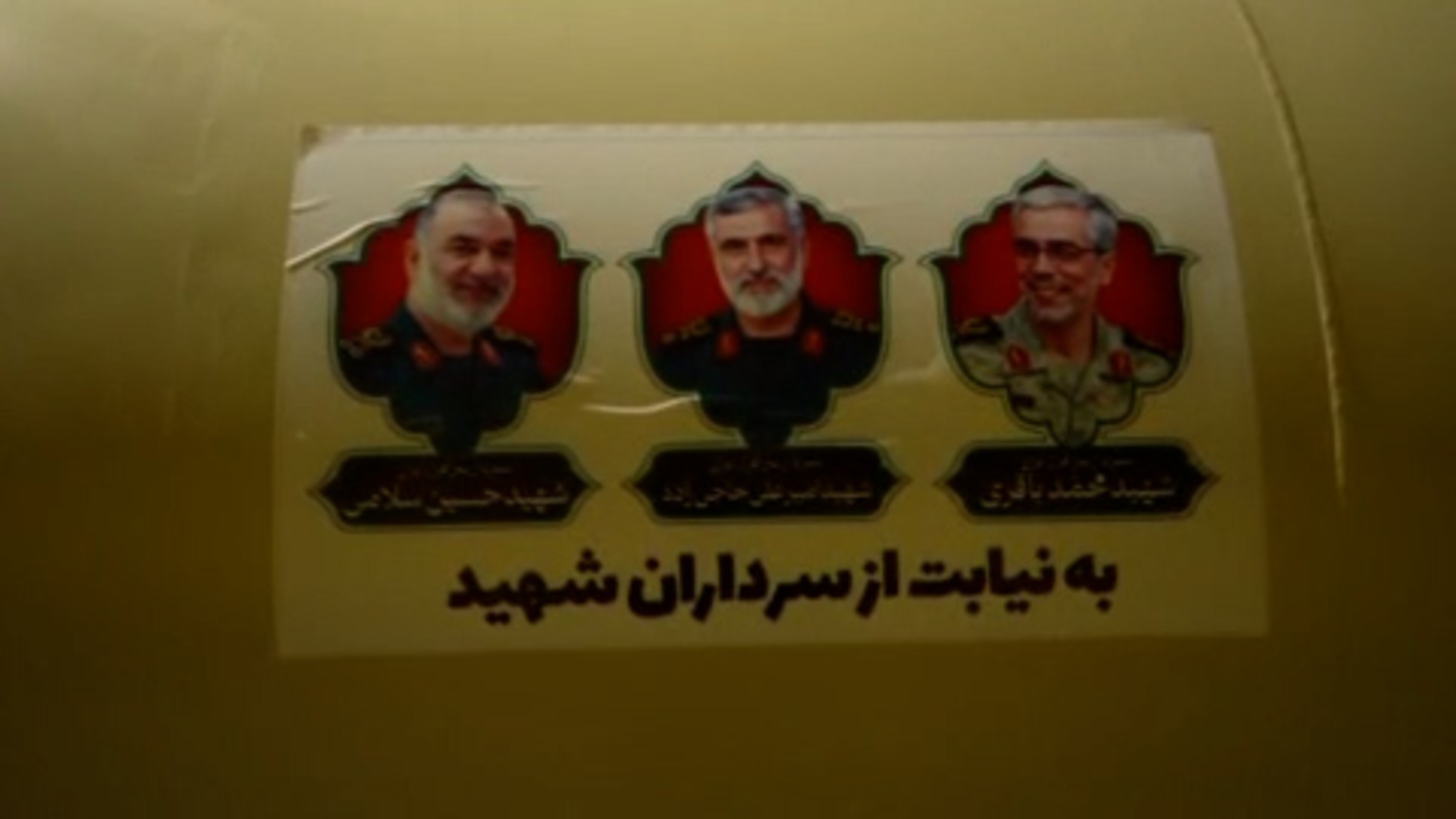
Iranian state-adjacent channels on 26 April 2026 displayed debris described as destroyed US military hardware in Shahreza, an event that played simultaneously as military intelligence disclosure, domestic political theatre, and psychological pressure aimed at Western capitals. Forty-eight hours earlier, air defense systems had been activated in Kermanshah Province, western Iran — a deployment reported across multiple regional monitoring channels as tensions along the Iraq-Iran border corridor continued to oscillate between kinetic exchange and managed restraint.
The two events are structurally related. The display of destroyed hardware — a classic Soviet and post-Soviet propaganda tactic, repurposed for the algorithmic age — communicates to multiple audiences at once: the Iranian domestic constituency that the armed forces are winning; the regional proxy networks that the front is holding; and Washington that the costs of continued pressure are accumulating. The activation of air defenses in Kermanshah, meanwhile, signals that the operational threat is not theoretical — Iranian command has identified specific incoming trajectories and committed defensive assets to intercept them. Together, they define a standoff in which the military and diplomatic tracks have become not just separate but actively contradictory.
That contradiction is now being priced in public betting markets. Polymarket data released on 25 April 2026 registered a 26 percent probability of a US-Iran diplomatic meeting occurring before the end of the month, and a 43 percent probability of Iran agreeing to surrender its enriched uranium stockpile within the year. The gap between those two numbers — meeting unlikely, concession somewhat more likely but far from assured — captures the shape of the problem. The instruments available to resolve the crisis through negotiation are known. The political conditions for deploying them are absent.
The Military Picture: Hardware in the Open
The display in Shahreza, reported by the Telegram channel Megatron_Ron in the early hours of 26 April 2026, showed what were described as remnants of drones and precision-guided munitions that Iranian air defenses had brought down during exchanges dated to the preceding days. The visual language is deliberate. Destroyed enemy equipment on public display is a communication technology in its own right — it signals capability, it signals accountability for the losses being inflicted, and it performs the appearance of transparency for a domestic audience that has been told for years that Western military technology is not invincible.
Geographically, the display location matters. Shahreza sits in Isfahan Province, central Iran — deep enough into the country's interior to suggest that whatever assets were engaged, Iranian command believed the threat was not confined to border zones. Whether that reflects the range of the weapons systems in question, the penetration depth of recent operations, or simply a decision to demonstrate resilience at a location with symbolic resonance for the aerospace and defense industry, the central placement of the display carries an implicit message: the war, if it comes, will be fought on Iran's terms across its entire territory.
Kermanshah Province, by contrast, sits in western Iran along the border with Iraqi Kurdistan. The activation of air defenses there on 25 April, reported by the Middle East Spectator monitoring channel, points to a different tactical calculus — one oriented toward the western approach, where cross-border logistics, drone launch corridors, and the traffic in materiel from Iraq and the Gulf states converge. The two geographic signals — central Iran showing destroyed hardware, western Iran activating defenses — suggest a military picture in which Iranian command is simultaneously demonstrating success against what it characterizes as incursions and preparing for continued threat from a known approach vector.
The Counterstrike Narrative and Iranian State Framing
Iranian state-aligned media have framed the exchange as a successful defensive operation in which incoming ordnance was neutralized before reaching intended targets, with the debris field in Shahreza serving as physical evidence. That framing draws on established Iranian strategic communication doctrine — the emphasis on defensive resilience, the framing of Western military action as aggression against a sovereign state, and the narrative of technological countersurveillance in which the enemy's supposedly superior hardware has been shown to be fallible.
The structural function of this narrative is consistent across similar moments in Iranian strategic communication: it sustains domestic political cohesion, it reinforces the legitimacy of the Islamic Revolutionary Guard Corps' operational decisions, and it positions any future diplomatic concession as a hard-won achievement rather than a capitulation. The hardware on display is simultaneously a trophy and a warning. It says: we can absorb what you send, and what comes back is yours.
Western accounts, to the extent they have been forthcoming, have framed the exchanges as limited and calibrated — designed by Washington to signal resolve without triggering the broader escalation that would complicate the posture of US regional allies, particularly Israel and Saudi Arabia, both of which have equities in the outcome of any US-Iran trajectory. The calibration creates a specific problem: the military signal is precise, but the political signal it is meant to send is muddied by the absence of a clear diplomatic off-ramp.
Air Defense Activations and the Operational Reality
The activation of air defense systems in Kermanshah on 25 April — confirmed by the Middle East Spectator channel and corroborated by parallel reports from the same source — represents the operational consequence of the strategic tension. Air defense activation is not a performative act; it involves radar commitment, missile battery positioning, and the readiness of crews to engage. The decision to activate implies that Iranian military intelligence identified specific, credible threats to western Iranian infrastructure or personnel.
That readiness posture carries its own signaling weight. It tells Washington that the deconfliction channels — the back-channel mechanisms that typically prevent inadvertent escalation between militaries with advanced systems operating in close proximity — are either not functioning or not trusted. It tells regional actors that the western approach to Iran remains contested and that any support infrastructure passing through that corridor is exposed. And it tells the Iranian domestic audience that the armed forces are not merely reactive but are operating on their own intelligence timelines.
The operational picture is further complicated by the nature of the weapons systems likely in play. Drone-based warfare — whether surveillance, strike, or saturation — has become the primary kinetic modality in US-Iran-adjacent confrontations over the past several years. Iranian air defense systems have demonstrated improved performance against these platforms in controlled conditions, but the exchange rate in active operations remains contested. The display of destroyed hardware in Shahreza claims evidence of successful interception; whether that evidence is complete or representative of the full exchange rate is not verifiable from open sources.
The Diplomacy Gap and What the Markets Are Saying
Polymarket's odds — a 26 percent chance of a diplomatic meeting by month's end and a 43 percent chance of uranium surrender within the year — are not prediction. They are market-priced probability, reflecting the aggregate judgment of participants who have real money at stake. That distinction matters. Markets can be wrong, and they are particularly unreliable in situations where the variables are political will and leadership decision-making rather than supply-demand fundamentals. But they are a useful proxy for the absence of positive signals.
A one-in-four chance of a diplomatic meeting within the next five days, against the backdrop of active air defense deployments and the public display of destroyed military equipment, reflects an information environment in which neither side is signaling willingness to de-escalate through the established diplomatic channels. The nuclear framework — built on the JCPOA architecture that the Trump administration exited in 2018 — has no current institutional basis for renewed negotiation. The Biden-era indirect talks produced no breakthrough. The current US posture, under whatever configuration of policy leadership exists in April 2026, appears to treat military signaling as the primary instrument rather than a precursor to negotiation.
The 43 percent probability of uranium surrender is instructive in its own right. It suggests that market participants give meaningful weight to the possibility that Iran, under sufficient external pressure, will accept constraints on its enrichment program. But it also signals that this outcome is not the base case — it requires Iran to abandon a capability that it spent a decade building and that constitutes its primary strategic bargaining chip. The fact that even this partial concession is priced at below-even odds tells us something about the state of the diplomatic environment.
What the markets cannot price is intent at the leadership level — whether the display of hardware in Shahreza and the air defense activations in Kermanshah are preparatory steps toward a negotiated settlement that Iranian command wants to frame as strength, or whether they are the operational posture of a state that has determined that the diplomatic track is closed and that the military track must therefore be managed over the long term.
Structural Forces and the Multipolar Dimension
The US-Iran standoff does not exist in isolation. It sits within a broader reconfiguration of Middle Eastern security architecture in which the assumptions that governed US regional policy for three decades — US military superiority as the guarantor of stability, the joint Sunni-Shia containment logic that kept the Gulf monarchies aligned with Washington, the nuclear non-proliferation regime as a universal norm rather than a selectively enforced tool — are under systematic pressure.
Iran's alliance relationships with China and Russia have provided diplomatic insulation that did not exist during the peak sanctions years of 2012-2016. The presence of Chinese and Russian diplomatic cover at the United Nations, in the International Atomic Energy Agency context, and in bilateral engagement forums means that any US attempt to isolate Tehran has a structural ceiling it did not previously encounter. This does not mean China or Russia are committed to an Iranian victory; it means they are committed to preventing an Iranian collapse that would leave a vacuum in the regional balance of power.
For Washington, the strategic problem is compounded by the priorities of regional allies. Israel has publicly framed Iran's nuclear program as an existential threat requiring a military option. Saudi Arabia has normalized relations with Iran but has not abandoned its interest in Gulf security architecture that does not include Iranian regional hegemony. The UAE and Bahrain watch the same intelligence feeds and draw conclusions about the stability of the US security guarantee. An Iran strategy that relies on military signaling without a diplomatic resolution path has to account for the fact that the regional audience is watching, and drawing conclusions about US reliability, for purposes that extend well beyond the Iran file.
What remains genuinely uncertain — and what the source material does not resolve — is whether the current military posture is intended to create space for a renewed diplomatic approach or whether it represents the default setting of a relationship that has no current path to resolution. The air defense activations in Kermanshah are consistent with either interpretation. The display of destroyed hardware in Shahreza is consistent with either interpretation. The Polymarket odds reflect ambiguity, not resolution.
Desk note: Monexus framed this story through the lens of operational military reporting and market-signal analysis — two data streams that do not always sit comfortably together, but whose combination reveals the specific shape of the diplomatic gap. Wire coverage from the major Western services oriented toward the diplomatic track, which remains largely closed. The Polymarket data provided a quantitative anchor that disciplined the analysis toward what the evidence actually supports rather than what the dominant narrative assumes.
This publication has documented US-Iran military exchanges since the 2020 Soleimani strike period with a consistent emphasis on operational verification over diplomatic optimism.
Wire provenance
This editorial synthesis draws on the following public wire/social posts:
- https://t.me/megatron_ron
- https://t.me/Middle_East_Spectator
- https://t.me/Middle_East_SpectatorTests
- https://en.wikipedia.org/wiki/Joint_Comprehensive_Plan_of_Action
- https://en.wikipedia.org/wiki/Operation_Soleimani