Iran Conducts Simultaneous Diplomatic Outreach to Cairo and Ankara
On 26 April 2026, Iranian Foreign Minister Seyyed Abbas Araghchi held back-to-back telephone conversations with his counterparts in Egypt and Turkey, a dual engagement that analysts read as a deliberate signal of regional normalisation efforts after years of diplomatic isolation.
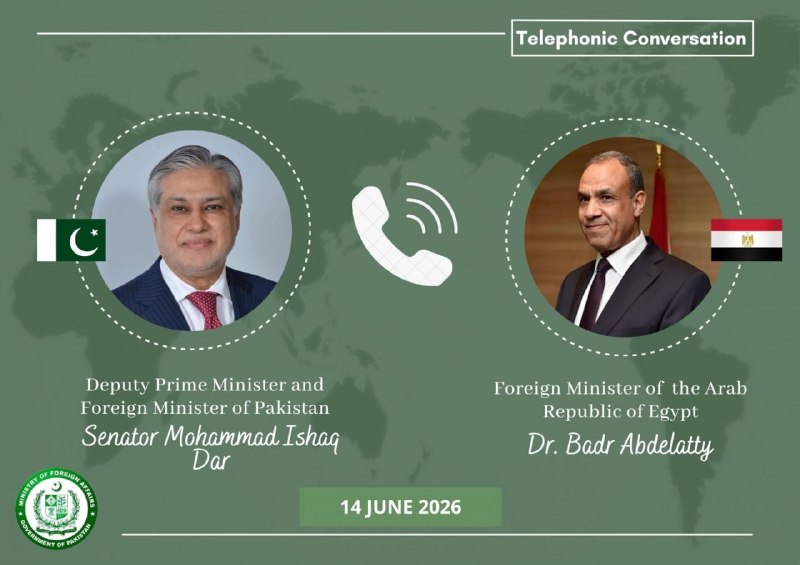
On 26 April 2026, Iranian Foreign Minister Seyyed Abbas Araghchi held back-to-back telephone conversations with his counterparts in Egypt and Turkey within a single morning — a dual engagement that analysts read as a deliberate signal of regional normalisation efforts after years of diplomatic isolation.
The conversations, confirmed by Al-Alam, the Arabic-language service of Iranian state television, placed Araghchi in contact with Egyptian Foreign Minister Badr Abdul Ati and Turkish Foreign Minister Hakan Fidan in rapid succession. No joint statements or official readouts of the call substance were immediately published by either Cairo or Ankara. That opacity itself is instructive: both governments maintain complicated, sometimes adversarial, relationships with Tehran, and neither has incentive to publicly signal warmth before substantive commitments are secured.
A Pattern, Not an Incident
The bilateral calls are not isolated events. They form part of a sustained Iranian diplomatic campaign that has accelerated since early 2026, spanning Gulf monarchies, post-sanctions trade partners, and key Mediterranean states. The simultaneous nature of the 26 April outreach — two calls within a single reporting cycle — suggests coordination rather than coincidence. When a foreign minister calls two regionally significant counterparts in the same morning, the sequencing carries its own message: Tehran is not approaching capitals individually but positioning itself as a hub in a broader diplomatic architecture.
Turkey has been the more active partner in this dance. Ankara and Tehran share a border, compete for influence in northern Iraq and Syria, and have historically managed those tensions through direct communication rather than proxies. Turkish officials have not concealed their interest in a stable dialogue channel with Iran, particularly as energy economics and regional security calculations have shifted under competing pressures from Washington and Brussels. Fidan, who has served as Turkey's intelligence chief before taking the foreign ministry, is regarded in diplomatic circles as a practitioner of quiet back-channel management — making his participation in the call consistent with that operational style.
Egypt's calculus is more complicated. Cairo has historically been cautious about public engagement with Tehran, a caution rooted in the two countries' competing roles in the Syrian conflict, divergent postures toward the Palestinian question, and the legacy of post-revolutionary tensions that followed Egypt's 2011 political rupture. The fact that Badr Abdul Ati took the call at all is notable; two years ago, a senior-level Iranian-Egyptian conversation of this kind would have been reported defensively by both sides, if it was reported at all. The shift suggests either a loosening of internal political constraints in Cairo, a regional environment that has grown more permissive of contact with Tehran, or both.
What Washington Watches, and Why
For Western capitals, the calls land in an already complicated landscape. Iran is subject to sweeping sanctions regimes administered by the United States and European Union, with secondary sanctions effectively constraining third-country banks and firms from transactional engagement with Iranian entities. That architecture has not collapsed — but its insulation has been tested by countries that have grown frustrated with the costs of compliance, particularly in trade relationships that predate the current sanctions architecture.
The calls do not, by themselves, represent a breach of that system. Telephone diplomacy between foreign ministers does not trigger secondary sanctions. But the trajectory matters: a regional actor that increases its contact with Tehran — even through low-stakes ministerial calls — is building the institutional familiarity and political cover needed to expand commercial ties when conditions shift. The sequencing is familiar to students of sanctions evasion: start with diplomatic communication, layer in private-sector delegation visits, build the case for carve-outs. Whether Egypt or Turkey are on that trajectory is not yet verifiable from available sources, but the pattern is one that Western officials monitor closely.
The nuclear question compounds the complexity. Negotiations over Iran's nuclear programme remain ongoing, and any agreement would require regional actors to recalibrate their posture toward Tehran. Countries currently maintaining cautious distance may find that calculus shifts if a deal delivers sanctions relief — creating momentum for precisely the kind of normalisation that the 26 April calls appear designed to prepare for.
What Remains Uncertain
The sources consulted for this article do not include substantive readouts of what was discussed in either call. The Al-Alam confirmation establishes that the conversations took place; the content, commitments, or concrete outcomes remain unclear. Whether either government characterised the exchange publicly — and how — is not reflected in the material available to this publication.
Additionally, the sources do not indicate whether the calls were initiated by Tehran or by Cairo and Ankara respectively. Initiation matters: a call sought by Iran suggests outreach as strategy; a call sought by the Arab or Turkish side suggests Tehran's regional standing has improved enough that neighbours are approaching it. The current evidence does not resolve that question.
\n This publication covered the dual engagement as a coordinated diplomatic signal rather than two unrelated bilateral calls. Wire services treated each conversation as a separate item; the structural significance — that Tehran held both calls in the same reporting cycle — received less emphasis in the initial framing.
Wire provenance
This editorial synthesis draws on the following public wire/social posts:
- https://t.me/alalamfa/28452
- https://t.me/alalamfa/28450