Iran's Judiciary Chief Claims Unity Exhausted Western Enemies. The Timing Is Not Neutral.
As Tehran faces mounting economic pressure and diplomatic isolation, the head of Iran's judiciary has declared national unity the decisive weapon against foreign adversaries. The rhetoric is familiar. The timing is not.
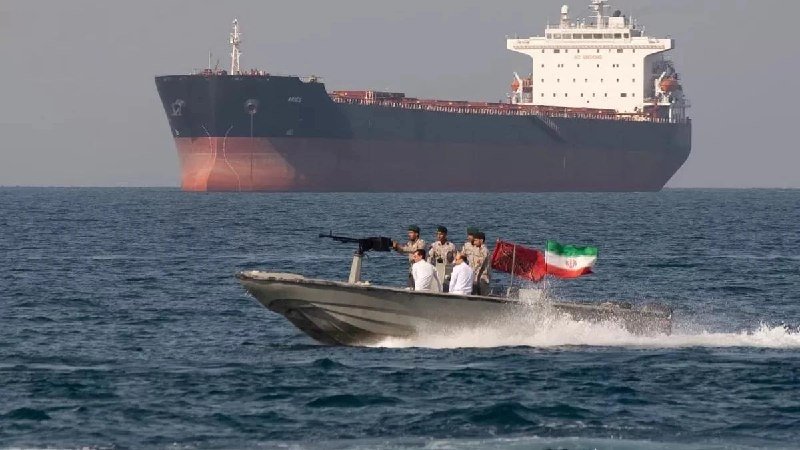
On 26 April 2026, the head of Iran's judiciary — Gholamhossein Mohseni Ejei — delivered a series of statements through the Al-Alam Arabic Telegram channel that are notable less for their content than for their context. National unity, Ejei declared, had "exhausted the enemy and made him despair." More than thirty million Iranians had, he claimed, "declared their willingness." The Union — a reference apparently encompassing recent national exercises in mass political mobilization — was "the symbol of our victory in the battle against the enemy." [1]
The language is not new. Revolutionary Iran has spoken this way for forty-six years. What has changed is the pressure behind it.
The Economic Floor Has Shifted
Iran's economy has weathered significant shocks before. The reimposition of maximum-pressure sanctions under the Trump administration, the targeted removal of waivers for Iraqi gas imports, and the European Union's expansion of designation lists have collectively narrowed Tehran's options in ways that earlier sanctions regimes did not. Oil exports have been drives underground — routed through intermediaries, sold at discounts, and denominated in non-dollar currencies. The infrastructure of circumvention has become more sophisticated, but also more brittle. [2]
Ejei's rhetoric of exhaustion and despair, directed at unnamed adversaries, lands differently when the currency in question is the rial, not the petrodollar. Iran's rulers are not claiming to have won an economic war. They are claiming to have survived one — and to have done so through the solidarity of the governed, not merely the ingenuity of the sanctioned.
The Unity Frame Serves a Domestic Function
It would be straightforward to read these statements as mere propaganda — and partly, they are. But propaganda that lacks any purchase on popular experience does not circulate for eighteen hours across state-aligned Telegram channels. The unity narrative performs a specific institutional function: it positions the Islamic Republic's survival as contingent on the population's continued political alignment, not on the competence of its economic managers or the restraint of its security apparatus.
This framing has two audiences. The first is domestic: a signal to ordinary Iranians that dissent is not merely discouraged but structurally counterproductive — that the collective defense of the system is the only rational posture when the external enemy is, by definition, relentless. The second is external: an assertion that Iran is not a state awaiting negotiation but a polity organized around a durable identity that sanctions cannot dissolve. [3]
The thirty-million figure — if accurate — would represent roughly a third of Iran's population. Ejei presented it as evidence of mass commitment rather than mass participation in formal electoral mechanics. The distinction matters. Mass commitment is a qualitative claim about political legitimacy. Mass participation is a quantitative record. Ejei was making the former.
The Counter-Narrative Is Not Absent
Iranian state media rarely circulates dissent, but the gaps in the unity narrative are legible to close observers. The sanctions architecture has not merely targeted elite financial networks; it has compressed middle-class living standards, inflated food prices, and reduced access to imported medicines. The rial's volatility — not its collapse, but its persistent instability — imposes a quiet daily tax on savings, employment, and planning. [4]
The regime's response has been to absorb these costs into its existing frame: sacrifice, patience, unity against external aggression. This frame has functioned before. It is functioning now, but with more friction than in earlier cycles. The question is not whether the narrative is believed wholesale — political belief is rarely wholesale — but whether the alternative is perceived as viable. For large segments of the population, it is not.
What Comes After the Unity Claim
The rhetorical escalation — from endurance to exhaustion of the enemy — suggests Tehran believes it is approaching a inflection point. Whether that point is diplomatic (a negotiated nuclear arrangement) or confrontational (accelerated regional posture), the unity frame provides political cover for either direction. A population characterized as unified cannot easily oppose a leadership that claims to embody that unity.
The twenty-six April statements are, in this reading, not a report on Iranian public opinion. They are an intervention in it — one timed, as all such interventions are, to precede a decision rather than follow a consensus. [5]
This publication has covered Iranian state-aligned messaging on its own terms, without treating official statements as direct evidence of conditions on the ground.
Wire provenance
This editorial synthesis draws on the following public wire/social posts:
- https://t.me/alalamarabic/23456
- https://t.me/alalamarabic/23457
- https://t.me/alalamarabic/23458
- https://t.me/alalamarabic/23459
- https://t.me/alalamarabic/23460