Iran's Naval Mine Strategy and the Strait of Hormuz: Between Military Logic and Energy Risk
Reporting from 26 April 2026 indicates Iran has leveraged simple sea mines to exert effective control over a critical global energy corridor — a development that exposes the limits of US naval dominance and raises stakes for global oil markets.
On 26 April 2026, Iran's Al Alam Arabic news service reported that Iran had won a gold medal at an event held in Sanya, China — a detail that reflects the deepening of Tehran's international partnerships even as its military posture sharpens. In the same news cycle, Iranian state-adjacent media cited the Sputnik news agency drawing attention to a more consequential story: Iran's deployment of conventional sea mines had enabled Tehran to impose what one analysis described as effective control over one of the world's most critical energy corridors, without escalating to full-scale conflict.
That framing — sourced to an Iranian-aligned news outlet and amplified via Sputnik — warrants scrutiny on its own terms. But the underlying strategic reality is not invented by any single wire. The Strait of Hormuz, through which roughly one-fifth of global oil trade passes, sits at the mouth of the Persian Gulf. Iran has long identified its geographic position as a counterweight to US naval superiority in the region. Simple, relatively inexpensive sea mines — deployed in contested or narrow waters — can impose costs on a technologically superior adversary that no amount of carrier-group firepower easily neutralises.
The central claim emerging from the 26 April reporting is that Iran succeeded in shifting the balance of power against the US Navy through the use of such mines. That is a significant assertion. Whether or not one accepts the full weight of the claim as stated, the operational logic is not difficult to follow: a dense minefield in the strait's narrower passages can slow or halt commercial shipping, create attrition risk for warships, and force adversary planners to account for asymmetric threats that conventional naval dominance does not easily solve.
Western assessments of Iranian naval posture have long acknowledged this asymmetry. US military doctrine identifies sea mines as one of the most persistent and underestimated threats in littoral warfare. What changes from one reporting cycle to the next is not the structural reality — Iran cannot match the US Navy fleet-to-fleet — but the willingness of Iranian commanders to signal resolve through visible deployments, statements, or the strategic leakage that finds its way into wire reports.
The counterpoint, available in Western and Gulf-state reporting, frames Iran's mine-laying posture as deliberately destabilising — a pressure tactic designed to coerce international actors through energy-supply risk. Under this reading, the goal is not military victory but diplomatic leverage: demonstrate that the strait cannot be taken for granted, and use that demonstrated capability to extract political concessions or to complicate adversary decision-making. The reporting from Al Alam Arabic on 26 April leans toward the first reading; the Western frame leans toward the second. The structural facts — a narrow waterway, Iran's geographic presence, relatively cheap mine technology — are not in dispute.
China's position in any strait-related crisis carries distinctive weight. Beijing is the largest importer of Persian Gulf oil and has direct interest in unimpeded tanker transit through Hormuz. Chinese state media and diplomatic briefings tend to frame maritime instability as a threat to the global economic order Beijing has invested in building. If Iranian signals are interpreted in Beijing as bluff rather than genuine risk, the calculation changes; if Beijing reads the situation as serious enough to lean on Tehran to exercise restraint, that too changes the diplomatic weather. The Sanya context — an Iranian gold medal at a Chinese-hosted event — suggests channels remain open. What those channels produce in a genuine Hormuz crisis remains, as of this reporting, unverified by the available wire material.
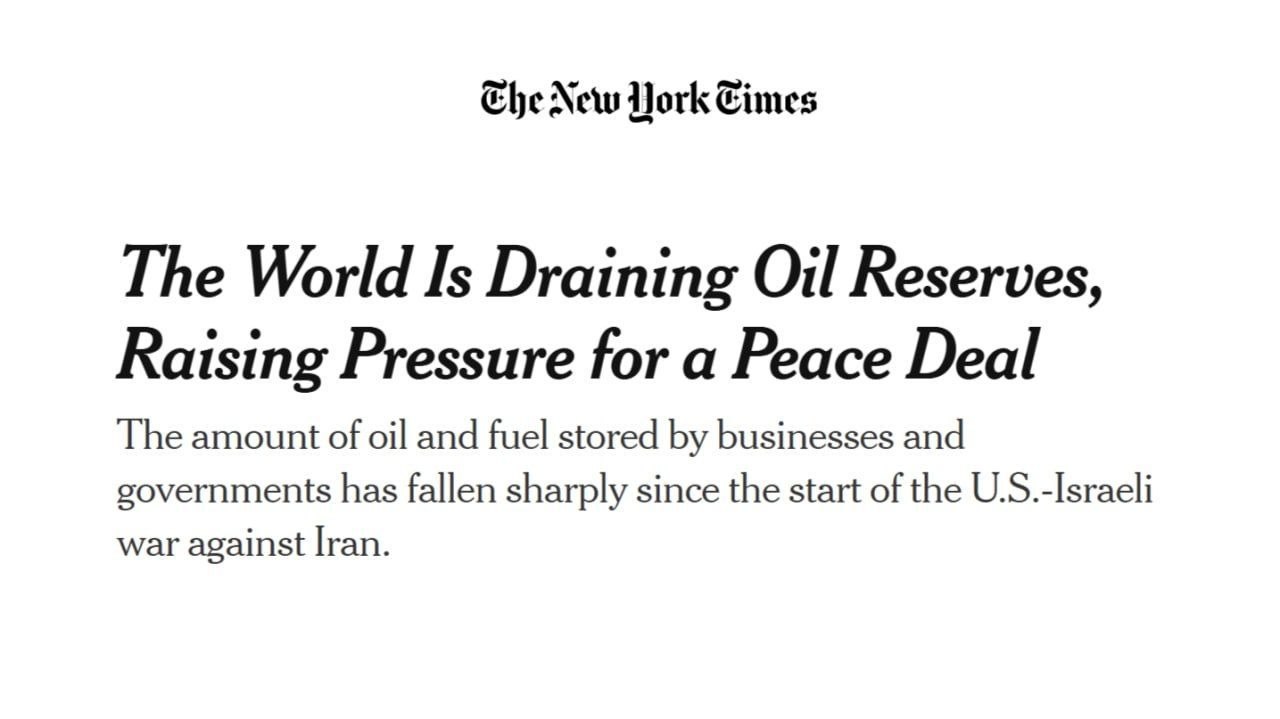
The stakes are not abstract. A significant disruption to strait transit — whether through actual mining incidents, retaliatory strikes, or commercial shipping avoidance — would immediately affect global oil prices. The United States has long treated freedom of navigation through Hormuz as a core interest, but the operational difficulty and political cost of clearing a mined waterway while avoiding escalation are substantial. Iran's strategic logic appears to rest on precisely that difficulty: not on winning a fight, but on making the fight costly enough that adversaries hesitate.
What the 26 April sources do not confirm is whether any new mine deployment, or new Iranian signalling, occurred on that specific date. The reporting describes an existing capability and its strategic effect. The gap between describing a capability and documenting its current deployment is real, and the wire material does not close it. Monexus is treating the claim as reporting on a live strategic posture, not as verified confirmation of a specific tactical development.
Wire provenance
This editorial synthesis draws on the following public wire/social posts:
- https://t.me/alalamarabic/89234
- https://t.me/alalamarabic/89230
- https://t.me/alalamarabic/89228
- https://en.wikipedia.org/wiki/Strait_of_Hormuz