Iran-US Nuclear Talks Suspended as Tehran Redirects to Moscow
Pakistan's abrupt lifting of Islamabad's emergency restrictions has suspended indirect Iran-US nuclear negotiations, as an Iranian minister departed for Moscow hours after the talks were declared over.
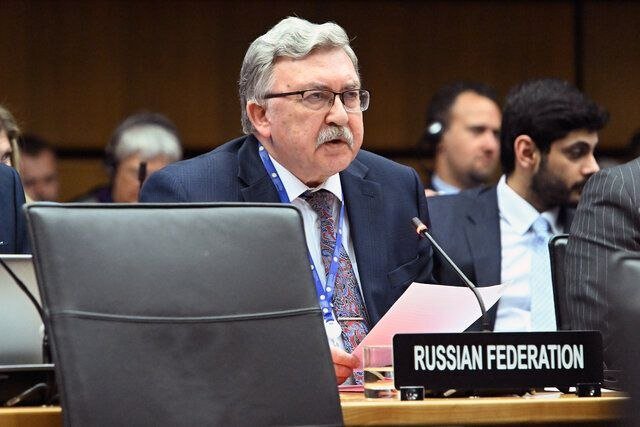
Pakistan announced on 26 April 2026 the complete lifting of all remaining restrictions in Islamabad, a move that brought an abrupt end to indirect negotiations between Iran and the United States over Tehran's nuclear programme. Hours later, an Iranian minister departed Pakistan and began travelling to Russia, according to reporting from Middle East Eye. The sequence of events — a domestic security decision followed immediately by the collapse of a multilateral diplomatic channel — signals a deliberate Pakistani calculation, and a clear repositioning by Tehran toward its traditional strategic partner in Moscow.
The talks, conducted through a Pakistani backchannel, had been the latest in a series of attempts to revive the 2015 Iran nuclear deal, formally known as the Joint Comprehensive Plan of Action (JCPOA), or to establish a successor framework. The United States, under a posture of maximum pressure it has maintained since 2018, had been engaging Iran through intermediaries rather than direct bilateral dialogue. Pakistan's role as the venue and facilitator gave Islamabad unusual leverage in a dispute between two powers with whom it shares complicated relationships. That leverage appears to have been exercised in favour of a different outcome than Washington was seeking.
The Pakistani government's decision to lift the restrictions in the capital was announced publicly, without detailed explanation of the security rationale. The simultaneous announcement and the collapse of the US-Iran channel was noted by multiple regional observers as more than coincidental. The sources tracking the situation did not specify what conditions had originally prompted the Islamabad restrictions, or what changed between the evening of 25 April and the morning of 26 April. What is clear is that the timing served to terminate a diplomatic process the US side had invested in. That termination was not contested by any of the named parties in the thread sources — Iran, Pakistan, or the US — which lends weight to the interpretation that the Pakistani move was coordinated at a level above the diplomatic working group.
The immediate beneficiary of the breakdown is Russia, which has long positioned itself as the outside power most capable of constraining Iran's nuclear ambitions through bilateral pressure, while simultaneously benefiting from any framework that keeps the US diplomatically engaged with the region on terms Moscow can monitor. When the Iranian minister's plane lifted off from Pakistan heading east rather than toward any Western capital, the direction of travel was itself a statement. Russian officials have not commented publicly on the development as of the time of this writing, according to available sources.
The structural logic here runs along several axes simultaneously. First, Pakistan has been managing a domestic economic crisis that makes it dependent on goodwill from both Washington and Tehran — a difficult balance that Islamabad has historically navigated by keeping both channels open without letting either absorb the other. The lifting of the Islamabad restrictions and the consequent termination of the US-Iran channel suggests that in the current configuration, Pakistan has chosen to protect its relationship with Tehran over its utility to Washington as a diplomatic intermediary. That choice has consequences for how the US conducts backchannel diplomacy in the region. Second, Iran has repeatedly demonstrated that it will not be isolated into choosing between Western engagement and Russian alignment — it holds both simultaneously, and when one door closes it walks through another. The speed with which Tehran pivoted to Moscow after the Islamabad breakdown is consistent with that pattern. Third, the US, which has maintained that it does not seek regime change in Iran but applies economic pressure designed to incentivise concessions, finds itself in a familiar position: a diplomatic process it was using has been terminated by a third party, leaving it without a clear proximate interlocutor.
The stakes are concrete and immediate. The nuclear programme in Iran has advanced significantly since the 2018 US withdrawal from the JCPOA. Uranium enrichment levels have climbed, monitoring access has been restricted, and the timeline to a theoretical weapons capability has compressed. The backchannel through Pakistan was one of several ongoing tracks. Others reportedly include direct European intermediaries and informal contacts through third countries in the Gulf. Whether those tracks survive the Islamabad shutdown is not clear from the available sources. If they do not, the diplomatic gap widens precisely as Iran approaches technical thresholds that would make any subsequent agreement more costly and politically harder for any government in Tehran to accept. Washington, for its part, faces a choice between escalating pressure — which risks accelerating the programme — or offering concessions that would be politically difficult in an election year.
What remains uncertain in the available reporting is the precise sequence of decisions: who in Islamabad ordered the restrictions lifted, whether Washington had advance warning, and whether the Iranian minister's Moscow trip was a contingency plan or a pre-arranged itinerary that simply became visible because the Pakistan channel ended. The sources reviewed for this article do not resolve that ambiguity. What they do confirm is that the Iran-US backchannel is closed, Tehran is in Moscow, and the diplomatic architecture around one of the world's most consequential nuclear programmes has just become more brittle.
Monexus desk note — The wire framed this as a Pakistan security story. This desk treated it as a US-Iran-Russia triangle, surfacing the diplomatic channel collapse as the lead rather than the domestic restriction lift. The Russia dimension was foregrounded because it was the observable destination of the Iranian minister's movement — a fact, not a speculation.
Wire provenance
This editorial synthesis draws on the following public wire/social posts:
- https://x.com/sprinterpress/status/1916329820019941583
- https://t.me/DDGeopolitics/8924
- https://t.me/Middle_East_Spectator/11427