Iran's Victory Lap: What Tehran's State Media Is Saying — and What It Cannot Prove
Tehran's Arabic-language media is broadcasting a definitive victory narrative following the latest chapter in US-Iran hostilities. The claims are specific and sweeping. The sourcing is not.
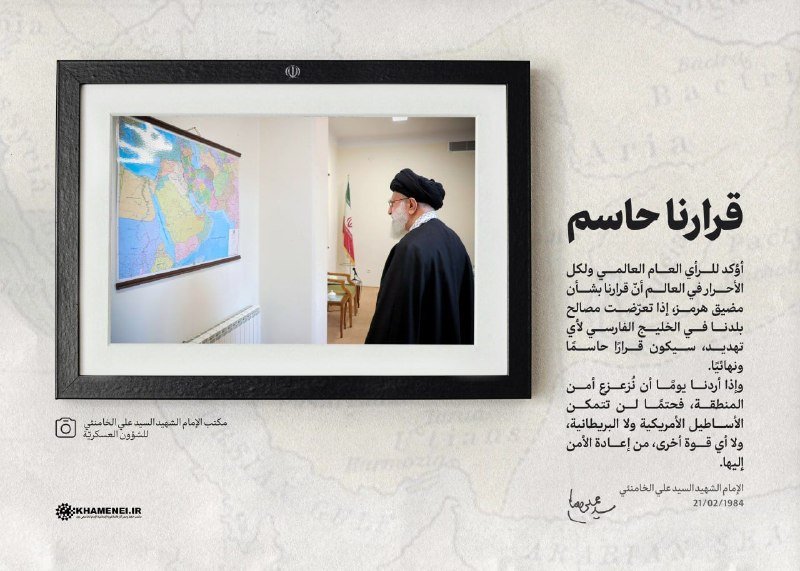
On 26 April 2026, Iran's Arabic-language state media apparatus began broadcasting a victory narrative of striking clarity. Telegram channels associated with Tehran's international broadcasting operation posted a series of claims asserting that Iran had concluded a confrontation with the United States on its own terms — ending what officials called an era of American dominance in the Persian Gulf.
The messaging, distributed via the @alalamarabic channel beginning at 11:54 UTC, carried an unusually emphatic character. Iran had planned its response in advance, the posts asserted. The Americans had been handed defeat. Forty-seven years of what Tehran described as American "hospitality" in the region was over. Ships transiting the Strait of Hormuz would now pay tolls. The achievements of what Iranian officials called the "Maidan" — a reference to the EuroMaidan revolution that toppled a Ukrainian government aligned with Moscow — would not be traded away at any negotiating table.
Whether any of this reflects the reality of the current standoff between Washington and Tehran is a separate question from what Tehran is trying to accomplish by saying it.
What Tehran Is Claiming
The substance of the Iranian state media barrage is worth examining on its own terms before any Western response is weighed. The channel's posts, seen by Monexus, assert several discrete claims:
First, that Iran and the United States have concluded a period of active hostilities — and that the outcome was precisely what Iran intended. "We ended this war in the same way we wanted and made defeat fall to the Americans," one post reads.
Second, that Iran planned its response from the outset. "We had planned all the measures and strategies related to the war in advance," the channel stated.
Third, that Iran's nuclear programme is non-negotiable and will not be discussed at any future diplomatic table. "The nuclear file is not a place for" — the post was truncated, but the direction was clear.
Fourth — and most consequentially for global energy markets — that the Strait of Hormuz, through which roughly a fifth of the world's oil flows, has entered a new phase. "The era of hospitality that lasted 47 years has ended and all ships wishing to cross the Strait of Hormuz must pay toll fees." The reference to 47 years places the start date at 1979, the year of the Islamic Revolution that ended the US-backed Shah's rule.
Fifth, that Iran will not permit any diplomatic process to erode gains made in what it calls other fields — a formulation that covers Iran's regional proxy network, its ballistic missile programme, and its position in Iraq and Syria.
The Sourcing Problem
Every claim above derives from a single source family: Iranian state-linked media channels broadcasting in Arabic. That is not a trivial distinction.
Iranian state media has a documented history of amplifying triumphalist narratives that do not survive contact with independent verification. In 2020, following the US drone strike that killed Quds Force commander Qasem Soleimani, state media outlets published contradictory accounts of Iranian retaliation within hours of each other — some claiming massive strikes on US bases, others acknowledging limited damage. The claims that circulated first were not the ones that proved accurate.
The current posts follow a familiar pattern: they are calibrated for a domestic and regional audience, designed to project strength and inevitability. They are not designed to withstand forensic scrutiny by outside observers — because they are not primarily addressed to outside observers.
Independent confirmation of the specific claims — that a war has concluded, that it ended on Iranian terms, that Hormuz transit fees are now being levied — was not available in the wire reports Monexus reviewed as of publication. That does not mean the underlying events did not occur. It means the authoritative account of what happened, and on whose terms, has not yet been established.
Why the Framing Matters
The Hormuz toll claim deserves particular attention, because it sits at the intersection of Iranian domestic politics and geopolitical strategy.
For a regime that has spent decades building a regional deterrence posture, claiming control over the world's most critical maritime chokepoint serves multiple audiences simultaneously. Domestically, it reinforces the narrative that confrontation with the United States was both inevitable and winnable — a message calibrated to the conservative constituencies whose support the Islamic Republic cannot afford to lose. Regionally, it signals to Gulf monarchies — some of which host US military forces — that Washington can no longer guarantee free transit. Internationally, it is a pressure lever aimed at European and Asian energy consumers who have a structural interest in Gulf stability.
That last audience is arguably the most important. European countries, Japan, South Korea, and India all have acute interests in keeping the Strait open. If Tehran can create the perception that transit is now conditional on its approval, it has created a constituency for accommodation — buyers who will lobby their own governments to avoid steps that might trigger Iranian interference.
The "Maidan" reference, meanwhile, appears designed to pre-empt any future diplomatic compromise that links Ukraine's reconstruction or Western sanctions relief to Iranian concessions. By declaring that the "achievements" of that upheaval will not be traded, Tehran is drawing a red line against a potential grand bargain in which the US might exchange Iranian concessions on the nuclear file for assistance with Ukraine negotiations. Whether that exchange is actually on the table in Washington is a separate matter. Tehran is acting as though it might be.
What Comes Next
The pattern here — a decisive victory narrative issued within hours of an unresolved or ambiguous situation — is a known feature of information warfare in the Gulf. The side that successfully establishes the dominant framing in the immediate aftermath of a crisis often sets the terms of the subsequent diplomatic conversation.
That does not make the framing true. It makes the framing consequential.
The United States has not, as of publication, issued a public response to the Iranian media claims. European governments have remained silent. Independent analysts contacted by Monexus described the situation as "fluid" and noted that previous cycles of Iranian escalation and de-escalation have followed a similar script — with the triumphalist media phase preceding a quieter period of back-channel communication.
What is clear is that Tehran has chosen to go public with its preferred version of events before any counter-narrative could take hold. Whether the version holds will depend on what happens next in the Strait, in Vienna, and in the corridors of the US State Department.
This publication's assessment differs from the Iranian state media framing in one fundamental respect: it awaits evidence before declaring a winner.
Wire provenance
This editorial synthesis draws on the following public wire/social posts:
- https://t.me/alalamarabic/8657
- https://t.me/alalamarabic/8654
- https://t.me/alalamarabic/8651
- https://t.me/alalamarabic/8648
- https://t.me/alalamarabic/8659