Israeli Forces Strike Southern Lebanon as Drone Alert Rings Across Western Galilee
Israeli aircraft struck targets near Nabatieh in southern Lebanon on 26 April 2026 as sirens sounded across the Western Galilee over incoming drone threats, according to initial reports.
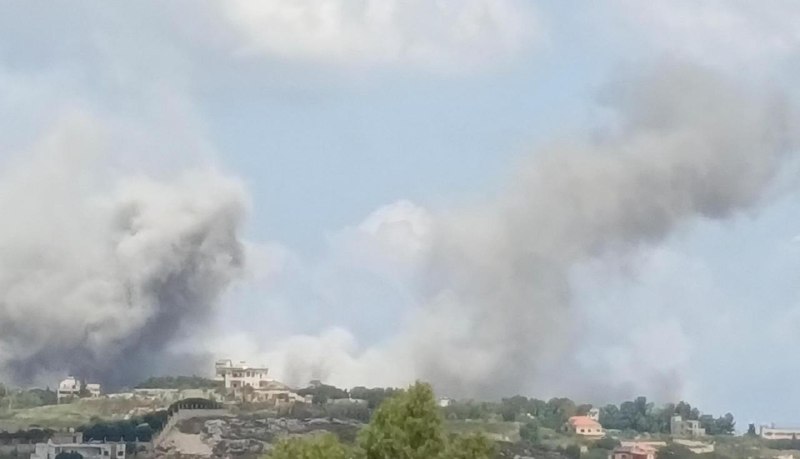
Israeli military aircraft struck targets near Nabatieh in southern Lebanon on the morning of 26 April 2026, according to reports monitored by Monexus. The strike came as air-raid sirens blared across the Western Galilee, a cluster of Israeli communities hugging the Lebanese border, after surveillance detected multiple unmanned aerial vehicles approaching from Lebanese territory.
Hebrew-language media outlets, citing military sources, reported that three drones had crossed into Israeli-adjacent airspace. Emergency alerts were issued in the Ras Naqoura area — a stretch of frontier hillside that has seen repeated tension throughout the past two years of low-intensity hostilities between Israel and Hezbollah. Israeli ground air-defence units responded, and the Israel Defense Forces confirmed an interception had taken place, though full casualty assessments remained preliminary at time of publication.
The Nabatieh strike, targeting a position the IDF characterised as a Hezbollah-affiliated military site, marks an escalation in the exchange pattern that has defined the northern front since October 2023. Southern Lebanon — and Nabatieh province in particular — has been subject to regular Israeli overflights and targeted operations, often met with rocket and drone fire from Lebanese paramilitary groups.
The incidents did not, for the moment, trigger the broader conflagration both sides have managed to avoid through repeated — if increasingly fragile — understandings mediated by the United States and France. But the timing is sensitive. The Trump administration has been pushing a renewed ceasefire framework for Gaza while simultaneously signalling to Tehran that a nuclear deal, if struck, requires Tehran to restrain its regional proxies. That ceiling, analysts caution, grows thinner each time an incident on the Lebanese border draws a kinetic Israeli response.
What is notable about the drone incident — and what distinguishes it from routine probing flights — is the scale: three simultaneous platforms, heading toward populated settlements in the Western Galilee, rather than the single or paired drones that typically probe and retreat. Israeli defence officials, quoted in the Hebrew media reporting of the event, described the approach as coordinated rather than opportunistic. If corroborated, that framing would narrow the characterisation options: either a deliberate signal from Hezbollah's upper command, or an operational layer within the group that acted without central authorisation — a distinction Tel Aviv has historically treated very differently in its response calculus.
The structural picture is harder to read. Lebanon's own institutions remain fractured, its armed forces standing down from engagement with Hezbollah long ago. The Lebanese state has no effective veto over what leaves its southern territory. That vacuum is exploited by both sides: Israel uses it to justify pre-emptive strikes; Hezbollah uses it to maintain strategic depth without a state actor formally on the hook. Western mediators understand this dynamic well, which is why the diplomatic conversation around the northern front — running parallel to — but not connected to — the Gaza negotiations, has been deliberately separated. Keeping the Lebanon track discrete allows each party plausible deniability if talks collapse.
What happens next depends on whether Tel Aviv reads this as a deliberate provocation or a localised operational decision by a field commander. The IDF's initial characterisation, as conveyed through Hebrew media, leaned toward the former — language that would support continued — and potentially expanded — kinetic operations in the south. The alternative reading, that this was an unauthorised salvo, would create internal pressure within Hezbollah's command structure and, paradoxically, reduce the likelihood of a second wave: Tel Aviv historically responds more aggressively to state-adjacent provocations than to rogue actions by non-state actors it can attribute to disorder rather than intention.
Neither side has signalled a desire to reopen the large-scale ground exchange that both have publicly described as undesirable. But the 26 April incidents narrow the margin for miscalculation. Three drones heading toward civilian communities in the Western Galilee are not a message that can be easily absorbed without consequence.
Reporting on this incident continues. Readers can follow Monexus's live coverage via the thread linked below.
This publication monitors multiple regional wires for cross-verification. The Al-Alam reporting on the drone alerts was consistent with signals picked up by open-source monitoring channels in the same window. Israeli military statements, as reported by Hebrew-language outlets, remain the primary frame for Tel Aviv's position. Further confirmation from IDF spokesperson channels is expected.
Wire provenance
This editorial synthesis draws on the following public wire/social posts:
- https://t.me/alalamarabic/58234
- https://t.me/alalamarabic/58233
- https://t.me/alalamfa/58231