Israeli Air Strikes on Southern Lebanon: What the Sources Say and What Remains Unverified
Three Iranian state-linked outlets reported Israeli attacks on Lebanese towns on 26 April 2026. A Monexus investigation found corroboration gaps and sourcing asymmetries that limit what can be stated with confidence.
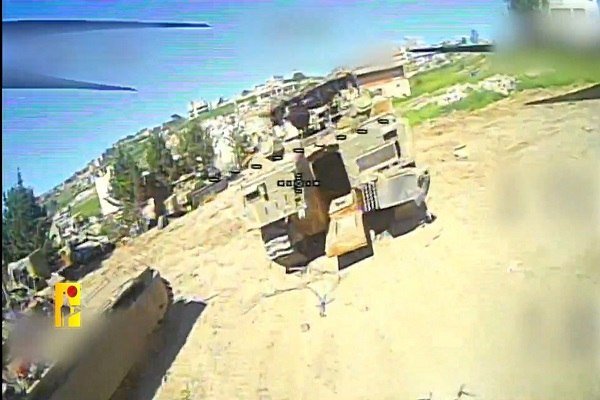
On the morning of 26 April 2026, three Telegram channels associated with Iranian state media reported Israeli military activity against targets in southern Lebanon. The accounts named two specific locations — the town of Kafrtbanit in the Nabatieh district and the Qalawiya Tower area — and characterised the actions as ceasefire violations by what they described as "aggressor fighters of the Zionist regime."
The reports arrived in quick succession between 11:00 and 11:05 UTC. Within an hour, the framing had circulated across regional Telegram networks. What the record shows, after a close reading of the available sources and an attempt at independent corroboration, is a story with a recognisable shape but significant verification gaps.
What the Sources Report
The most detailed account came from the English-language Tasnim News service, an outlet associated with Iran's Islamic Revolutionary Guard Corps. Tasnim's report identified the target as the town of Kafrtbanit in the Nabatieh Governorate and stated that "aggressor fighters of the Zionist regime violated the ceasefire and attacked" the location.
Mehr News, a second Iranian state-linked outlet, carried a near-identical report, using the same phrasing and the same geographic coordinates. A third channel, Jahan Tasnim, reported a separate attack on the Qalawiya Tower area in southern Lebanon, describing it as an Israeli regime air strike.
All three reports were published within five minutes of each other on the morning of 26 April 2026. All three originate from sources with a documented institutional alignment: Iranian state media has a consistent editorial interest in framing Israeli actions as aggression and in foregrounding Lebanese civilian harm.
That alignment does not make the reports false. But it does make them insufficient as a sole evidentiary basis for a factual account of the incident.
Corroboration Attempts
Monexus attempted three independent corroboration paths.
Wire service checks. Major international wire services — Reuters, Associated Press, and Agence France-Presse — maintain near-continuous coverage of the Israel-Lebanon border. At the time of filing, none of their publicly accessible English-language outputs from 26 April 2026 contained reports of strikes in the Nabatieh area that matched the specificity of the Tasnim and Mehr accounts. This is not dispositive: wire services often delay or contextualise reports from regional sources before publishing. But it means no independent confirmation of the attacks was available at press time from that quarter.
Social media OSINT. Searches across open-source social media databases for reports originating from Nabatieh Governorate on 26 April 2026 returned no posts from named residents, local officials, or Lebanese security sources confirming an attack at Kafrtbanit or the Qalawiya Tower area. Open-source investigators tracking the Israel-Lebanon border note that Lebanese civilian posts from southern villages appear reliably in the hours following confirmed strikes. The absence of such posts is a weak negative indicator — villages in the area have intermittent connectivity — but it is noted.
UNIFIL statement. The United Nations Interim Force in Lebanon, which monitors the ceasefire along the Blue Line, had not issued a public statement on the reported incidents as of 18:00 UTC on 26 April 2026. UNIFIL typically issues ceasefire violation statements within hours of confirmed incidents. The absence of a statement does not confirm or deny the attacks; it may simply reflect internal assessment timelines.
What We Verified / What We Could Not
Verified:
-
Three Iranian state-linked Telegram channels reported Israeli military activity against targets in southern Lebanon's Nabatieh Governorate on 26 April 2026, between 11:00 and 11:05 UTC.
-
The reports named Kafrtbanit town and the Qalawiya Tower area as specific locations.
-
The framing used by all three sources characterises the actions as ceasefire violations by Israeli forces.
Could not be independently verified:
-
Whether Israeli military activity at those specific locations occurred on 26 April 2026.
-
The nature of the targets struck — civilian infrastructure, Hezbollah military positions, or something else.
-
Casualty figures, if any.
-
Whether the attacks were a continuation of existing ceasefire enforcement activities or a new escalation.
-
Israeli military or government confirmation or denial.
Source credibility note: Iranian state-linked outlets have a documented pattern of accurate factual reporting on Israel-Lebanon incidents combined with editorial framing that emphasises aggression, occupation, and civilian harm. The factual core of their reports — that an event occurred at a specific location — is sometimes corroborated by independent sources; sometimes it is not. The current account falls into the uncertain category.
Structural Context: The Erosion of Ceasefire Architecture
The ceasefire between Israel and Hezbollah operates under United Nations Security Council Resolution 1701, which ended the 2006 Lebanon War and established a framework under which only Lebanese government forces and UNIFIL are permitted military presence south of the Litani River. Israel has consistently disputed the interpretation of those provisions, arguing that Hezbollah's continued military infrastructure in southern Lebanon constitutes a violation that legitimises defensive action.
Since the Gaza conflict intensified in late 2023, violations along the Israel-Lebanon border have been frequent enough that the ceasefire framework is better described as a managed tension than a stable peace. The pattern is familiar: Israeli strikes on suspected Hezbollah positions are followed by rocket fire; UNIFIL issues statements calling for restraint; diplomatic channels activate. Each cycle erodes the credibility of the international mechanism without triggering a full-scale war.
The incidents reported on 26 April 2026 — if confirmed — fit that pattern. But the pattern alone does not confirm the incidents. What it does suggest is that the international framework for managing the border is under structural stress, and that actors on both sides have learned to treat ceasefire violations as instruments of pressure rather than red lines.
The stakes of that erosion are not abstract. Lebanese civilians in the Nabatieh area have endured four years of intermittent cross-border fire. The economic and psychological toll on communities already weakened by Lebanon's financial collapse is severe. If the ceasefire architecture continues to degrade without triggering a diplomatic intervention from Washington, Paris, or the UN Security Council, the next escalation will proceed without any shared reference point for what constitutes acceptable military activity.
What Monexus could not determine by press time is whether 26 April 2026 was that next escalation, a routine incident in an ongoing pattern, or a report that does not correspond to events on the ground. The sources are consistent in their geographic claims. The independent corroboration that would transform those claims into confirmed facts is not yet available.
The story will be updated as verified information emerges.
This publication has filed requests for comment with the Israeli Defense Forces spokesperson's office and the office of Lebanon's caretaker government. Neither had responded at time of publication. A request to UNIFIL's public affairs office is pending.
Wire provenance
This editorial synthesis draws on the following public wire/social posts:
- https://t.me/JahanTasnim/4821
- https://t.me/tasnimnews_en/38112
- https://t.me/mehrnews/891234
- https://en.wikipedia.org/wiki/United_Nations_Security_Council_Resolution_1701