Trophy Cases: What Kim Jong Un's Leopard Tank Display Tells Us About North Korea's War Museum Diplomacy
Pyongyang's decision to put captured Western armour on permanent display at a new military museum carries a dual message: one aimed at a domestic audience hungry for proof of national strength, and another at the broader geopolitical choreography of the Russia–North Korea alignment.
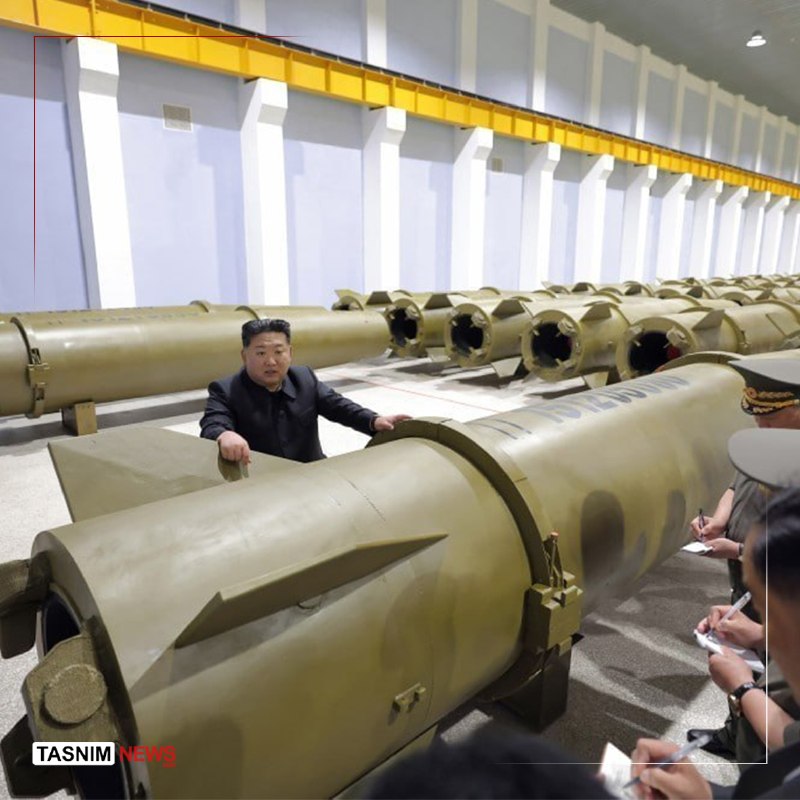
On 26 April 2026, North Korean state media released footage of Kim Jong Un touring a newly opened military museum in Pyongyang. Among the exhibits displayed: a German Leopard 2A4 main battle tank and other pieces of Western armour, identified by their markings as equipment lost during Ukraine's failed Kursk incursion. The video, shared widely on social media platforms, showed Kim walking deliberately past the trophy hardware, pausing at sufficient length for cameras to capture the moment.
The display is not accidental. North Korea's museum culture has always served a dual purpose — preservation and pedagogy. Every exhibit is curated for a political lesson, every trophy placed to reinforce a specific narrative about national resilience and the fecklessness of adversaries. The Leopard 2A4, a Bundeswehr-built tank that formed the backbone of several European armies' armoured units, occupies a particular symbolic slot in that narrative: a piece of the West's own arsenal, now conscripted into the service of a state the West designated a pariah.
What makes this moment structurally significant is the convergence of two separate storylines that Pyongyang has managed to collapse into a single image. The first is the reality of North Korean troop deployments to Russia's Kursk region — a deployment confirmed by Ukrainian, Western, and independent intelligence sources across 2025 and early 2026. The second is the specific failure of Ukrainian armoured formations during the Kursk counteroffensive, where Leopard 2A4 units supplied by European partners bore the brunt of Russian and allied fire. North Korea did not merely send soldiers; it sent an exhibit.
The Domestic Audience: Engineering Reverence at the Museum Door
For a North Korean viewer, the message is unambiguous. The father-and-grandfather leader who has met Russian President Vladimir Putin, received Russian military technology, and sent Korean People's Army troops abroad — all in service of a war the official media frames as a righteous struggle against Western encroachment — is now shown standing before the literal wreckage of Western hardware. The psychological architecture of the scene mirrors decades of North Korean propaganda: the leader surveying the enemy's tools of oppression, now rendered impotent.
The Leopard 2A4 is not a generic tank in this framing. It is a specific artifact of the arms that European democracies committed to Ukraine's defence — tanks that arrived with ceremony, with political statements attached. Their capture and display strips those political statements bare. The message to a North Korean audience is not merely "we are strong" but something more precise: "the armies your government once feared have been defeated by our alliance."
This kind of material evidence — tactile, visible, photographable — performs a different kind of work than rhetorical claims about the imperial decline of the United States. It takes the abstract and makes it concrete. A tank captured in Kursk and shipped to Pyongyang is proof, in the most visceral sense, that the axis Pyongyang has aligned itself with is winning.
The Russia Axis: Logistics, Legitimacy, and the Theatre of Victory
North Korea's deepening alignment with Russia is not new. The relationship, formalised through a state visit in September 2024 and a bilateral treaty that observers described as approaching a mutual defence commitment, has produced concrete military cooperation. North Korean troop deployments to Kursk — estimated by Ukrainian and Western officials at several divisions — represent the largest overseas deployment of Korean People's Army forces since the Korean War.
The exchange is not one-directional. Russia has provided North Korea with advanced missile technology, satellite imagery, and — according to South Korean and American intelligence assessments — technical assistance for its nuclear and ballistic missile programmes. The Leopard display sits inside this reciprocal arrangement: it is evidence, for a Russian audience and for the broader diplomatic audience Pyongyang courts, that North Korean participation in the war is producing tangible returns.
What North Korea received by sending troops to Kursk is now on display in its museums. What Russia received — tens of thousands of North Korean soldiers, at least some of whom have been killed or wounded in combat — is not visible in the same way. The asymmetry of disclosure is itself a message. Pyongyang can show the trophy. Moscow, for reasons of its own domestic and diplomatic politics, has been more guarded about acknowledging the scale of its reliance on North Korean manpower.
The Leopard 2A4 display also functions as a quiet rebuttal to the argument — made in Western capitals throughout 2025 — that North Korea was being exploited by Russia, sending soldiers to die for a power that would offer nothing in return. The museum says otherwise. The tank is proof of a bargain being kept.
The Western Equipment Problem: A Symbol That Outlived Its Promise
The Leopard 2A4 has had a difficult war. Delivered to Ukraine with considerable political fanfare in early 2023, the tank was expected to provide a breakthrough capability against Russian armoured and defensive formations. Instead, Ukrainian Leopard units suffered heavy losses in the attritional fighting of 2023 and 2024, particularly in the southern counteroffensive that failed to achieve its objectives. The tanks proved vulnerable to modern anti-tank weapons, drone swarms, and the kind of combined-arms综合性作战 that Russia, despite its own heavy losses, had mastered through sheer repetition.
The failure of Western equipment to deliver a decisive battlefield outcome has been a recurring theme in the war, one that has produced genuine soul-searching in European defence ministries and arms manufacturers alike. The Leopard 2A4 on display in Pyongyang is, in that sense, a double trophy: evidence not just of a specific engagement lost in Kursk, but of a broader expectation — that Western military technology would prove decisive — that the war has not validated.
North Korea's curators understand this. The exhibit is not simply "a Leopard tank"; it is a Leopard tank captured in circumstances that confirm, for the audience Pyongyang wants to reach, that the limitations of Western arms are not a bug but a feature of the world the North Korean state has always described.
What Remains Unclear
The footage released on 26 April 2026 does not indicate when the museum opened, what other exhibits it contains, or whether the display is permanent or part of a temporary exhibit. North Korean state media has not released a press statement accompanying the video, and no official description of the museum has been published. The origin of the specific Leopard 2A4 on display — which army originally operated it, which unit lost it in Kursk — cannot be independently confirmed from the available imagery alone. The full catalogue of trophies shown in the video has not been publicly identified.
These gaps matter for the precision of the analysis. A museum display is a curated moment; the decision to release footage of Kim touring it is itself a communication, but the communication is bounded by what Pyongyang chooses to show. What remains behind closed doors — the full scope of the exhibits, the narratives attached to them, the staff briefings Kim may have received — is not visible.
The Stakes of the Display
The consequences of this image extend beyond propaganda. For South Korea, which has watched North Korean troops deploy to Ukraine with growing alarm, the museum display is further evidence that the Russia–North Korea axis is producing capabilities — and an exchange of battlefield lessons — that will not remain confined to the European theatre. For Japan and for NATO members who supplied the equipment now on display, the image carries a specific sting: their arms, sent to defend Ukraine, have become an exhibit in the country that supplied troops to help defeat that effort.
The Leopard 2A4 in Pyongyang is, in the end, a geopolitical object. Its value is not military — it will not change the balance of power on the Korean Peninsula — but informational. It tells its domestic audience that the world is remaking itself around an axis they belong to. It tells Russia that the bargain is producing visible returns. It tells the West, indirectly but unmistakably, that the equipment it sent to Ukraine has a new home.
This article was filed from Seoul. Monexus has sought comment from the South Korean Ministry of Unification and the Ukrainian Defence Ministry; neither had responded by time of publication.