The Model Speaks: LeBron James and the Weight of Legacy Betting Against Jalen Brunson's Ascent
As the 2026 NBA Playoffs tip off, a predictive model is backing both a forty-year-old legend chasing one last run and a mid-career guard rewriting New York's ceiling — a pairing that says as much about how we value basketball stars as it does about either player.
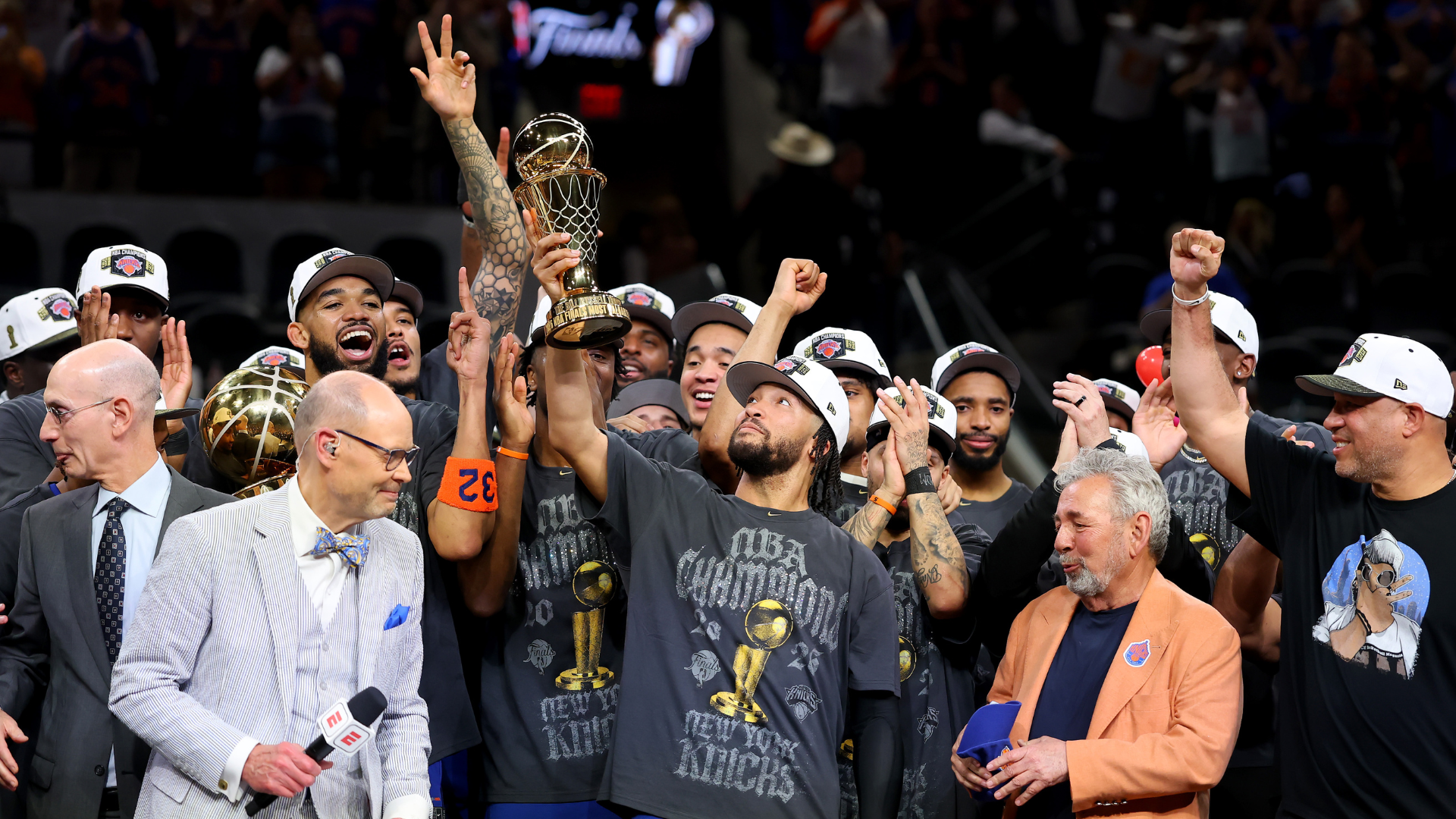
The SportsLine model does not care about legacy. On 26 April 2026, as the NBA Playoffs moved into their opening week, the predictive tool flagged LeBron James as a value pick in player prop markets. Twenty-four hours earlier, the same model had done the same for Jalen Brunson of the New York Knicks. Two players, two days, two very different stories about what the 2026 postseason is supposed to mean.
This is not unusual for prop markets. Models surface value based on statistical patterns, and the postseason distorts those patterns in ways that reward those who know where to look. But the pairing of LeBron and Brunson in consecutive model outputs captures something the numbers alone cannot: the NBA at forty is simultaneously a sport in generational transition and one still defined by the gravitational pull of a single name.
LeBron James turned forty before the 2025-26 season began. The Lakers finished seventh in the Western Conference — respectable enough to avoid the play-in tournament, precarious enough that no serious analyst counted them as true contenders. And yet the SportsLine model saw something in LeBron's prop lines that the market had not fully priced. Whether that edge is in scoring volume, assist totals, or minutes management depends on which prop market one examines, but the direction was unambiguous: the model liked James at his current valuations.
That is worth sitting with. A forty-year-old player on a seventh-seeded Lakers team, in the most physically demanding tournament in professional basketball, flagged as a value pick. Either the model is seeing something that escapes every other analytical framework, or the market has overcorrected on age-related decline in a player who has defied that narrative for longer than most current analysts have covered the league.
Brunson's case is structurally different. The Knicks enter the 2026 playoffs as a team transformed by his presence. New York finished third in the Eastern Conference — a result that would have seemed fanciful three seasons ago when the franchise was still cycling through rebuilds and misadventures. Brunson arrived as a free agent in 2023 as something of a calculated underbet: a guard good enough to build around, not quite a superstar by conventional metrics. Three years later, he is the engine of a team with genuine Finals aspirations.
The SportsLine model backed Brunson on 25 April 2026, one day before its LeBron call. The prop lines it favored reflected a player whose two-way contributions — scoring, playmaking, late-clock execution — had become inseparable from New York's identity. When the Knicks needed a bucket in clutch situations, Brunson was the call. When defenses adjusted to take away his penetration, he found teammates. That versatility is exactly what prop models reward: contributions across multiple statistical categories that compound into expected value.
The editorial tension here is not between LeBron and Brunson. It is between two modes of evaluating basketball talent that the 2026 playoffs have forced into the same conversation. The LeBron pick is, at its core, a bet on narrative stability — a forty-year-old who has been the league's defining figure for two decades is being priced as if his decline is both inevitable and complete. The model disagrees, or at least sees enough residual edge to justify the bet.
The Brunson pick is an argument about ceiling. Not his — everyone now accepts Brunson's individual ceiling — but the Knicks'. New York has not been a genuine title contender since the 1990s. The franchise's cultural weight has long outstripped its on-court results, creating a gap between expectation and reality that has defined the Knicks as much as any player or coach. Brunson's emergence has not closed that gap entirely, but it has narrowed it to the point where serious people are asking whether 2026 is the year.
That question is where the model and the broader media conversation diverge most sharply. SportsLine's prop algorithms are built to identify edges in markets where public perception and statistical reality have drifted apart. The LeBron pick suggests the model believes the market has over-discounted his production because of age. The Brunson pick suggests the model believes the market has not fully absorbed his impact on a Knicks team that, with or without a deep playoff run, has already exceeded most reasonable projections.
What neither pick captures is the playoff multiplier — the way postseason basketball warps normal statistical relationships. Defenses tighten. Rotations shorten. The physical and mental toll of playing deep into June is real and documented. A prop model calibrated on regular-season data will always carry some uncertainty when applied to elimination games, and that uncertainty should be visible in how seriously one takes the picks.
The broader pattern is harder to ignore. The NBA in 2026 is a league in which the stars who defined its first three decades are aging out of their prime years, and the players who will define the next era are establishing themselves in real time. LeBron is LeBron — his longevity is not merely statistical but cultural, a sustained presence that shapes how the sport is covered, marketed, and remembered. Brunson is something different: a player whose rise has been gradual enough to miss if you were not paying attention, and obvious enough in hindsight that it feels as if it should have been predicted.
The SportsLine model backed both on consecutive days. Whether that reflects analytical coherence or the coincidental alignment of two separate value signals is a question the model cannot answer. What it does confirm is that the 2026 NBA Playoffs are, at minimum, interesting — a tournament in which both the league's past and its emerging future have legitimate claims on the props pages.
The Lakers open their series against an opponent whose defensive scheme will test whether LeBron can still impose his will against a set defense designed to slow him. The Knicks, meanwhile, face a first-round matchup in which Brunson's two-way production will determine whether New York's 2025-26 regular season was a genuine statement or a high-water mark that the postseason cannot sustain.
The model has spoken. The games will speak louder. Either way, the 2026 playoffs are writing a story about what the NBA looks like when the old guard and the new order occupy the same prop sheet — and the numbers, for once, are not pretending the two groups are mutually exclusive.
This publication's sports desk selected the LeBron versus Brunson angle over a narrower prop-only framing because the pairing illuminates how betting markets function as a collective judgment on player value — and because the 2026 Knicks storyline is, simply put, the most interesting team narrative the Eastern Conference has produced in years. The CBS Sports model is one input; the broader editorial task is to situate it.