Odesa under siege: what Russia's drone campaign against Ukraine's ports tells us
A coordinated swarm of Russian drones struck Odesa port on the night of 26 April 2026, the latest in a pattern of strikes that suggests Russia's strategy has shifted from battlefield attrition to economic coercion targeting Ukraine's export infrastructure.
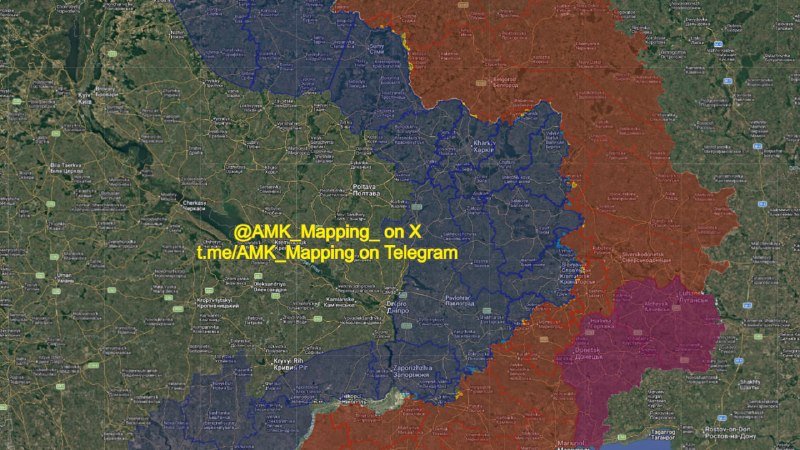
Between 21:55 and 22:37 UTC on 26 April 2026, monitoring channels reported multiple waves of unmanned aerial vehicles approaching Odesa from multiple vectors. A swarm of at least 15 drones advanced toward the port and Peresyp district; additional groups of 10 and 5 drones targeted the city centre and the coastal approach from Zatoka. The strikes, confirmed in successive advisories across open-source monitoring feeds, marked one of the more concentrated barrages against Ukraine's principal Black Sea port in recent weeks. Odesa is a minus, one update read — a terse formulation that has become standard shorthand for civilian harm in the immediate vicinity of the strike zone.
This is not a one-night event. It is the latest strike in a campaign that has intensified over the first four months of 2026, and one that carries a logic distinct from the drone attacks that defined earlier phases of the war.
The escalation pattern
The volume and coordination of the 26 April barrage suggest a deliberate operational decision rather than opportunistic targeting. Successive waves of 15, 10, and 5 drones, arriving from different headings within a forty-minute window, indicate a level of planning and command-and-control that goes beyond the improvisational loitering munitions strikes that characterized Russia's early drone campaigns. That pattern — high-volume, co-ordinated, geographically distributed — has appeared in other recent strikes against port infrastructure and grain handling facilities along the Black Sea coast. The scale is new. The repeat frequency is new. And it is not random.
Ukrainian air defence has intercepted a substantial portion of incoming barrages, and the General Staff's public briefings credit Western-supplied systems with protecting critical infrastructure. But interception at scale is resource-intensive. A swarm of fifteen drones requires fifteen interceptors — or a layered defence that Russia is probing for gaps. The evidence suggests the barrages are as much a test of Ukrainian air defence sustainability as they are an attempt at physical destruction.
Why ports are the target
Ukraine's grain export corridor was the subject of intense diplomatic negotiation for two years, and its formal collapse in mid-2023 underscored how dependent Ukraine's economy is on functional port access. Odesa processes the bulk of the country's remaining maritime export capacity. Every strike on port infrastructure — storage silos, handling equipment, harbour approaches — reduces throughput, raises insurance costs for commercial shipping, and squeezes the revenue Ukraine uses to fund its own defence production.
There is a secondary calculation. Disrupted exports mean higher grain prices globally; higher grain prices mean political pressure on Western governments whose electorates experience food cost inflation. The logic is not subtle: make the cost of sustaining Ukraine visible at the supermarket checkout, and Western appetite for continued support eventually erodes. This is economic coercion dressed as military operations.
That calculation is not without risk for Moscow. Public opinion in Western countries has remained relatively resilient — the framing of support for Ukraine as a response to unprovoked aggression has held, even through periods of war-weariness. But the cumulative effect of infrastructure strikes, if sustained, could shift the political calculus. Russia appears to be betting that a slow bleed of economic disruption will succeed where a fast military victory did not.
The Black Sea dimension
The strategic importance of the Black Sea has changed since the war began. For the first two years, Ukraine maintained a credible naval deterrence and used sea drones to push Russian naval assets away from the western Black Sea. That posture allowed a partial reopening of the export corridor under the now-expired Black Sea Grain Initiative. Russia's current drone campaign against Odesa follows the formal termination of that arrangement and the withdrawal of the Russian guarantees that underpinned it.
The campaign has two components. The first is kinetic — direct strikes on infrastructure that damage export capacity. The second is signalling — demonstrating to commercial shipping insurers and operators that the route into Odesa is no longer covered by the political risk management instruments that made the grain corridor viable. Insurers reprice risk; shipping companies reroute; throughput declines regardless of whether the port itself is fully operational.
Ukraine has sought to mitigate this through alternative overland routes — rail connections to Romania and Poland, Danube transport via Reni and Izmail — but these lack the volume capacity of maritime export. A port that processes 40,000 tonnes of grain per day cannot be replaced by a border crossing designed for trucks.
What the West must decide
The 26 April strikes do not alter the fundamental facts of the war: Russia launched a full-scale invasion in February 2022, has occupied Ukrainian territory, and is conducting strikes that target civilian and economic infrastructure simultaneously. But they do sharpen a question that Western policymakers have been reluctant to address directly: whether air defence support for Ukrainian cities will be extended to Ukrainian ports, and whether the distinction between defending civilian infrastructure and enabling commercial exports is one that Russia can exploit indefinitely.
The supply of longer-range air defence systems — Patriot batteries, NASAMS, IRIS-T — has so far prioritised population centres. Port protection has been partially addressed but remains uneven. Ukraine has publicly requested expanded coverage; Western partners have cited production constraints and the difficulty of disaggregating a finite air defence inventory across the full range of critical infrastructure.
That difficulty is real. But the alternative — allowing Russian drone campaigns to systematically degrade export capacity without a corresponding response — amounts to accepting Russia's strategic logic. The West committed to supporting Ukraine's economic resilience as part of the broader political commitment to the country's sovereignty. A campaign that specifically targets that resilience deserves a corresponding answer.
The strikes on Odesa on 26 April are not a tactical nuisance. They are a signal about how Russia intends to fight the next phase of this war — and about what Western policymakers will need to respond to if they intend to hold the line on support. The drones are coming from multiple directions. The question is whether the response will do the same.
Wire provenance
This editorial synthesis draws on the following public wire/social posts:
- https://t.me/war_monitor
- https://t.me/war_monitor
- https://t.me/war_monitor