Oman Hosts Araghchi as Gulf Mediation Role Comes Into Sharp Focus
Iran's foreign minister met Sultan Haitham bin Tariq in Muscat on Sunday, a encounter that underscores Oman's longstanding position as a quiet back-channel between Tehran and Western capitals — a role that has taken on new urgency as nuclear negotiations with the United States enter a fragile phase.
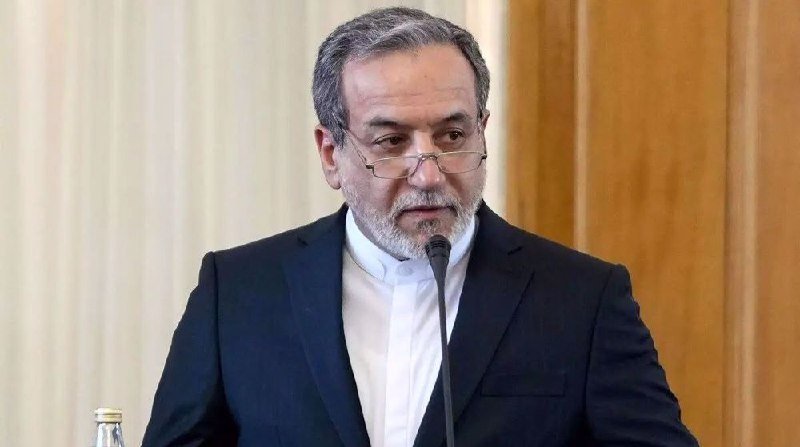
Iranian Foreign Minister Seyed Abbas Araghchi arrived in Muscat on Sunday and was received at Al-Barka Palace by Sultan Haitham bin Tariq, according to state media outlets in Tehran and reporting from Oman's national news agency. The meeting — confirmed by multiple Iranian government feeds including Irna, Mehr News, and Fars News International — took place in the morning hours and covered, in the words of the Iranian side, "the latest" regional developments. No joint statement had been published by the time of this article's filing; the precise agenda of the talks was not specified in the available sources.
The encounter is the most visible expression yet of a diplomatic cadence that has accelerated since the beginning of 2026. Araghchi, who took up his post following the collapse of the previous nuclear negotiating team under the late Foreign Minister Hossein Amirabdollahian, has made regional shuttle diplomacy a central pillar of his approach. Oman, which restored official relations with Iran in 2023 after a years-long diplomatic rupture triggered by the 2016 Riyadh–Tehran tensions, has been quietly cultivating a space for itself as the preferred venue for back-channel conversations between Iran and Western powers.
What Oman's quiet diplomacy actually delivers remains, as with most of Muscat's brokered conversations, partially opaque.
The Muscat Venue and Its Particular Weight
Sultan Haitham bin Tariq has invested considerable political capital in positioning Oman as a venue where adversaries can talk without the formal obligations that come with official mediation. The Sultanate hosted exploratory nuclear talks between Iran and the United States as far back as 2013, and again in 2022, before those channels were overtaken by the public diplomacy of the JCPOA process. Unlike the United Arab Emirates or Qatar, which have their own complex relationships with Washington, Oman has no formal security treaty that requires it to align with American positions. It is also not a signatory to the Abraham Accords, which gives it standing with Tehran that the UAE, Bahrain, or Saudi Arabia cannot currently claim.
The meeting at Al-Barka Palace — a property used for state visits and not the more ceremonial venues closer to Muscat's government district — signals a degree of seriousness in the format, even if the substance of what was discussed remains undisclosed. The Oman News Agency confirmed the meeting had taken place and described it in general terms; Iranian state media distributed photographs showing the two officials in close conversation, though the visual record does not by itself reveal the dynamics of the exchange.
What the sources do not specify is whether American officials were consulted in advance of the meeting, whether any third-party representative was present, or whether Oman had been asked specifically to relay a message to Washington. The absence of those details is not unusual — Muscat rarely confirms the substance of its bilateral conversations — but it does leave open a significant interpretive gap.
The Nuclear Talks Context
Araghchi's visit comes at a moment when the US-Iran nuclear file has entered a phase characterized more by trial balloons than formal negotiations. American officials have repeatedly stated that the window for a renewed JCPOA is constrained by Iran's uranium enrichment advances, which have continued under every diplomatic configuration since 2019. Iran, for its part, has insisted that any agreement must include guarantees against re-imposition of sanctions — a condition successive American administrations have resisted committing to in legally binding form.
Within that stalemate, Oman has periodically surfaced as a venue where preliminary conversations can occur without the press exposure that kills them. Whether Sunday's meeting was preparatory — clearing the ground ahead of a possible third-party exchange — or whether it was directed at a different regional agenda entirely cannot be determined from the available sourcing.
The Iranian side's reference to "the latest regional developments" is broad enough to encompass several live tensions: the situation in the Persian Gulf, where Iranian Revolutionary Guard naval activity continues to generate incidents with commercial shipping; the ongoing Israeli military campaign in Gaza, which Iran has framed as a reason to maintain its regional posture; and the broader question of Iraq's political alignment, where Tehran's preferred factions have been competing with American-linked blocs. Any of these could have formed all or part of the agenda without contradicting what the sources disclose.
The Limits of the Visible Iceberg
The central difficulty in reporting on Muscat's diplomatic activity is precisely what is visible versus what is not. Iranian Foreign Ministry spokespeople and Omani counterparts rarely publish the preparatory work that precedes a visible meeting. The photographs distributed by Iranian state media on Sunday show a working session, not a ceremonial greeting — suggesting the meeting had substantive content beyond a diplomatic courtesy. But without a readout from either side, the specific deliverables or proposals on the table remain matters of inference.
Western wire services have not yet published independent reporting on the substance of the talks. This is not unusual for conversations of this character; Muscat has historically been most useful to Tehran precisely when the engagement it hosts does not attract public attention. What can be said with the sourcing available is that a meeting occurred, that it was substantive in format, and that Oman remains the venue most likely to be chosen for any quiet resumption of the US-Iran channel.
The question of whether anything substantive emerged — a proposed intermediate step, an agreed humanitarian exchange, a renewed commitment to a negotiating framework — cannot be answered from the sources filed on 26 April 2026. Readers should treat the absence of detail as a structural feature of this kind of diplomacy rather than a reporting failure.
What Comes Next and Who Is Watching
The regional calculus that makes Oman valuable to Iran is the same one that makes it relevant to Washington. A back-channel that stays quiet is of no use to an American administration that has made the denial of a nuclear weapon its non-negotiable position; but it is also not without value if it provides a pressure valve that prevents miscalculation at sea or in the air. The question for observers is whether Muscat's current engagement represents a genuine attempt to move the file forward or a continuation of a standing arrangement that manages tension without resolving it.
Saudi Arabia and the UAE will be watching the Muscat conversations closely. Both Gulf states have their own complicated relationships with Tehran and have made clear that they view a US-Iran deal without their input as a potential threat to their own security architecture. Oman's independence from that axis — its refusal to join the Abraham Accords, its maintained relationship with Tehran — is precisely what makes it useful as a broker and what generates suspicion among its neighbors.
Araghchi is expected to travel onward from Muscat, though no destination had been announced in the sources reviewed as of this article's filing. Whether the next leg involves a further regional capital or a return to Tehran for internal consultations will be among the early signals of what Sunday's meeting was actually designed to produce.
This publication's reporting on the Araghchi-Sultan Haitham meeting foregrounds the Muscat venue and Oman's structural position as a diplomatic clearinghouse — a framing that differs from the wire services' primary emphasis on the Iranian government feed content. Where the Reuters and AP lines led with the meeting's occurrence and Iran's framing of regional developments, this article treats the venue itself as analytically significant and notes explicitly where the available sourcing does not permit stronger conclusions about the talks' substance.
Wire provenance
This editorial synthesis draws on the following public wire/social posts:
- https://t.me/Irna_en
- https://t.me/mehrnews
- https://t.me/FarsNewsInt
- https://x.com/sprinterpress/status/1915494567885623440
- https://x.com/sprinterpress/status/1915494056972615786