Oman Hosts Araghchi as Gulf Monarchies Chart a Middle Course Between Washington and Tehran
Iran's Foreign Minister Abbas Araghchi met Sultan Haitham bin Tariq in Muscat on 26 April 2026 — a visit that reflects a Gulf monarchies quietly repositioning themselves as US influence in the region wanes and the nuclear crisis deepens.
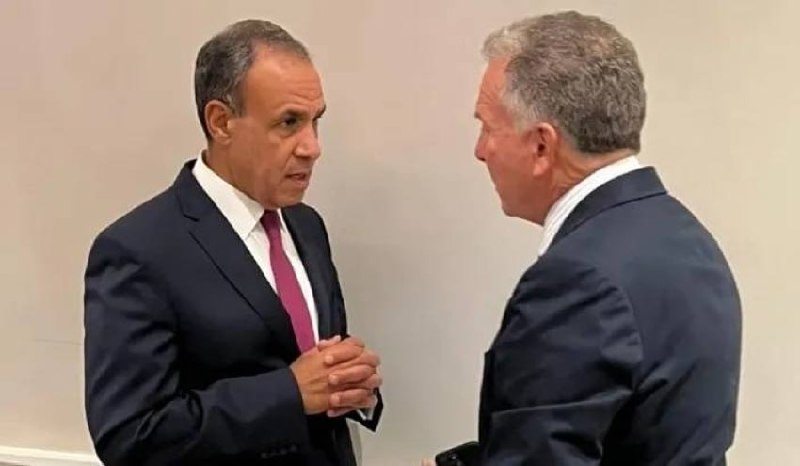
On the morning of 26 April 2026, Abbas Araghchi, Iran's Minister of Foreign Affairs, arrived at Al Baraka Palace in Muscat, where he was received by Sultan Haitham bin Tariq of Oman. The meeting — confirmed by Iranian state-aligned channels including Tasnim News — offered no public readout of its substance. But its timing is itself a signal. It follows a period in which Iran has been conducting a visible diplomatic offensive across the Gulf, and it arrives as the nuclear standoff enters what analysts describe as a new and more volatile phase.
The meeting's thin public record means this publication cannot confirm what specific proposals, if any, were discussed. What is clear is that Araghchi chose Muscat for an engagement that Iran's own Ministry of Foreign Affairs described as a working visit, and that Oman — rather than a more formal multilateral forum — was selected as the venue. That choice, against the backdrop of a fraying nuclear framework and a Gulf region in active realignment, is the story.
The Nuclear Backdrop
The nuclear situation that frames Araghchi's visit is well documented. In May 2018, the United States withdrew from the Joint Comprehensive Plan of Action — the 2015 agreement that had capped Iran's enrichment programme in exchange for sanctions relief — and reimposed the sweeping sanctions regime that had been lifted under the deal. What followed was a period of what the Trump administration termed "maximum pressure," a campaign of economic isolation that, by 2026, had produced more than 1,000 rounds of new sanctions against Iranian individuals, institutions, and economic sectors. Iran responded by exceeding the enrichment limits the JCPOA had set, accumulating a stock of enriched uranium that nuclear inspectors from the International Atomic Energy Agency have repeatedly described as inconsistent with any civilian justification.
Direct negotiations between the United States and Iran have been rare and halting since 2018. In early 2026, reports emerged — including from outlets tracking Iranian diplomacy closely — that indirect talks had been facilitated through Muscat, suggesting Oman had been holding a channel open when the political temperature between Washington and Tehran made it impossible for either side to be seen at the same table. Whether the Araghchi visit represents a continuation of that back-channel process, a separate diplomatic track, or a signal of intent to regional audiences cannot be confirmed from the publicly available record. The gap between what was said inside Al Baraka Palace and what was reported outside it is the central ambiguity of this story.
Oman and the Art of Facilitation
What the record does support is that Oman has served this function before. The 2013 nuclear talks that eventually produced the framework for the JCPOA were held in Muscat before moving to more formal multilateral settings. That history is not coincidental. Oman is a small state by every conventional measure — modest population, modest military capacity, modest economic diversification — but it has cultivated a diplomatic identity that is structurally distinct from its neighbours. Unlike Saudi Arabia or the UAE, which have invested heavily in assertive regional postures and large-scale military procurement, Oman has maintained a deliberate non-aligned quality to its foreign policy. It hosts no permanent foreign military bases. It participates in Gulf cooperative structures without being a primary driver of them. It maintains relations with Iran at a level that most of its neighbours found politically untenable during the worst periods of Gulf rivalry in the 2010s.
The strategic logic for Muscat is not ideological. Oman is a monarchy with a conservative social order and a ruler who has consolidated power since taking the throne in 2020. Its interest in facilitation is functional: a stable Gulf that avoids military confrontation serves Oman's economic ambitions, particularly the long-term diversification agenda anchored by the Sultan Qaboos Port and the Oman Vision 2040 development plan. Active conflict on Oman's doorstep — or economic collapse in a major neighbour — is not in Muscat's interest. The calculation is straightforward enough to state without invoking any theoretical framework: a middle-sized monarchy with limited hard power has a structural preference for quiet de-escalation.
That preference has made Oman a useful interlocutor for parties who need a channel but cannot be seen using one. The Araghchi visit, whether or not it advances any specific agenda, confirms that this channel remains open. The sources do not specify whether any substantive nuclear discussion took place; this publication is not claiming it did. What the meeting confirms is relational: that Oman and Iran continue to maintain a direct line, and that Muscat remains a viable venue when direct engagement is politically impossible.
The Structural Shift in Gulf Geopolitics
To understand what is at stake in a meeting like this, it helps to locate it inside the broader pattern it sits within. The past several years have seen a documented recalibration of Gulf relationships that does not fit neatly inside any existing framework of analysis. The United States remains the dominant external security actor in the Gulf — the bilateral defence relationships that Gulf monarchies have with Washington are extensive, documented, and not in question. But the character of American engagement has shifted in ways that regional governments are processing quietly and practically. The withdrawal from the JCPOA, the maximum-pressure campaign, and the transactional rhetoric that has accompanied the current administration's approach to alliances have all contributed to a sense among Gulf states that American commitments carry conditions and deadlines that their own interests do not always track.
Iran, for its part, has not been passive. Its network of regional relationships — with armed groups, with political parties, with states that share opposition to particular American policies — has been resilient through years of sanctions. More significantly, Iran has continued to develop its nuclear programme through periods of maximum pressure without triggering the military response that some analysts had predicted. That trajectory has changed the calculation of regional actors who, whatever their disagreements with Tehran, recognize that the Islamic Republic is not going to be coerced into a deal on Washington's preferred terms.
The result is a Gulf diplomacy that is more multi-directional than it was a decade ago. The Abraham Accords — the normalisation agreements brokered between Israel and several Arab states in 2020 — were a significant development, but they have not produced the regional realignment that their architects envisioned. Gulf states have been careful not to position themselves as proxies in a US-China competition, despite American pressure to do so. They are navigating between partners rather than choosing one, and they are maintaining channels with Iran precisely because that hedging is in their interest.
The Gap in the Record
Any honest account of this meeting must acknowledge what is not known. The publicly available sources — Iranian state-aligned Telegram channels, confirmed by Tasnim News — describe the setting, the participants, and the fact of the meeting. They do not describe what was discussed. The sources do not share any readouts, joint statements, or official accounts of the agenda. This publication has not been able to independently confirm whether the meeting addressed nuclear negotiations, regional security, economic cooperation, or some combination of these.
What can be said is that Araghchi's visit to Muscat follows a pattern — of Omani facilitation, of Iran using quiet channels rather than public ones, of Gulf states maintaining relationships with Tehran even as they participate in American-led security architectures. Whether this particular meeting advances anything substantive, or merely confirms that the channel remains open, cannot be determined from the available evidence. The ambiguity is real, and this publication will not resolve it by invention.
What Comes Next
The stakes of the underlying dynamic, however, are not ambiguous. If Iran continues on its current nuclear trajectory — expanding enrichment capacity, accumulating material, and operating facilities that inspectors have limited access to — the window for a negotiated resolution narrows with each passing quarter. The military options that are occasionally referenced in Western policy discussions carry costs that no regional actor has appetite to absorb. And the diplomatic alternatives — multilateral forums, European-led initiatives, back-channel processes — have each shown their limits over the past several years.
Meetings like the one in Muscat do not resolve that crisis. But they maintain a channel that matters precisely because it is quiet. Oman is not a power broker in any conventional sense. It does not have the leverage to force outcomes. What it has is a venue and a relationship, and in a situation where the formal mechanisms have all broken down, that is not nothing.
The question is whether a meeting held without public agenda, without readouts, and without any confirmable outcome represents the maintenance of a last channel — or whether it is, as some critics of Gulf shuttle diplomacy have argued, a process that generates the appearance of movement without producing any actual resolution. The sources do not answer that question. They confirm only that Araghchi was in Muscat, that he met the Sultan, and that the meeting happened. That will have to be enough for now.
—
Desk note: Three Telegram-sourced reports from Iranian state-aligned channels provided the primary record of this meeting — Tasnim News in English, Jahan Tasnim, and Al Alam. All confirmed the venue, participants, and date. The substance of the discussion is not reflected in the public record available to this publication. The article is built on the confirmed facts of the meeting and the broader geopolitical context against which it occurs. Readers seeking official readouts should consult the Iranian Ministry of Foreign Affairs or the Omani royal court directly.
Wire provenance
This editorial synthesis draws on the following public wire/social posts:
- https://t.me/tasnimnews_en/15234
- https://t.me/JahanTasnim/8921
- https://t.me/alalam_fa/11892
- https://en.wikipedia.org/wiki/Iran%E2%80%93Oman_relations
- https://en.wikipedia.org/wiki/Foreign_policy_of_Oman
- https://en.wikipedia.org/wiki/Joint_Comprehensive_Plan_of_Action
- https://en.wikipedia.org/wiki/Iranian_enrichment_of_uranium
- https://en.wikipedia.org/wiki/Abbas_Araghchi