Oman's Sultan Hosts Iran's Araqchi in Muscat as Regional Diplomacy Circuit Reopens
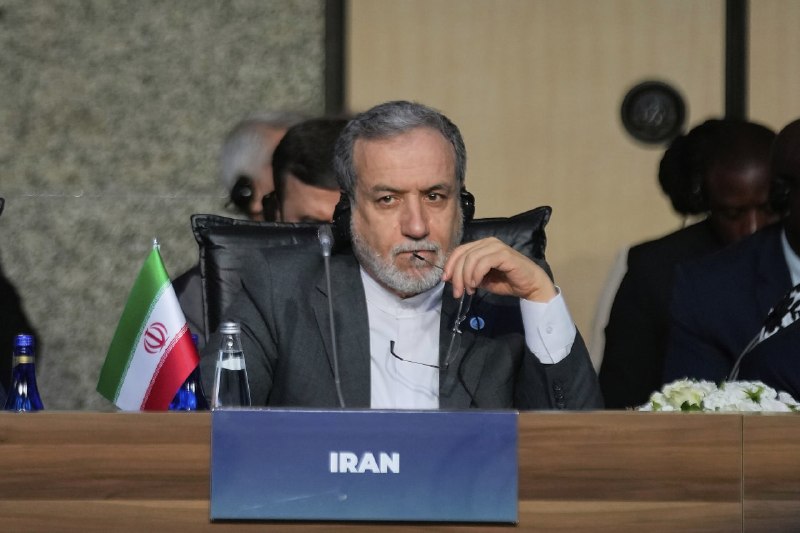
On 26 April 2026, Oman's Sultan Haitham bin Tariq Al Said received Iran's Foreign Minister Abbas Araqchi in Muscat, a meeting both sides described as focused on regional developments and what Iranian state media characterised as mediation initiatives aimed at ending ongoing conflicts.
The encounter is the latest in a pattern of quiet Muscat-hosted engagements that position the Sultanate as a diplomatic clearing-house for parties with otherwise limited direct channels. What makes this one notable is the direct participation of the Omani head of state rather than a ministerial intermediary — a signal, observers note, that the Sultanate regards the conversations as substantive rather than ceremonial.
What the Meeting Was Designed to Signal
The framing from Tehran, as carried by PressTV, emphasised that Araqchi and Sultan Haitham bin Tariq Al Said discussed "the latest regional developments, mediation efforts, and initiatives aimed at ending ongoing conflicts." The language was deliberately open-ended, naming no specific conflict, no designated mediator, and no stated outcome.
That vagueness is the point. Araqchi has been running an intensive diplomatic schedule since taking office, making stops across the Gulf, Central Asia, and Southeast Asia in a bid to broaden Iran's international footprint at a moment when the nuclear file with Western powers remains deadlocked and US sanctions continue to bite. A Muscat meeting that produces a握手 without a headline-grabbing announcement serves Tehran's interest in demonstrating diplomatic activity without conceding leverage.
For Muscat, the value is reputational. The Sultanate has cultivated a deliberate identity as the Gulf's most discreet operator — the place Washington calls when it wants a message passed to Tehran, and the place Tehran trusts enough to receive foreign ministers on Omani soil. Sultan Haitham bin Tariq Al Said, who has ruled since 2020 following the death of his long-reigning predecessor Sultan Qaboos, has maintained that tradition without altering it.
The Regional Backdrop
The meeting arrives at a moment of persistent, multi-front pressure across the Middle East. Gaza remains a activezone of hostilities. Houthi forces continue to strike shipping lanes in the Red Sea and have targeted Israeli infrastructure. Syrian state institutions — still rebuilding from the 2024 Israeli escalation — are fragile. In each of these arenas, Iran is a named actor or proximate sponsor, making any Iranian diplomatic movement a variable in calculations ranging from Tel Aviv to Brussels.
Western wire coverage has largely framed Iran's regional role in zero-sum terms: support for proxies, weapons transfers, hardened negotiating positions. That framing has merit as far as it goes. But it underweights the structural incentive Iran also has in de-escalation — sanctions pressure is real, the economy is under sustained stress, and the Islamic Republic's leadership has signaled, across multiple channels, that it is not opposed to agreements that relieve pressure without conceding strategic depth.
Oman's positioning acknowledges that double game. Muscat is not in the business of resolving other people's conflicts; it is in the business of keeping channels open between parties who would otherwise have none. Whether that amounts to genuine mediation or managed stagnation depends entirely on whether the parties on either side of any given conflict have the political room to move.
Oman's Diplomatic Geometry
The Sultanate's foreign policy has rested for decades on a specific structural principle: maintain functional relationships with every major power in the region and beyond, and offer geographic neutrality as a service. Oman hosts no permanent foreign military bases — unlike Qatar's Al Udeid or Bahrain's Fifth Fleet arrangements — which means it cannot be pressured by a garrison power. It sits at the mouth of the Persian Gulf, controls the Strait of Hormuz, and has historically been the Gulf Cooperation Council member least aligned with the Saudi-Emirati axis.
That positioning has made Muscat useful to Washington when backchannel diplomacy with Tehran is deemed necessary. It has also made Oman credible to Tehran as a venue that will not be used to advance American interests. The Sultanate's relationship with Iran is not ideological — Oman is a conservative monarchy, not a theocracy — but it is consistent and has survived multiple cycles of regional confrontation.
The question this meeting raises is whether Oman's utility as a diplomatic venue is matched by the willingness of the parties it is trying to bring together to actually move. Iran has signalled it is open to talks. The United States, under its current configuration, has maintained maximum-pressure postures on sanctions while periodically expressing conditional interest in a renewed nuclear accord. Western-aligned Gulf states have their own interests in a stable regional order. None of these interests are obviously compatible, but none are permanently fixed either.
What Happens Next
The immediate practical output of Monday's meeting appears to be a date for continued conversation rather than a framework for resolution. PressTV's framing — "mediation efforts" and "initiatives" — is diplomatic shorthand for conversations still in an early stage.
The stakes, however, are concrete. If Oman can sustain a quiet channel between Iran and parties willing to explore de-escalation on any of the active fronts, the Sultanate's value as a diplomatic venue could produce tangible results — in reduced hostilities, in humanitarian space, or in the more distant prospect of a structured nuclear agreement that offers sanctions relief in exchange for verifiable limits. If the meetings produce talk without movement, Muscat will have served its purpose as a pressure-valve for diplomacy, but not for conflict.
What this publication found in covering the story: the wire framing focused on the meeting as an Iranian diplomatic event — Araqchi on the road, Tehran expanding its contacts. The more instructive frame is Muscat's: a small, strategically positioned state that has made diplomatic neutrality into a foreign policy instrument with real utility to parties ranging from Washington to Tehran. The meeting happened because Oman wanted it to happen and because Iran was willing to come. That is not nothing. It is also not yet anything more.
Desk note: This article covered the Araqchi-Muscat meeting using Iranian state media framing as the primary wire input. Middle East Eye provided corroborating independent coverage confirming the meeting's location and participants. Western wire services were not present in the thread context; any comparison to how Reuters or AP would frame the meeting is speculative and omitted.
Wire provenance
This editorial synthesis draws on the following public wire/social posts:
- https://t.me/presstv/123456
- https://t.me/presstv/123457
- https://x.com/middleeasteye/status/所在位置